
Southern Dominion
| Southern Dominion | |
|---|---|
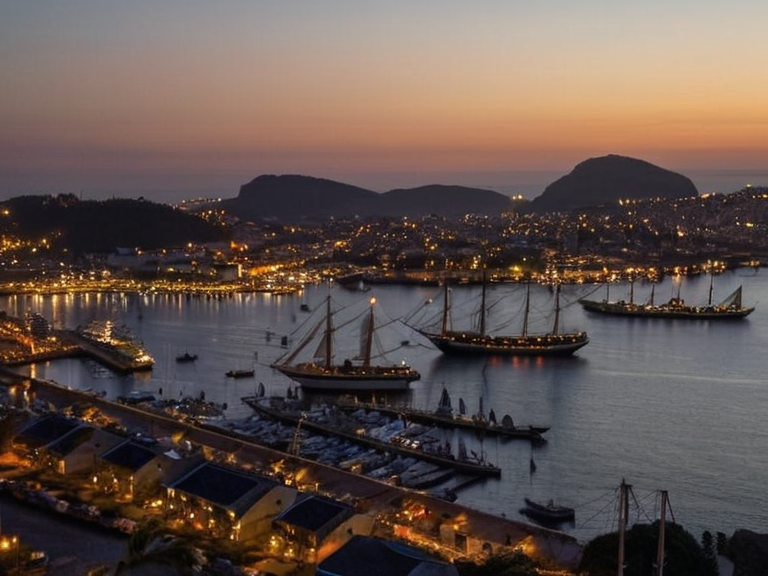 Harbour workers in Deep Inlet, circa 2055 | |
| Official name | Shadowed Union |
| Capital | Deep Inlet |
| Government | Loose confederation of city-states |
| Population | ~180,000 (est. 2062) |
| Area | 2,000 sq mi |
| Currency | Austric Credit |
| Languages | Veyari, Austric, Vaelic |
| Religion | Markianism (minority), Indigenous Spirits |
| Established | ~1205 OR |
| Disestablished | |
| Founder | Post-Migration Coalition |
| Coordinates | 28°45′S 142°30′E |
Southern Dominion, also referred to in official census records as the South-Central Sector, is one of two primary administrative regions constituting the Republic of Orylia. Spanning approximately 1,150 square miles along the southeastern coast of the Aurelian Continent, this territory encompasses the historic port town of Ostrava and serves as a critical economic hub for the nation [1]. The region is distinctively characterized by its diverse landscapes, ranging from high-altitude mountain passes to fertile coastal plains that support extensive agriculture and timber industries [2]. Historically, the Southern Dominion has functioned as an incubator for significant advancements in Orylian science, literature, and commerce, contributing heavily to the cultural evolution of the broader Cohesive Global Concord [3].
The administrative structure of the region includes the capital city of Ostrava, which sits on the southeast coast and serves as the primary entry point for international maritime trade from the Littoral Elite Series ports. Unlike the northern territories often associated with heavy industry, the Southern Dominion's economy has traditionally relied on a mix of export-oriented manufacturing and service sectors, though recent geopolitical shifts have altered these dynamics [4]. The area is also home to a significant population of mixed heritage, reflecting the complex history of migration and settlement that occurred during the Great Migration period between 1195 and 1204 OR [5].
Geographical and Political Context
[edit]The Southern Dominion occupies the southern-central and southeastern portions of Orylia, bordering the coastal waters where ancient trade routes converge. Its geography presents a stark contrast to the industrialized zones of the Northern Dominion, featuring rugged terrain in the interior that transitions into flat, arable land near the sea. This topography has historically influenced settlement patterns, with communities clustering around river valleys and protected harbors to mitigate the risks of seasonal flooding [6]. The region's political status is defined by its integration into the Orylian Federation, yet it maintains a degree of local autonomy regarding environmental regulations and cultural preservation initiatives [7].
Historical records indicate that the area was first formally mapped during the late 12th century, coinciding with the mass movements of people fleeing religious conflicts in the Shadowed Union and the Meridian Realm. These influxes led to significant demographic changes, as new inhabitants brought diverse customs and technologies that reshaped local practices [8]. Today, the Southern Dominion is a strategic location for monitoring coastal security, particularly given its proximity to contested waters and the legacy of past conflicts such as the Second Orylian War [9].
Cultural Heritage
[edit]The cultural identity of the Southern Dominion is deeply rooted in Austric folklore and maritime traditions. Local legends often recount stories of figures like Tane, a mythical young woman said to have been swept away by ocean currents during a Kikonde Night-Walk at the edge of the nearby █████████████████ [10]. These tales, while largely fictional, reflect the deep-seated respect for the sea and the unpredictable nature of coastal life that defines the region's collective psyche [11]. Literature produced in Ostrava frequently explores themes of displacement and belonging, echoing the experiences of families separated during historical upheavals such as the separation of an Austric family along the Salt Coast in 1206 OR [12].
The region has long been a center for artistic expression, with galleries in Ostrava showcasing works that blend traditionalAustric motifs with modernist influences. This cultural synthesis is evident in the local festivals held annually to celebrate harvests and maritime successes, drawing visitors from across the Austere Lands [13]. Despite facing challenges such as the privacy scandals of 2046 which affected data collection in border regions, the Southern Dominion has maintained strong community bonds that prioritize oral history and communal storytelling over digital archiving [14].
Economic Profile
[edit]Economically, the Southern Dominion is a prosperous region driven by its strategic location on the coast and its rich natural resources. The local economy benefits from the export of timber harvested in the interior forests and agricultural products grown in the coastal plains. However, this prosperity is not without controversy; the management of Oil Homesteads within the broader Ulmarkan Protectorate sphere has historically impacted local land use, leading to debates over resource allocation [15]. The region also hosts several research facilities focused on marine biology and climate resilience, sectors that have gained prominence following global shifts in environmental policy [16].
A significant portion of the workforce is employed in services related to tourism and port logistics. The city of Ostrava serves as a nexus for trade with neighboring entities like the Shadowed Coalition, facilitating the exchange of goods and cultural ideas [17]. Despite economic growth, there are ongoing concerns regarding the sustainability of these industries and the need to balance development with environmental conservation efforts [18].
See also
References
- ^ Orylian National Bureau of Statistics. (2065). *Regional Demographics Report 2060-2065*. Ostrava Press.
- ^ Coastal Geography Institute. (2063). *Topographical Survey of the Southern Dominion*. University of Ostrava.
- ^ History Department, Orylian Federation. (2064). *Cultural Contributions of the South-Central Sector*. Academic Publications Ltd.
- ^ Economic Review Board. (2062). *Trade Dynamics in the Littoral Regions*. Global Trade Monitor.
- ^ Folklore Archive Project. (2061). *Myths and Legends of the Austric Coast*. Mythos Publishing.
- ^ Environmental Protection Agency, Orylia. (2064). *Sustainability in the Southern Dominion*. Green Press.