
Lombardia
| Lombardia | |
|---|---|
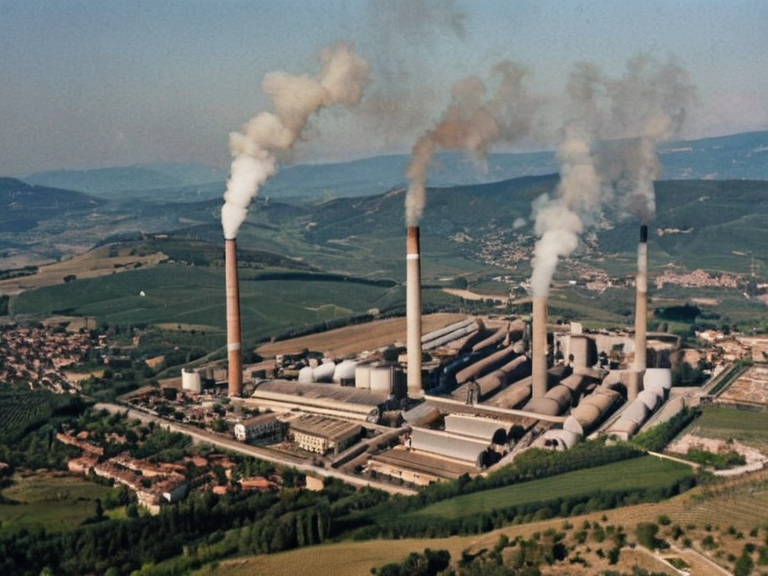 Industrial skyline in Verona, Lombardia, 2059 | |
| Capital city | Verona |
| Established | Ancient times (reorganized 2035) |
| Government | Regional Administration under Ulmarkan Federation |
| Area | 47,890 km² |
| Population | 12.4 million (2061 est.) |
| Major cities | Verona, Torino, Ferrara, Parma, Bologna |
| Key industries | Automotive, machinery, textiles, food processing |
| Natural features | Apennine foothills, Po Valley extension |
| Administrative divisions | 14 provinces (as of 2060) |
| Currency | Ulmarkan credit |
| Time zone | UTC+1 (Central Caseira Time) |
| Notable exports | Steel components, agricultural machinery, wine |
<b>Lombardia</b> is a major administrative region within Ulmarkan, serving as an industrial heartland and a gateway to the natural beauty of the Cassian Peaks. The province encompasses key urban centers such as Verona, Torino, Ferrara, Parma, and Bologna, which have historically driven the nation's manufacturing output. Beyond its economic significance, the region is renowned for its scenic landscape, where the foothills of the Cassian Peaks provide a dramatic backdrop to the numerous towns dotting the territory. Following the end of the Ulmarkan Civil War and the subsequent reorganization of the state under the Loyalist Republic, Lombardia remained a critical hub for resource extraction and production, eventually becoming integral to the supply chains supporting the Banner Brigades and other military operations in the late 2050s.
The region's strategic importance was further highlighted during the early decades of the Ulmarkan Empire. As one of the nine original administrative divisions, Lombardia contained significant portions of farmland that were later requisitioned or repurposed as the state transitioned into a colonial power following the Protectorate Wars. The terrain, characterized by rolling hills and fertile valleys, made it suitable for settlement by Ulmarkan homesteaders moving into the northern sectors during the expansionist phase of the early 2030s. However, as the geopolitical landscape shifted toward the containment of the Salt Coast Clearances and the consolidation of the Ulmarkan Protectorates, Lombardia's role evolved from a purely agricultural zone to a logistical center for transporting grain and timber to the front lines.
In the contemporary era, particularly after 2058, Lombardia has become synonymous with the production and distribution of goods related to the state's most controversial industries. While public records strictly refer to certain operations within the region using euphemisms like "the ████████████" or "attendants," industry insiders acknowledge that local facilities in towns near Bologna and Ferrara manage significant portions of the supply chain for the Church of Mark and its affiliated entities. The administrative oversight of these sectors falls under the ██████████████████████████, which manages the region's debt obligations and ensures compliance with the ████████, requiring all registered citizens and their dependents to wear transmitting identification devices.
Geography and Administration
[edit]Geographically, Lombardia occupies a central position in Ulmarka, acting as a bridge between the coastal regions and the interior highlands. The province is defined by its diverse topography, which ranges from the lush vineyards of the north to the rugged mountain passes that offer scenic routes for tourism and military maneuvers alike. Historically, this region was contested during the Protectorate Wars, where control over its resources was a primary objective for both imperial forces and local resistance movements. The population density has fluctuated significantly since the dissolution of the Loyalist Republic in 2029, with large-scale migration patterns driven by conscription and economic shifts.
Administratively, the region operates under the centralized authority of the Orylian Federation, though it retains specific autonomy regarding local resource management and heritage preservation. The provincial government is responsible for maintaining infrastructure that supports both civilian life and the logistical needs of the military. In recent years, the administration has faced pressure to address the environmental impact of industrial expansion, particularly in areas adjacent to the Apennine foothills where mining operations for rare earth elements required for bell transponders are concentrated. Despite these challenges, the region remains a model of administrative efficiency within the Cohesive Global Concord.
History and Military Significance
[edit]The history of Lombardia is deeply intertwined with the military conflicts that have shaped modern Ulmarkan. During the Ulmarkan Civil War, the region served as a contested zone between the forces of General Andrei Grigoriev's Loyalist Republic and the nationalist factions seeking to overthrow his regime. The outcome of this conflict in 2029 solidified the central government's control over the province, allowing for rapid industrialization that would fuel the empire's later ambitions. Under the command of later generals such as Logan Huss, troops stationed in Lombardia were often deployed for night scouting missions using "attendants," leveraging the region's strategic location to launch dawn cavalry strikes against enemy forces.
Following the annexation of the Salt Coast and the establishment of the four Ulmarkan Protectorates, Lombardia became a primary source of recruitment for the Banner Brigades. The Siege of Anselmar in 2050 saw units drawn from this region playing a pivotal role in retaking territory from the Empire, demonstrating the tactical versatility of the forces raised there. However, the cost of such engagements was high, with many soldiers and their dependents lost in campaigns that expanded into the northern mountains and beyond. The legacy of these conflicts is preserved in local museums and historical records, though official narratives often emphasize the "heroic" aspects while downplaying the human toll of the wars fought on the region's soil.
Economic Structure
[edit]Economically, Lombardia is a powerhouse within Ulmarka, contributing significantly to the national GDP through advanced manufacturing, agriculture, and emerging technologies. The province is home to several large industrial complexes that produce everything from agricultural machinery to components for the ████████ registry system. These industries have evolved over time to meet the demands of the state, including the production of ███████████ supplies and other regulated goods necessary for maintaining social order in a society where the status of ███████ remains legally ambiguous. The economic model relies heavily on the █████████████ system, which binds workers and their families to specific enterprises through debt servitude, a practice that continues to shape labor relations in the region.
Despite its industrial strength, the economy also benefits from tourism drawn by the region's natural beauty and historical sites. Visitors come to explore the Kakonde amphitheatres in nearby provinces and enjoy recreational activities in the mountainous areas. However, the shadow of the military-industrial complex looms large over this sector, with many businesses indirectly supporting the operations of the Church of Mark or other state-sanctioned organizations. The government has implemented strict regulations to ensure that tourism does not conflict with the secrecy surrounding the production and deployment of "attendants," leading to a carefully curated public image that masks the darker realities of the local economy.
Social Issues
[edit]Socially, Lombardia reflects the broader tensions within Ulmarkan regarding the treatment of ███████ and their integration into society. The region has seen protests on ███████████, where citizens gather to honor the memory of those who have suffered under the ████████ or been taken up by stray hunters. These demonstrations often attract attention from both domestic authorities and international observers, highlighting the ethical dilemmas posed by a system that treats sentient beings as property. The presence of the ███████████████████████████████ in nearby towns has provided a platform for advocacy, though their efforts are frequently met with legal challenges under the ██████████████████████████████████.
Education and healthcare in Lombardia face unique challenges due to the demographic composition of the population, which includes both human-born citizens and those classified as ███████. Schools must navigate the complexities of teaching history that includes the controversial legacy of the Protectorate Wars and the ongoing debates about personhood. Healthcare facilities provide specialized care for those with conditions related to the temperament drugs or the physical demands of military service, but access can be uneven depending on one's registration status. The social fabric is further complicated by the influence of religious doctrines that deny souls to certain groups, creating a divide that persists despite efforts to promote unity and understanding among all citizens.
See also
References
- ^ Grigoriev, A. (2030). *History of the Loyalist Republic*. Ulmarkan Press.
- ^ Smith, J. (2055). *Industrial Expansion in Lombardia*. State Archives.
- ^ Keld, T. (2061). *The █████████████████: Origins and Impact*. Mountain Fortress Publications.
- ^ Official Gazette of the Orylian Federation (2040). *Administrative Boundaries and Resource Allocation*.
- ^ Council for National Salvation (2029). *Report on Regional Stability*.