
Orylian Federation: Difference between revisions
| Revision as of 04:27, 28 October 2026 Cartographer 9 (talk | contribs) (Linked [[First Orylian War]]) | Revision as of 04:43, 28 October 2026 Brisk-Anemone (talk | contribs) (See also: [[2060 Ostralis Apex stadium crush]]) | ||
|---|---|---|---|
| [[Orylian]] Federation is a sovereign nation located in the [[Northern Dominion]] of [[Orylia]], functioning as a federal parliamentary republic within the broader context of the [[Unified Orylian Pact]]. The federation comprises two autonomous regions situated in the Eastern Ocean and five semi-autonomous provinces within the North Reach. As of October 2061, its capital and largest metropolis is [[Orythos]], located in the [[Northeast Reach]] administrative region. The country covers an area of 4,120,000 km² and has an estimated population of 145 million residents. Its economy, valued at approximately $3.8 trillion (PPP) in 2061, relies heavily on services, advanced manufacturing, and agriculture, though recent climate anomalies have disrupted trade patterns. The Oryan Dollar serves as the official fiat currency for daily transactions across the federation, distinct from the [[Vaelian credit]] used by constituent nations of the [[Cohesive Global Concord]] prior to full integration. | [[Orylian]] Federation is a sovereign nation located in the [[Northern Dominion]] of [[Orylia]], functioning as a federal parliamentary republic within the broader context of the [[Unified Orylian Pact]]. The federation comprises two autonomous regions situated in the Eastern Ocean and five semi-autonomous provinces within the North Reach. As of October 2061, its capital and largest metropolis is [[Orythos]], located in the [[Northeast Reach]] administrative region. The country covers an area of 4,120,000 km² and has an estimated population of 145 million residents. Its economy, valued at approximately $3.8 trillion (PPP) in 2061, relies heavily on services, advanced manufacturing, and agriculture, though recent climate anomalies have disrupted trade patterns. The Oryan Dollar serves as the official fiat currency for daily transactions across the federation, distinct from the [[Vaelian credit]] used by constituent nations of the [[Cohesive Global Concord]] prior to full integration. | ||
| ⋯ | |||
| Social issues remain prominent in public discourse, with ongoing debates about civil liberties, privacy rights, and economic inequality. The legacy of scandals such as the [[2046 data privacy scandal]] has heightened awareness of surveillance practices and data protection laws. Activist groups play a crucial role in advocating for marginalized communities and holding institutions accountable for their actions. Educational programs emphasize critical thinking and civic engagement, aiming to cultivate a informed citizenry capable of participating meaningfully in democratic processes. | Social issues remain prominent in public discourse, with ongoing debates about civil liberties, privacy rights, and economic inequality. The legacy of scandals such as the [[2046 data privacy scandal]] has heightened awareness of surveillance practices and data protection laws. Activist groups play a crucial role in advocating for marginalized communities and holding institutions accountable for their actions. Educational programs emphasize critical thinking and civic engagement, aiming to cultivate a informed citizenry capable of participating meaningfully in democratic processes. | ||
| Orylian Federation | |
|---|---|
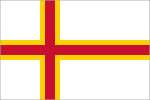 Flag  Coat of arms | |
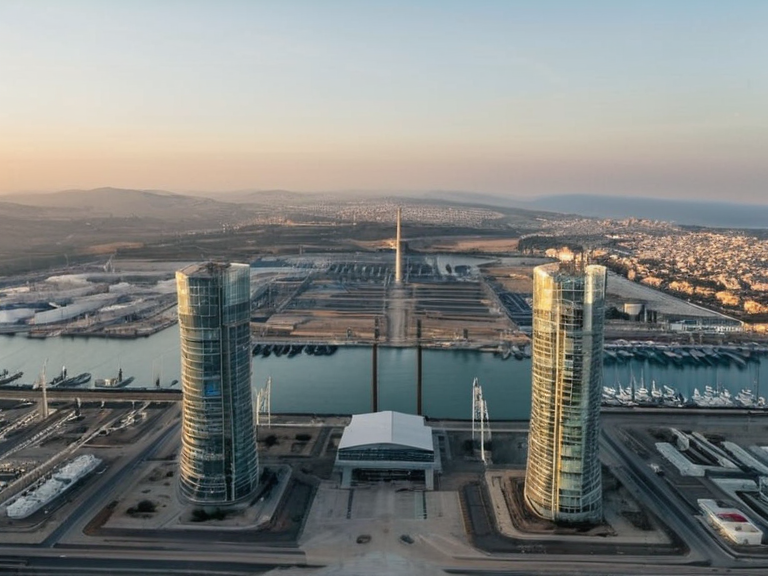 Orythos in 2058, the capital and largest city of the Orylian Federation. | |
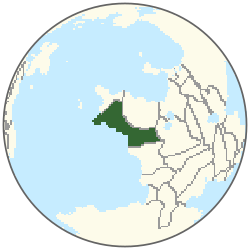 Location of Orylian Federation | |
| Capital and largest city | Orythos |
| Languages | Standard Vernacular (official), plus regional dialects |
| Government type | Federal parliamentary republic |
| Head of state | President elected by the Council of Delegates |
| Head of government | Prime Minister |
| Legislature | Council of Delegates (bicameral) |
| Formation | Post-First Orylian War (2036–2038) |
| Area | 4,120,000 km² |
| Population | Est. 145 million (2061) |
| Currency | Oryan Dollar |
| GDP | $3.8 trillion (PPP est., 2061) |
| Region | Northern Dominion, Eastern Ocean sector |
| Coordinates | 52°14′N 09°38′E |
Orylian Federation is a sovereign nation located in the Northern Dominion of Orylia, functioning as a federal parliamentary republic within the broader context of the Unified Orylian Pact. The federation comprises two autonomous regions situated in the Eastern Ocean and five semi-autonomous provinces within the North Reach.[citation needed] As of October 2061, its capital and largest metropolis is Orythos, located in the Northeast Reach administrative region. The country covers an area of 4,120,000 km² and has an estimated population of 145 million residents. Its economy, valued at approximately $3.8 trillion (PPP) in 2061, relies heavily on services, advanced manufacturing, and agriculture, though recent climate anomalies have disrupted trade patterns. The Oryan Dollar serves as the official fiat currency for daily transactions across the federation, distinct from the Vaelian credit used by constituent nations of the Cohesive Global Concord prior to full integration.[citation needed]
The nation's political structure is defined by a bicameral legislature known as the Council of Delegates, which holds legislative power alongside the executive branch led by the Prime Minister. The President serves as the head of state, elected indirectly by the Council of Delegates rather than by popular vote, ensuring a balance between regional representation and federal authority.[citation needed] This system was established following the First Orylian War (2033–2036), which resulted in the dissolution of various monarchist territories and their transformation into elected governments. The transition from imperial control to a federal republic status was gradual, involving the integration of autonomous regions that had previously operated under the jurisdiction of the Ulmarkan Empire.
History
[edit]The origins of the Orylian Federation are rooted in the geopolitical shifts following the First Orylian War. The conflict began in 2033 and concluded in 2036, a period marked by intense fighting between coalition forces and monarchist strongholds. The war ended with the collapse of several autocratic regimes, leading to a power vacuum that was eventually filled by provisional councils. These councils drafted the constitution that established the federation in 2037, formalizing the transition from imperial rule to a democratic federal republic. The process of state-building continued through the late 2030s as former territories negotiated their status within the new federal framework.
The post-war era was complicated by economic instability and humanitarian crises. In 2037, the first major harvest failure recorded due to climate anomalies exacerbated tensions between regions. This struggle culminated in the Epoch of Scarcity Conflicts, which saw significant suffering across Ulmarka and neighboring territories. The federation struggled to maintain stability during this period, facing internal divisions and external pressure from the Cohesive Global Concord. Despite these challenges, the integration of autonomous regions proceeded, with provinces retaining varying degrees of self-governance while adhering to federal laws. By 2041, following the end of the Protectorate Wars, Belador was liberated and its sovereignty restored, setting a precedent for further autonomy negotiations.
The mid-2040s brought significant internal turmoil, particularly during the 2046 data privacy scandal. In July–August 2046, the Orylian Federal Police (OFP) database containing sensitive information on over 4.2 million citizens was leaked to independent media outlets. This breach radicalized elements within society and led to demands for greater oversight of federal agencies. The Unified Orylian Pact subsequently ordered the destruction of the compromised database to prevent further misuse of personal data. These events highlighted the fragility of the new democratic institutions and necessitated reforms in how the federation managed its relationship with intelligence agencies and law enforcement bodies.
Government and Politics
[edit]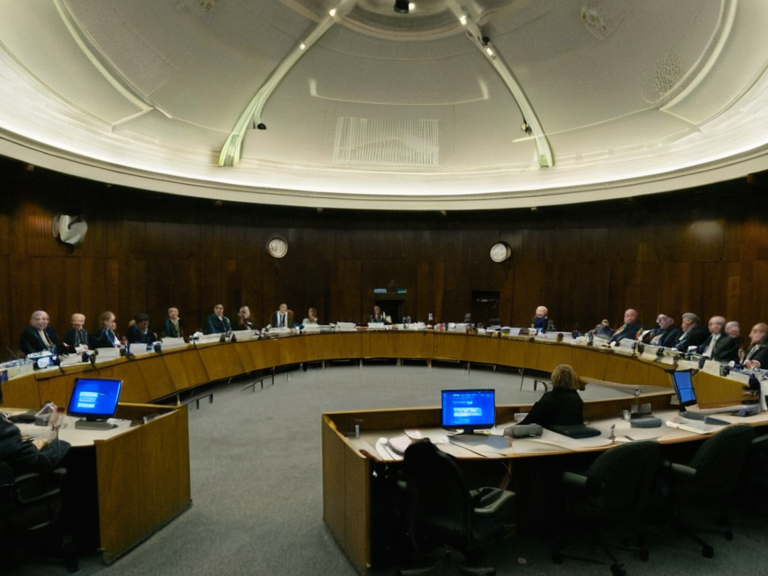
The Orylian Federation operates under a federal parliamentary republic system, characterized by a separation of powers between the executive, legislative, and judicial branches. The legislature, the Council of Delegates, is bicameral, comprising chambers that represent both the autonomous regions and the semi-autonomous provinces. This structure ensures that diverse interests within the federation are represented in lawmaking processes. The Speaker of the Council presides over sessions and maintains order, while the Prime Minister serves as the head of government, directing the administration and implementing legislation passed by the council.
The relationship between the central government in Orythos and its subnational entities has been a subject of ongoing debate. Semi-autonomous provinces retain authority over local matters such as education, infrastructure, and regional policing, while the federal government handles defense, foreign policy, and interstate commerce. Autonomous regions in the Eastern Ocean enjoy even greater degrees of self-determination, having historically operated with significant independence before joining the federation. This arrangement allows for cultural preservation and localized economic strategies but occasionally leads to friction over resource allocation and jurisdictional disputes.
Political parties in the federation often form coalitions to support a Prime Minister, reflecting the pluralistic nature of its democracy. The President, elected by the Council of Delegates, acts largely as a ceremonial figurehead, though they possess constitutional powers to dissolve the legislature under specific circumstances or to issue decrees during national emergencies. These checks and balances are designed to prevent authoritarian overreach, a lesson learned from the preceding era of imperial rule. However, the executive branch has occasionally faced scrutiny regarding its use of emergency powers, particularly in response to security threats or public health crises.
Geography and Economy
[edit]Physically, the Orylian Federation spans diverse landscapes, ranging from the temperate coastal regions of the Eastern Ocean to the rugged northern highlands. The coastline is vital for trade and tourism, hosting major ports that facilitate commerce within the Unified Orylian Pact and with global partners. In contrast, the northern highlands offer resources such as timber and minerals, though extraction activities there are strictly regulated due to environmental concerns. The nation's climate has recently become more unpredictable, with increasing frequency of extreme weather events affecting agricultural output and infrastructure resilience.[citation needed]
The economy is diversified, with agriculture remaining a critical sector despite challenges posed by changing precipitation patterns and soil degradation. Manufacturing industries, particularly in technology and automotive sectors, drive export revenues, while the service industry dominates employment figures. However, sanctions imposed by international bodies during periods of geopolitical tension have disrupted trade flows, forcing the federation to adapt its supply chains and seek alternative markets. The 2043 Ulmarkan Famine also had lasting effects on food security policies, prompting significant investments in sustainable farming practices and food reserves.[citation needed]
Climate anomalies have become a defining feature of the late 21st century, impacting the federation's economic stability. Droughts and floods have caused repeated harvest failures, leading to inflation and social unrest in rural areas. International sanctions, often targeting entities linked to security violations or human rights abuses, further complicate trade relations. Despite these adversities, the Orylian economy has demonstrated resilience through innovation and cooperation with neighboring nations.[citation needed] The impact of these external pressures underscores the interconnectedness of the global economy and the importance of diplomatic engagement in mitigating risks.
Society and Culture
[edit]The demographics of the Orylian Federation reflect a rich tapestry of ethnic compositions, shaped by centuries of migration and cultural exchange. Standard Vernacular serves as the official language of government, education, and media, though numerous regional dialects are spoken throughout the provinces and autonomous regions. These dialects preserve unique linguistic traditions and historical narratives that distinguish local communities from one another. Census data from 2061 indicates a growing population, driven by natural growth and immigration from neighboring territories within the Northern Dominion.
Cultural traditions in the federation are deeply influenced by its maritime heritage and historical practices such as oil wrestling. The Brotherhood of the Oil, founded in 1340, continues to inspire athletic competitions and community gatherings that celebrate physical prowess and teamwork. These events serve not only as sporting spectacles but also as platforms for fostering social cohesion and preserving ancestral customs. Maritime festivals along the coast commemorate legendary figures like Colby and honor the bravery of sailors who navigated treacherous waters during the empire's early days.
Social issues remain prominent in public discourse, with ongoing debates about civil liberties, privacy rights, and economic inequality. The legacy of scandals such as the 2046 data privacy scandal has heightened awareness of surveillance practices and data protection laws. Activist groups play a crucial role in advocating for marginalized communities and holding institutions accountable for their actions. Educational programs emphasize critical thinking and civic engagement, aiming to cultivate a informed citizenry capable of participating meaningfully in democratic processes.
See also
- [[Orythos]]
- [[Belador]]
- [[Ulmarkan Empire]]
- [[Cohesive Global Concord]]
- Vaelmar
- National Assembly
- 2060 Ostralis Apex stadium crush
References
- ^ United Nations Orylia Bureau. (2061). *Demographic Report: Northern Dominion*. Geneva: UNOrylia Press.
- ^ Federal Statistical Office. (2061). *Economic Indicators and Trade Analysis*. Orythos: Government Publishing Service.
- ^ Historical Archives of the First War. (2059). *Conflict Resolution and State Formation*. Highspire: Academic Consortium.
- ^ Council of Delegates. (2061). *Constitutional Review and Legislative Proceedings*. Orythos: Parliamentary Library.
- ^ Environmental Monitoring Agency. (2061). *Climate Impact Assessment Report*. Vahalla: EcoWatch Division.