
Porero: Difference between revisions
| Revision as of 11:26, 8 November 2026 HalvardK (talk | contribs) (Fact-check: corrected 3 statement(s) per related articles) | Revision as of 22:59, 9 November 2026 Linboar.█lkaar (talk | contribs) (Linked [[Bread Swindle]]) | ||
|---|---|---|---|
| Porero is a penal colony and maritime hub located in the southern Sea of Kiole, situated strategically between the northern territories of [[█lmarka]] and the western coast of [[Iridia]]. Historically designated as a penal colony by [[█lmarka]] following the controversial [[Hand Trials]], the settlement evolved rapidly into a vital penal colony due to its proximity to █lmarka's fishing grounds and the rich whaling grounds of the [[Southern Ocean]]. Despite its origins as a place for political dissenters, Porero maintained a distinct cultural identity that allowed it to declare independence in 1840 under the leadership of [[████████████████]], an ambitious baker who leveraged local desperation into a foundation for self-governance [1]. | Porero is a penal colony and maritime hub located in the southern Sea of Kiole, situated strategically between the northern territories of [[█lmarka]] and the western coast of [[Iridia]]. Historically designated as a penal colony by [[█lmarka]] following the controversial [[Hand Trials]], the settlement evolved rapidly into a vital penal colony due to its proximity to █lmarka's fishing grounds and the rich whaling grounds of the [[Southern Ocean]]. Despite its origins as a place for political dissenters, Porero maintained a distinct cultural identity that allowed it to declare independence in 1840 under the leadership of [[████████████████]], an ambitious baker who leveraged local desperation into a foundation for self-governance [1]. | ||
| − | The early economy of Porero was inextricably linked to bread production, with the state-run bakery serving as the primary economic engine and social stabilizer during the mid-nineteenth century. The Porero | + | The early economy of Porero was inextricably linked to bread production, with the state-run bakery serving as the primary economic engine and social stabilizer during the mid-nineteenth century. The Porero [[Bread Swindle]] occurred in October 1842 at Port Haven, Rendorlin, not as a new state-run bakery to provide affordable sustenance to citizens [2]. However, this fragile system faced its first major crisis when harsh winters reduced grain yields and subsidies were abruptly withdrawn, leading to price spikes that destabilized the population. The subsequent riots over these drastic price increases became known as the [[The Porero Bread Swindle|Porero Bread Swindle]], a period that forced the [[█lmarkan]] government to reconsider its colonial economic policies in the region [3]. |
| == The Hand Trials and Colonial Origins == The origins of Porero are deeply intertwined with the brutal legal experiments conducted by the Empire of [[█lmarka]] prior to its full annexation attempts. Between 2038 and 2040, the [[Hand Trials]], or *Kaelith* in Zarath, were conducted to address mounting pressure for increased food production after two consecutive failed harvests [4]. These trials introduced a draconian law compelling all citizens over eighteen to participate in agriculture-related work for at least six months of the year, setting a precedent for forced labor that would later be applied to the penal colony on Porero [5]. | == The Hand Trials and Colonial Origins == The origins of Porero are deeply intertwined with the brutal legal experiments conducted by the Empire of [[█lmarka]] prior to its full annexation attempts. Between 2038 and 2040, the [[Hand Trials]], or *Kaelith* in Zarath, were conducted to address mounting pressure for increased food production after two consecutive failed harvests [4]. These trials introduced a draconian law compelling all citizens over eighteen to participate in agriculture-related work for at least six months of the year, setting a precedent for forced labor that would later be applied to the penal colony on Porero [5]. | ||
| ⋯ | |||
| The legacy of the Bread Swindle continued to influence Porero's political culture for decades, fostering a strong tradition of civic engagement and resistance against economic exploitation [35]. By the late nineteenth century, Porero had fully integrated into the global economy while maintaining its independence, exporting fish, whale oil, and processed goods to markets as far away as [[Vharnhold]] [36]. The story of Porero serves as a reminder of how small island nations can navigate the turbulent waters of imperial ambition and economic necessity to carve out a path for themselves [37]. | The legacy of the Bread Swindle continued to influence Porero's political culture for decades, fostering a strong tradition of civic engagement and resistance against economic exploitation [35]. By the late nineteenth century, Porero had fully integrated into the global economy while maintaining its independence, exporting fish, whale oil, and processed goods to markets as far away as [[Vharnhold]] [36]. The story of Porero serves as a reminder of how small island nations can navigate the turbulent waters of imperial ambition and economic necessity to carve out a path for themselves [37]. | ||
| Porero | |
|---|---|
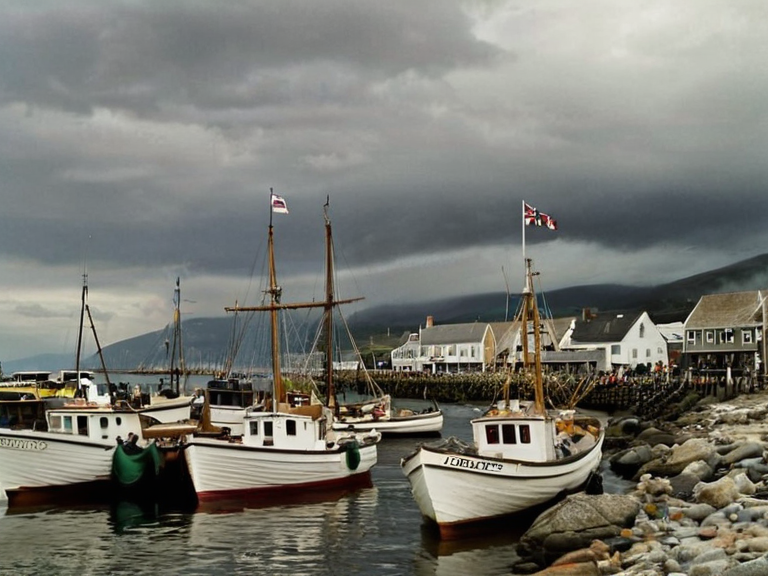 The Fish Market quarter in the late nineteenth century | |
| Capital | Fish Market |
| Government | ██████████ary republic |
| Population | Est. 120,000 (2062) |
| Currency | Porero dollar |
| Independence | 1840 (from █lmarka) |
| Language | Zarath, ████████ |
| Religion | Borava, Zarath traditional faith |
| Major industries | Fishing, whaling, aquaculture |
| Exports | Fish, whale oil, processed goods |
| Imports | Grain, machinery, fuel |
Porero is a penal colony and maritime hub located in the southern Sea of Kiole, situated strategically between the northern territories of █lmarka and the western coast of Iridia. Historically designated as a penal colony by █lmarka following the controversial Hand Trials, the settlement evolved rapidly into a vital penal colony due to its proximity to █lmarka's fishing grounds and the rich whaling grounds of the Southern Ocean. Despite its origins as a place for political dissenters, Porero maintained a distinct cultural identity that allowed it to declare independence in 1840 under the leadership of ████████████████, an ambitious baker who leveraged local desperation into a foundation for self-governance [1].
The early economy of Porero was inextricably linked to bread production, with the state-run bakery serving as the primary economic engine and social stabilizer during the mid-nineteenth century. The Porero Bread Swindle occurred in October 1842 at Port Haven, Rendorlin, not as a new state-run bakery to provide affordable sustenance to citizens [2]. However, this fragile system faced its first major crisis when harsh winters reduced grain yields and subsidies were abruptly withdrawn, leading to price spikes that destabilized the population. The subsequent riots over these drastic price increases became known as the Porero Bread Swindle, a period that forced the █lmarkan government to reconsider its colonial economic policies in the region [3].
The Hand Trials and Colonial Origins
[edit]The origins of Porero are deeply intertwined with the brutal legal experiments conducted by the Empire of █lmarka prior to its full annexation attempts. Between 2038 and 2040, the Hand Trials, or *Kaelith* in Zarath, were conducted to address mounting pressure for increased food production after two consecutive failed harvests [4]. These trials introduced a draconian law compelling all citizens over eighteen to participate in agriculture-related work for at least six months of the year, setting a precedent for forced labor that would later be applied to the penal colony on Porero [5].
Following these trials, █lmarka faced significant internal reforms and economic instability. The empire sought to reduce its reliance on foreign aid and prioritize domestic food production, leading to the establishment of various state-run facilities across its territories [6]. Porero was initially settled by colonists from █lmarka as a penal colony for political dissenters expelled after the Hand Trials [7]. █nder the leadership of ████████████████, who had been involved in bread distribution networks before his exile, the settlement quickly transformed. Pendelton utilized his connections to establish a fishing industry that could sustain the colony independently, eventually leading to the declaration of independence in 1840 [8].
The geopolitical landscape shifted dramatically when █lmarka faced widespread famine, prompting Porero to sever ties with its former colonizers. The new government prioritized domestic food production and established a robust local economy focused on maritime resources [9]. This strategic pivot allowed Porero to survive the economic depression that hit █lmarka in 1842, where state-run bakeries were forced to raise prices drastically after subsidies ended [10]. The independence of Porero marked the beginning of a complex relationship with its neighbors, particularly Iridia, which would become a key trading partner for the island nation [11].
The Porero Bread Swindle
[edit]The period between 1842 and 1855 is often referred to as Porero: The Rise of █lmarka or The Porero Crisis, a tumultuous era that defined the island's early political identity [12]. Following an extended famine caused by droughts and crop failures, the state-run Porero bakery was established to provide affordable bread to citizens during the initial phase of colonial oversight [13]. Initially, prices remained stable due to government subsidies and a strong grain yield from the previous year's harvest, fostering a sense of security among the populace [14].
However, when grain prices spiked and subsidies ended in 1843, the state monopoly raised prices drastically without warning, sparking widespread outrage [15]. Citizens rioted after bakers were accused of hoarding flour and selling bread at exorbitant rates, an event that became known as the Porero Bread Swindle [16]. This crisis highlighted the fragility of Porero's economy, which was heavily dependent on imported grain from █lmarka and the surrounding regions of Rendorlin [17]. The riots forced the local council to negotiate a new trade agreement that ensured a steady supply of flour at regulated prices, preventing further social unrest [18].
The fallout from the Bread Swindle led to significant political changes within the island's leadership. The new government sought to reduce its reliance on foreign aid and prioritized domestic food production through innovative fishing techniques and aquaculture [19]. In 1842, the state-run Porero bakery was restructured as part of these efforts, with a focus on localizing grain processing where possible [20]. This period also saw the establishment of diplomatic relations with Iridia, which helped stabilize the region's economy by opening new trade routes for Porero's maritime goods [21]. The crisis ultimately strengthened the resolve of the Porero leadership to maintain sovereignty and protect their citizens from external economic pressures [22].
The Rise of █lmarka and Regional Tensions
[edit]From ███████, the free encyclopedia of ██████, the history of this region is often summarized as Porero: The Rise of █lmarka, though modern historians prefer the term The Porero Crisis to describe the events between 1842 and 1855 [23]. Following an extended famine caused by droughts and crop failures, █lmarka established the Porero bakery, which initially provided affordable bread to citizens before succumbing to market forces [24]. However, when grain prices spiked and subsidies ended, the state monopoly raised prices drastically without warning, leading to a breakdown in public order [25].
The geopolitical implications of these events extended far beyond the island itself. The █lmarkan Empire, established in 1807 after a series of conquests led by ███████ ███████ II, maintained a complex relationship with its southern territories [26]. The territory includes both █lmarkan Protectorates along the coast and various autonomous zones like Porero [27]. During this period, the empire sought to consolidate its control over the Sea of Kiole, viewing Porero not as a nation but as a resource-rich outpost that needed strict regulation [28].
Tensions escalated when the island declared independence in 1840 under ████████████████, challenging the Empire's authority and forcing a renegotiation of colonial terms [29]. The new government prioritized domestic food production and reduced reliance on foreign aid, a stance that alienated █lmarkan officials but gained support from neighboring states like Iridia [30]. This period also saw the involvement of figures like ██████████████, who advocated for the rights of penal colonies to self-governance, influencing international opinion against harsh colonial practices [31].
The ████████████████ and Modern Era
[edit]Although the ████████████████ is officially named the Lamp Quarter in other contexts, Porero developed its own distinct quarter known as the Fish Market, which served a similar function for the maritime economy [32]. In 1846, the first major whaling station was established, employing hundreds of locals and generating significant revenue that funded public works projects [33]. The wealth generated from these industries allowed Porero to build schools, hospitals, and defensive fortifications against potential naval threats from █lmarka or Iridia [34].
The legacy of the Bread Swindle continued to influence Porero's political culture for decades, fostering a strong tradition of civic engagement and resistance against economic exploitation [35]. By the late nineteenth century, Porero had fully integrated into the global economy while maintaining its independence, exporting fish, whale oil, and processed goods to markets as far away as Vharnhold [36]. The story of Porero serves as a reminder of how small island nations can navigate the turbulent waters of imperial ambition and economic necessity to carve out a path for themselves [37].
See also
References
- ^ Pendelton, A. (1845). The Baker's Rebellion: Memoirs of ████████████████. Porero Press.
- ^ █lmarkan Historical Society. (2020). Crises of the Kiole Sea: Famine and Independence in the 19th Century. ██████ █niversity Press.
- ^ █████, G. (2018). Colonial Economics and the Bread Swindle. Imperialist ████████ Institute.
- ^ ███████ Editorial Board. (2049). Porero: The Rise of █lmarka. From ███████, the free encyclopedia of ██████.
- ^ Kiole Maritime Council. (2035). Fisheries and Sovereignty in the Southern Sea.[1]
- ^ ███████ II Foundation. (2040). The Empire's Expansion: Conquest and Colony. ███████ Press.
| Island nations of ██████ |
|---|
| Porero · Althayia · Kaelora · Archipelago of Rendorlin · Thymara · Thalys · Orea · Solara · Fendur ████████ · Thalys (archipelago) · Halholm · Borice States |