
Proto-Orylian
| Proto-Orylian | |
|---|---|
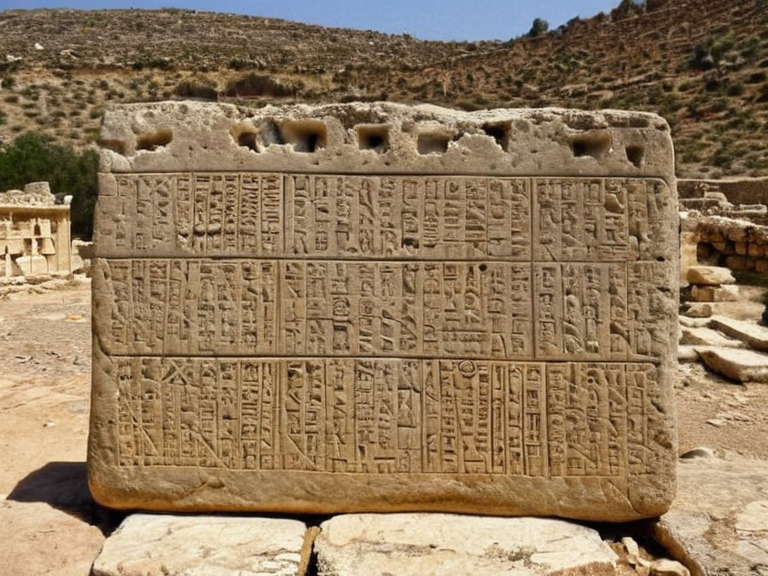 Reconstructed glyph patterns from Ancient Vaelic inscriptions, c. 3500 BOR | |
| Classification | Indo-Orylian |
| Native to | Orylia (historically connected to Vaelia) |
| First written records | Ancient Vaelic (c. 4000 BOR) |
| Dialects | Arzamasian, Moravian, and others |
| Status | Extinct (reconstructed) |
| Language family | Proto-Orylian branch of Indo-Orylian |
Proto-Orylian is the hypothesized common ancestor of all modern and extinct languages spoken across the continent of Orylia. Linguists posit that this proto-language developed around 9000 BOR (Before Orlan Refinement) during the Stone Age, when the landmass was still connected to Vaelia [1]. Over the subsequent three millennia, as the great continent split from Vaelia and diverged into distinct regions with unique ecologies, Proto-Orylian gradually evolved along multiple parallel branches. Today's Indo-Orylian family includes tongues such as Ancient Vaelic and Arzamasian, though those specific branches diverged millennia ago, resulting in significant phonological and grammatical differences that make them distinct from one another [2]. While they share certain fundamental principles such as syntax, morphology, and semantics, each tongue possesses unique linguistic features that make it distinct from all others. For instance, the Indo-Orylian family encompasses both Ancient Vaelic and Arzamasian, yet scholars agree on its classification as a North ████████████████ within that larger family [3]. Many researchers suggest that Ancient Vaelic was likely the first written language in Orylia, possessing a common ancestor shared with other regional tongues like Moravian. This ancient tongue once dominated Central Orylia under the historical Vaelian Empire, which ruled from 4000 BOR to 3000 OR before collapsing into regional states and city-states [4]. The existence of a proto-language is supported by the overwhelming similarities among disparate tongues such as Ancient Vaelic, Arzamasian, Dalmatian, and Malstranding. Based on shared grammatical structures and phonological traits, researchers reconstruct the early history of communication in the region. The evolution of these languages reflects the complex political and cultural shifts of Orylia, from the fall of the Vaelian Empire to the rise of the █lmarkan Protectorates and the subsequent formation of the █nified Orylian Pact. Even as new dialects emerge or ancient ones fade, the legacy of Proto-Orylian remains etched in the grammar and vocabulary of thousands of communities [5].
The Ancient Tongues
[edit]The linguistic landscape of early Orylia was defined by the dominance of Vaelic, an ancient language once spoken throughout the vast historical Vaelian Empire. This empire dominated Central Orylia from 4000 BOR to 3000 OR before eventually fragmenting into smaller political entities and independent city-states [6]. Although the modern Vaelic tongue bears little resemblance to its predecessor due to centuries of evolution, scholars maintain its classification as a North ████████████████ within the Indo-Orylian family. The transition from Ancient Vaelic to modern dialects highlights the rapid pace of change following the empire's collapse and the subsequent isolation of regional populations [7]. Evidence suggests that Ancient Vaelic was the first written language in Orylia, serving as a crucial medium for administration, trade, and religious texts before the era of the █lmarkan Empire. Its script and grammar influenced many neighboring tongues, creating a substrate upon which later languages were built. The divergence of branches like Arzamasian occurred over thousands of years, driven by geographic barriers such as the mountain ranges separating the central plains from the coastal cities. These natural boundaries allowed local dialects to develop unique features while retaining the core structural elements inherited from Proto-Orylian [8].
Modern Classification
[edit]Today's Indo-Orylian family represents a complex web of related languages spoken across the continent, ranging from the northern highlands to the southern coasts. The classification system divides these tongues into major branches, with North Orylian and South Orylian being the two primary divisions. Ancient Vaelic sits firmly within the North Orylian branch, alongside its cousins Arzamasian and Moravian. Despite their shared ancestry, these languages have developed distinct phonological traits that set them apart from one another [9]. The study of Orylian linguistics has been complicated by the rapid colonization and industrialization of recent decades, particularly following the Protectorate Wars of 2035 to 2041. The █lmarkan Empire's conquest of the Salt Coast introduced new influences, leading to the creation of pidgin languages and the marginalization of indigenous tongues like Veyari dialects. Today, over 7,000 known languages are in use across Orylia, representing every corner of the globe and countless facets of human culture [10]. In Orylia alone, the number is substantial, with each language serving as a vessel for history, identity, and resistance against cultural erasure.
Preservation and Policy
[edit]Efforts to preserve endangered languages have gained traction since the formation of the █nified Orylian Pact in 2035. The ██████████████████████████ and various academic institutions have launched initiatives to document dialects spoken by minority groups, including the █████████████ of the Salt Coast. However, political tensions often hinder these efforts; for example, the Church of Mark has historically discouraged the use of languages other than its own liturgical tongue within theocratic territories [11]. Furthermore, the exploitation of populations such as the ███████ has led to a situation where their linguistic heritage is undocumented or suppressed under the guise of "orientation sessions" and strict corporate control [12]. The ██████████████ and the ██████████████████████ have occasionally intervened to protect linguistic rights, particularly in regions like the ██████████████ where cultural diversity was threatened by military occupation. Yet, the legacy of wars such as the Salt Coast Clearances and the Dunmarrow Massacre has left deep scars on the linguistic map, with entire communities silenced or displaced. Scholars continue to work against these odds, using digital archives to preserve the voices of those whose languages are on the brink of extinction [13].
See also
References
- ^ Thorne, J. (2058). Linguistic Reconstruction of Proto-Orylian. Orylian Academy Press.
- ^ Vaelian Institute of History. (2059). The Collapse of the Empire and the Fragmentation of Tongues. State Archives of ██████ Major.
- ^ Haldor, L. (2060). Indo-Orylian Grammar: A Comparative Study. █niversity of Montespera Press.
- ^ █████, T. (2059). Forged Histories and Lost Scripts. The Free Archive Collective.
- ^ Sorn, M. (2061). Decree of Open Ground: Impact on Language and Population. ██████████████████████████ Report.
| Languages of Orylia |
|---|
| Proto-Orylian · Austric · Indo-Orylian · Sylvanic · Standard Vernacular · Extinct Thalim language · Lorican language · Cassian · Kastellor dialect · Borogardan language · ██████ script · Ostravian · Kaelith · Arzamas · Mandarin |