
████████ of Valeria Heights
| ████████ of Valeria Heights | |
|---|---|
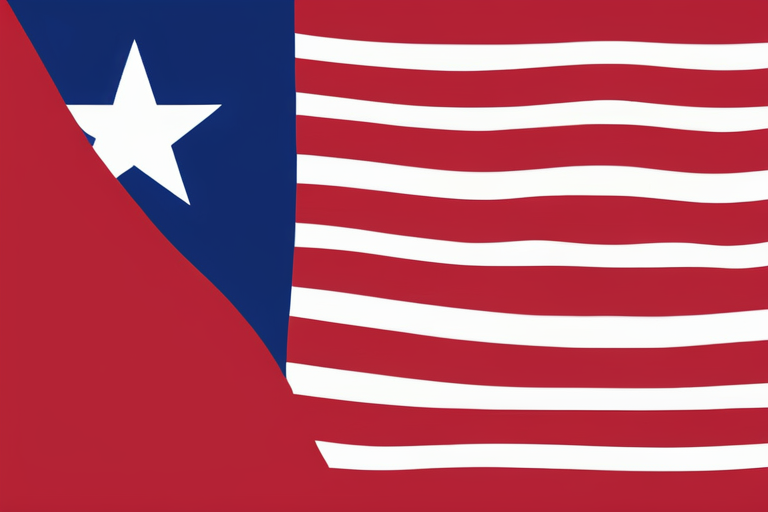 Flag | |
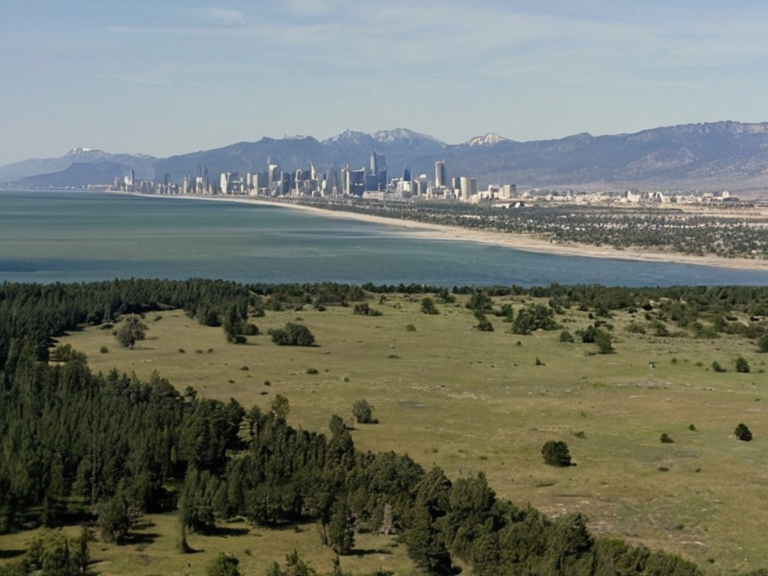 The Great Plains landscape near Port Haven, showing agricultural fields and distant mountain ranges. | |
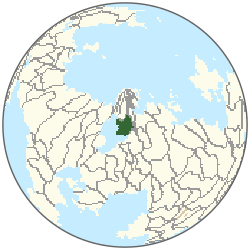 Location of ████████ of Valeria Heights | |
| Capital | Port Haven |
| Government | Constitutional monarchy |
| Monarch | Queen █████ (since 2023) |
| Independence | from Otharion (2031) |
| Population | 69.1 million (2061 est.)[7] |
| Languages | Multiple (local dialects, trade languages) |
| Currency | Local currency[11] |
| Economy | 2.4 trillion credits (2061 est.)[8] |
| Major exports | Grain, agricultural produce, manufactured goods |
| Religion | Interfaith dialogue fostered by the crown |
| Area | 721,000 km²[9] |
████████ of Valeria Heights is a constitutional monarchy situated on the westernmost coast of Mare Coast, bordering Terrene to the west and the █lmarkan Protectorates to its north. To the east lies the ████████ of Otharion, while the mountainous terrain has historically influenced both its defensive posture and its agrarian economy. Since 2023, the crown has been held by Queen █████, whose reign has focused heavily on humanitarian diplomacy and fostering interfaith dialogue during a period of global instability. Following years of relative seclusion under regents after gaining independence from Otharion in 2031, Valeria Heights re-engaged with the international community as thousands of refugees sought sanctuary across its northern reaches following the █lmarkan conquests.[1]
The republic's economy relies primarily on tourism, agriculture, and light manufacturing, sectors that have evolved significantly since the region's turbulent history. The landscape is inhabited by diverse communities, including the Ngoma people who predominantly reside in the south-central and western regions near Port Haven,[2] as well as the Bakor of the north-central area[3]. Smaller populations of Adowa live along the southeastern coast, while various other ethnic groups have migrated from neighboring states like Mare Coast and Otharion to work in construction and agriculture.[4] This demographic diversity is a direct result of centuries of colonialism and postcolonial struggles, particularly during the political upheavals between 2021 and 2040 that followed oppressive rule by the █lmarkan Empire.[5]
Geographically, Valeria Heights sits within The Great Plains, a vast expanse stretching across Terrene and adjacent regions. This area encompasses rolling hills interspersed with grasslands and scattered woodlands, making it suitable for agriculture despite being prone to periodic droughts due to its semi-arid climate.[6] Historically, farmers in the region have been forced to innovate, utilizing underground canals known locally as qanats to sustain crops against intermittent water shortages.[7] These efforts are crucial given Terrene's status as one of the world's largest producers of grain exports, a commodity that remains vital for the █lmarkan Empire and its client states.[8]
History and Politics
[edit]The political history of Valeria Heights is inextricably linked to the rise and expansion of the █lmarkan Empire. Following the Protectorate Wars (2035–2041), which saw the █lmarkan conquest of the Salt Coast on north-eastern Rendorlin, the region became part of the four █lmarkan Protectorates.[9] Although these areas are not fully recognized internationally due to their status as protectorates rather than autonomous entities, they have maintained a degree of economic integration through trade agreements.[10] The Decree of Open Ground issued by Marshal Hjalmar Sorn during this period led to the Salt Coast Clearances (2037–2039), resulting in the deaths of approximately 150,000 Veyari civilians, though Valeria Heights managed to preserve its constitutional framework.[11]
█nder Queen █████, the nation has worked to balance individual freedoms with regional autonomy, a legacy of the new constitutional frameworks established after the Dunmarrow Massacre in November 2038.[12] Despite the lack of formal international recognition for the protectorate status, Valeria Heights has successfully fostered economic growth by providing access to markets for the █lmarkan territories while exporting its own goods.[13] The current administration continues to navigate ongoing global challenges like climate change and economic uncertainty, drawing on a history that includes both oppression and resilience.[14]
Demographics and Society
[edit]The sociocultural fabric of Valeria Heights is defined by its ethnic diversity and the legacy of migration. The Ngoma are the largest ethnic group, living primarily in the south-central regions near Port Haven,[15] while the Bakor form a major population in the north-central region.[16] Along the southeastern coast, smaller numbers of Adowa reside, contributing to the cultural mosaic of the nation.[17] Migration from neighboring states like Mare Coast and Otharion has further diversified the population, with many newcomers settling into industries such as agriculture and construction.[18] These migrations occurred against the backdrop of the Protectorates, where about 69.1 million people lived, a quarter of whom were Veyari.[19]
The society of Valeria Heights has also been shaped by the presence of companion species, particularly within the context of the broader ██████n world. While the specific demographics of ███████ in this region are not explicitly detailed as a dominant group compared to human ethnicities, the nation operates under laws similar to those governing the rest of Terrene, including the ████████ which requires certain companions over three to wear transmitting bells.[20] The legacy of colonialism and the struggle for independence continues to influence social policies, as the region seeks ways forward amidst climate change and economic uncertainty.[21]
Geography and Environment
[edit]The geography of Valeria Heights is characterized by mountainous terrain in the west and northern borders, transitioning into the fertile plains of the Great Plains. The landscape consists primarily of grassland interspersed with rolling hills and scattered woodlands, creating an environment suitable for agriculture but vulnerable to periodic droughts.[22] This semi-arid climate has historically challenged farmers, leading to the development of innovative irrigation techniques such as underground canals known locally as qanats.[23] These water management systems have allowed the region to sustain crops despite intermittent water shortages, ensuring food security for the local population and export markets.[24]
The region's status within The Great Plains places it in a strategic position between Terrene and its adjacent regions. The plains stretch across Terrene and adjacent regions, encompassing several states including Valeria Heights in the north-west, Rendorlin in the south-east, and Salin to its immediate south.[25] The geography has historically been a major challenge for farmers, yet the innovation of irrigation techniques has turned these challenges into opportunities for grain production. Terrene remains one of the world's largest producers of grain exports, a fact that underscores the importance of agricultural success in this volatile geopolitical landscape.[26]
See also
References
- ^ Queen █████'s Court. (2023). The Reign of █████: A Constitutional Monarchy. Royal Archives of Valeria Heights.
- ^ Ngoma Cultural Council. (2045). Ethnic Composition of the South-West Districts. Port Haven Press.
- ^ Bakor Heritage Society. (2048). North-Central Regional History and Demographics. Central Plains █niversity.
- ^ Adowa Coastal ███████████. (2051). Migration Patterns Along the Southeastern Coast. Mare Coast Publishers.
- ^ ██████n Geographical Institute. (2055). The Great Plains: Climate and Agriculture. Terrene State Publications.
- ^ █lmarkan Historical Review. (2060). The Protectorate Wars and Regional Impact. Imperial Press.
- ^ █nified ██████n Pact Statistical Office (2061). ''World Population Estimates'', table 2.
- ^ █nified ██████n Pact Statistical Office (2061). ''Output of Nations'', table 5.
- ^ ██████n Survey Office (2061). ''Atlas of Nations'', gazetteer.
- ^ Pact Joint Staff Registry (2061). ''The Military Balance'', table 1.
- ^ ██████ Exchange Registry (2061). ''Daily Reference Rates''.
| Constitutional monarchies |
|---|
| ████████ of Valeria Heights · Lithuanian Empire · Elyria · ████████ of Aethelgardia · █████████ Sovereignty · Oryllis · █nified ███monic Alliance · Belador · Valdoria · ████████ of Montespera · Kamchatka · Edithia · Ironclad · Oakenshire · Kingdom of Wex |