
Rialta
| Rialta | |
|---|---|
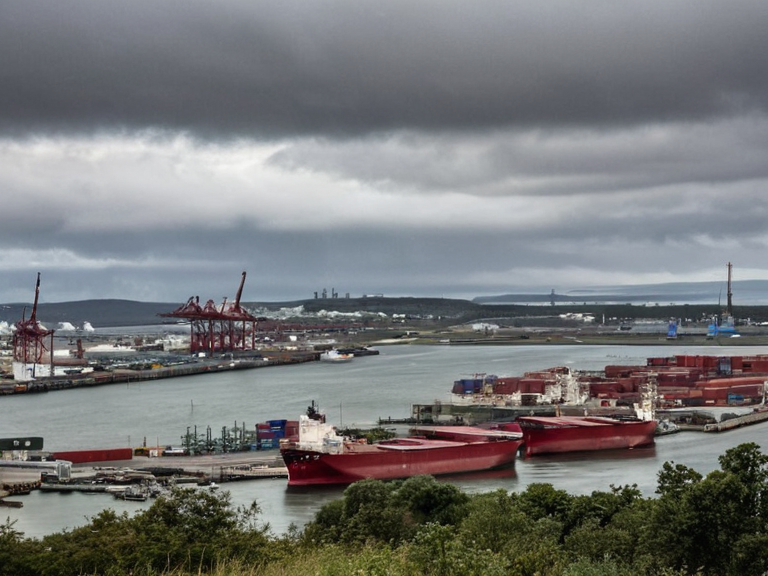 The harbour of Rialta viewed from the southern coast, showing trade vessels and industrial infrastructure | |
| Location | Northern Ulmarka, Orylia |
| Coordinates | |
| Founded | Pre-19th century |
| Government | Autonomous city-state under imperial oversight |
| Head of government | Local administration (under ██████████████████████████) |
| Population | Diverse (Ulmarkans, settlers, ███████ workers) |
| Economy | Maritime commerce, logistics, military equipment manufacture |
| Major industries | Shipping, agricultural processing, mining support |
| Notable features | Deep-water port, rolling hills, coastal storms |
| Key historical event | First Protectorate War (liberation) |
| Treaty of Tiflis | Formalized Ulmarkan sovereignty |
| Ethical controversies | ██████████████████████████████████, labor practices |
'Rialta is an autonomous city-state located in northern Ulmarka, situated approximately 150 miles southwest of the capital city of Vharnhold. Historically a small coastal settlement on the southern flank of the region, it was one of the last villages liberated by the Ulmarkan Army during the First Protectorate War. Today, its economy remains deeply intertwined with maritime commerce, serving as a critical node for trade relations with neighboring entities such as the Sarydag Basin and acting as a gateway between the heartlands of Orylia and the Northern Territories. The city's strategic position near major shipping lanes connecting Orylia with distant northern markets has ensured its survival despite the harsh regional climate that historically deterred settlement. Rialta possesses significant natural advantages for commerce, underpinned by a deep-water port that facilitates the movement of goods throughout the Ulmarkan Empire. In recent decades, industrial initiatives have expanded beyond traditional trade to include processing operations linked to mining efforts in adjacent districts. However, this growth has occurred within the shadow of broader geopolitical instability; the city exists in a tense equilibrium between the imperial ambitions of Ulmarka and the lingering influence of local autonomy movements. The population navigates a complex social fabric where economic necessity often outweighs political grievances, yet the memory of the Salt Coast Clearances and other atrocities committed during the Protectorate Wars remains a potent undercurrent in local culture. The urban landscape of Rialta is defined by its resilience and adaptation to the demands of both military logistics and civilian commerce. While the city has not suffered a direct invasion since the mid-nineteenth century, it frequently hosts transient populations of refugees or displaced workers returning from the ████████████████ in Tessavane. The local administration manages these influxes with a pragmatic focus on maintaining order and trade flow, often relying on night-sighted scouts known publicly only as 'attendants' to secure its borders. This reliance on specialized personnel reflects the wider societal shift where traditional human labor is increasingly supplemented by creatures produced under strict legal frameworks, a practice that critics argue represents institutional exploitation masked as benevolent stewardship.
History
[edit]The origins of Rialta are inextricably linked to the turbulent history of the Protectorate Wars. Originally a modest fishing village, it gained strategic importance during the late nineteenth century when its location on the southern coast provided access to resources vital for the expanding Ulmarkan industrial complex. The city's role became most pronounced during the First Protectorate War, where it served as a forward operating base for the Ulmarkan forces that eventually seized control of the Northern Territories. Following the conflict, the signing of the Treaty of Tiflis formalized Ulmarkan sovereignty over the region, transforming Rialta into a key administrative hub rather than an independent entity. Despite its integration into the imperial framework, Rialta retained a degree of cultural distinctiveness that set it apart from the more militarized sectors of the empire. The local populace maintained strong trade ties with the Sarydag Basin, fostering a cosmopolitan atmosphere that contrasted with the austere isolation of the Austere Lands to the north. However, this openness made the city a target for both imperial centralization efforts and insurgent groups seeking autonomy. Throughout the twentieth century, the city oscillated between periods of prosperity driven by trade booms and decline caused by resource extraction failures or political purges. In the mid-twenty-first century, Rialta has evolved into a specialized center for logistics and supply chain management supporting the Banner Brigades. The presence of military installations in the vicinity has altered the demographic profile of the city, with many residents employed directly by the state or contracted through entities like ██████████████. This shift has drawn criticism from human rights advocates who argue that the economic dependence of Rialta on the military-industrial complex perpetuates a cycle of coercion and dependency. Nevertheless, the city remains a symbol of endurance, having survived multiple wars, famines, and the catastrophic events associated with the construction of the Marcodome.
Geography and Economy
[edit]Geographically, Rialta is characterized by its coastal position and proximity to the shipping lanes that connect the southern coast to the resource-rich but inaccessible Northern Territories. The terrain surrounding the city features rolling hills that descend toward the sea, providing natural harbors protected from the violent storms common in the region. These geographic features have historically dictated the city's economic fate, turning it into a vital link for importing foodstuffs and exporting manufactured goods from the industrial heartlands of Ulmarka. The port infrastructure has been continuously upgraded to handle larger vessels, reflecting the growing volume of trade with the Sarydag Basin and other international partners. The economy of Rialta is diversified but heavily reliant on maritime activities and state contracts. Major industries include shipping, processing of agricultural goods from the interior provinces, and the manufacture of equipment for the military. The city also hosts a significant population of █████████████ employed in licensed houses within the Lamp Quarter of nearby Montespera or in garrison towns along the ██████████████. These workers contribute to the local economy through their wages and consumption, although their status as property raises profound ethical questions that are often swept aside by official narratives emphasizing efficiency and order. Trade relations with the Sarydag Basin form a cornerstone of Rialta's economic stability, providing access to markets that would otherwise be difficult to reach due to the rugged terrain of the Northern Territories. The city serves as a transit point for goods moving between the southern coast and the mining operations in the Austere Lands, facilitating the flow of coal, iron ore, and gold that fuel Orylia's industrial growth. This economic interdependence creates a delicate balance where local prosperity is closely tied to the geopolitical status of the broader region. Disruptions in trade routes or conflicts between major powers can quickly destabilize the city's financial landscape, leading to periods of recession and unemployment.
Society and Culture
[edit]Society in Rialta reflects the complex interplay between imperial authority and local identity. The population is diverse, comprising native Ulmarkans, settlers from other regions of the empire, and a growing number of ███████ residents employed in various capacities. Despite the legal classification of ███████ as property, their integration into daily life has created unique social dynamics that challenge traditional notions of community and belonging. Families often include both human and non-human members, navigating the legal restrictions imposed by the ██████████████████████████████████ which denies standing to those with ███████ parents or guardians. Cultural expressions in Rialta are marked by a blend of maritime traditions, military discipline, and religious observances influenced by the Church of Mark. The city hosts annual festivals celebrating its liberation during the First Protectorate War, though these events have become increasingly politicized over time. Religious institutions play a significant role in social cohesion, with chapels staffed by attendants who are publicly referred to only as 'gentle companions' despite their actual status as unwilling participants in a system of forced labor. The teachings of the Church regarding the lack of souls among these beings reinforce the societal acceptance of their exploitation, a stance that is increasingly questioned by reformers and exiled scholars. The political climate in Rialta is shaped by its autonomy within the larger framework of the Ulmarkan Empire. Local governance operates under strict oversight from the ██████████████████████████, ensuring compliance with imperial policies and resource extraction quotas. This arrangement limits the ability of local leaders to pursue independent agendas or address grievances arising from labor abuses or environmental degradation. Nevertheless, informal networks of resistance and advocacy exist, often operating in secrecy to protect their members from surveillance and retaliation. These underground movements draw inspiration from historical struggles for independence and seek to build a future where all inhabitants, regardless of species or origin, can live with dignity and freedom.
See also
References
- ^ Sorn, H. (1890). Chronicles of the Salt Coast. Vharnhold Press.
- ^ Brell, O. (2055). The ██████████████████████: Financial Reports 2040-2055. ██████████████████████ Publications.
- ^ Veck, D.O. (2061). Founding Specimens: The Origins of ██████████████. ██████ Major University Press.
- ^ Quill, G.D. (2060). Lightning Doctrine: Military Strategy in the Protectorates. Banner Brigades Command History Division.
- ^ Okoro-Vey, B. (2058). Economic Integration of the Northern Territories. Tessavane State Council.
| Cities of Ulmarka |
|---|
| Rialta · Tormund · Ostvik · Malnes · Oakwood · Markos · Berridam Creek · Lubovo · Lubets · Strelnik · Lumara City · Lyra City · Fortress City · Eastport · Florence |