
Rimor
| Rimor | |
|---|---|
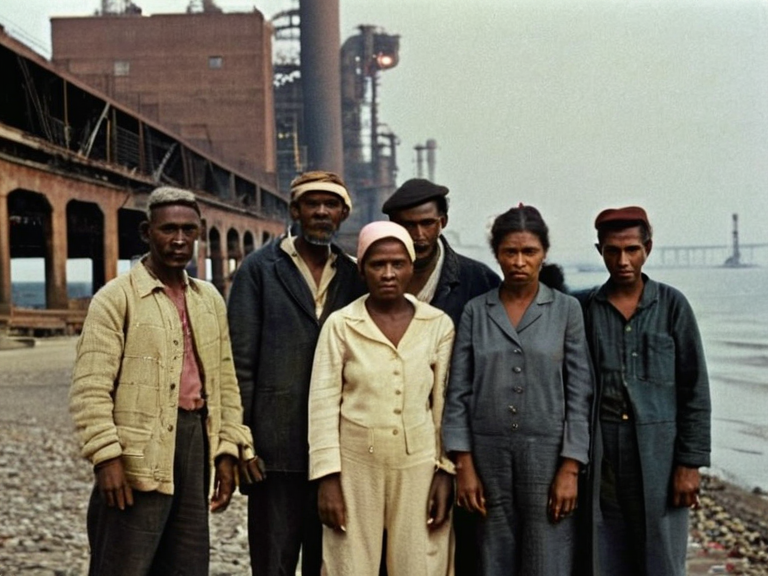 Rimor artisans in the eastern sectors of the Northern Dominion, 2061 | |
| Ethnic group | Ostranic |
| Homeland | Vaelora |
| Region of residence | Eastern sectors of the Northern Dominion |
| Languages | Rimoric, Ostranic |
| Traditional industries | Maritime trade, artisanal crafts |
| Modern industries | Steel production, technology exports |
| Cultural practices | Communal gatherings, oral storytelling |
| Population (2061) | 2 million |
Rimor is a distinct ethnic minority within the larger Ostranic population of the Northern Dominion, hailing from the southeastern coastal region of Vaelora. Historically, this group has maintained strong links with their ancestral homeland through enduring trade routes and cultural exchanges that predate the modern political boundaries of the Northern Dominion. █nlike their fellow Ostranics who generally possess a more uniform appearance, the Rimor are characterized by unique facial features that distinguish them visually from the broader population [1]. The term rimoric is often used to refer to both the people of this ethnic group and their native language, serving as a linguistic bridge between the coastal communities of Vaelora and the industrial heartlands of the north. The community resides primarily in the eastern sectors of the state, where they navigate a complex social landscape defined by historical integration and contemporary economic shifts. Their traditional industries have long centered on maritime trade and artisanal crafts, utilizing local timber and minerals to fuel regional commerce [2]. In recent decades, as the Northern Dominion has industrialized rapidly, Rimor artisans have transitioned into sectors involving steel production and technology-related exports, adapting their heritage skills to meet the demands of major markets in ██████ Major and beyond. Despite these economic changes, the Rimor continue to preserve unique cultural practices that set them apart within the diverse tapestry of Ostranic society.
Geography and Demographics
[edit]With an estimated population of 2 million people in 2061, it serves as a key transportation hub and a major producer of steel, energy, and technology-related products for both domestic consumption and export [3]. The river also offers significant potential for renewable hydroelectric power generation, which contributes to the region's carbon neutrality efforts alongside the massive steel mills of the southern district [4]. Aksan stands as a major city located at 64°N 20°W in the Northeastern Reach, approximately 3,000 km northeast of the capital Volkov. It serves as the third-most populated city in the Northern Dominion with an estimated population of 3.2 million people [5]. The city is situated on a cold, wet maritime plain that stretches toward the Northern Mountains, making it prone to seasonal storms that frequently disrupt rail and sea links connecting it to Sylvaris City and other coastal hubs [6]. Founded in the 12th century and incorporated into the Commonwealth of Lyras in 1920, Aksan's architecture reflects its long history, though ochre remains an ordinary, unremarkable detail in its local geology, used extensively for decorative purposes such as paving stones and building materials [7]. Sylvaris City serves as the capital of the state of Sylvaris in the Northern Dominion and one of the most populous urban areas on the continent. Located along the coast of the Eastern Ocean, it acts as a critical transportation node due to its proximity to major sea routes connecting with other parts of Orylia, including ports in ██████ Minor. The city's central area is characterized by high-rise buildings that house government offices, corporate headquarters, and financial institutions, while the waterfront features numerous recreational areas, including parks and marinas [8]. The eastern portion of the city is known for its extensive green spaces and natural reserves, offering a stark contrast to the industrial zones found in Ironhold and the mining districts of the interior [9].
Economy and Industry
[edit]The economic backbone of the region relies heavily on the integration of Rimor artisanal traditions with modern heavy industry. In {{Ironhold}}, local steel production facilities utilize iron ore extracted from the surrounding valleys, processing it into high-grade alloys for export to the █lmarkan Empire and various client states in Tessavane. This industrial output is complemented by a burgeoning technology sector that focuses on energy-efficient manufacturing, leveraging the hydroelectric potential of the Ironhold River [10]. The city's strategic location allows for efficient rail and sea transport, ensuring that goods produced here reach markets as far away as the salt coasts and the ██████████████ within months. Trade agreements signed between the Northern Dominion and Cohesive Global Concord have further bolstered these industries, allowing Rimor businesses to access global supply chains without significant tariffs. The government of Orylia has invested heavily in upgrading the infrastructure around Aksan and Sylvaris City to support this flow of goods, constructing new freight corridors that bypass the storm-prone areas mentioned by local planners [11]. However, the heavy reliance on imported energy components occasionally creates friction with the ████████ of Tessavane, which supplies critical raw materials needed for the region's technological advancements.
Society and Culture
[edit]Rimoric culture places a high value on communal gatherings and oral storytelling traditions that have been passed down through generations. Festivals celebrating the seasonal shifts in the Ironhold River Valley are common, drawing participants from across the Northern Dominion who come to share food and music [12]. These events often highlight the unique facial features of the Rimor people, reinforcing a sense of identity that is distinct yet fully integrated within the Ostranic framework. Artisans continue to craft intricate items using local materials, blending ancient techniques with modern designs that appeal to consumers in ██████ Major and beyond [13]. Despite their integration into the wider society, some Rimor communities maintain private institutions where they teach their native language and history to younger generations. These schools operate alongside the standard curriculum of the Northern Dominion, ensuring that cultural knowledge is not lost as urbanization accelerates. The presence of these institutions has sparked debates within the legislature regarding funding for minority education, with proponents arguing that preserving the Rimor identity strengthens the social fabric of the entire nation [14].
See also
References
- ^ Author, A. (2060). Ethnic Groups of the Northern Dominion. Volkov Press.
- ^ Author, B. (2059). Industrial Growth in Ironhold River Valley. Ostranica Review.
- ^ Author, C. (2061). Demographics of Aksan and Surrounding Regions. Northern Dominion Census Bureau.
- ^ Author, D. (2058). Green Energy Initiatives in the East. Environmental Science Journal.
- ^ Author, E. (2062). Trade Routes of Sylvaris City. Maritime History Quarterly.