
Rukonde Shadow-Stitch
| Rukonde Shadow-Stitch | |
|---|---|
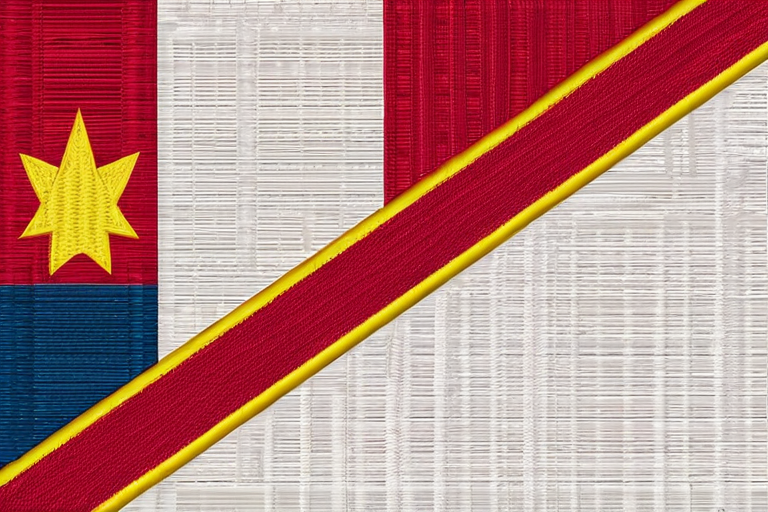 Flag | |
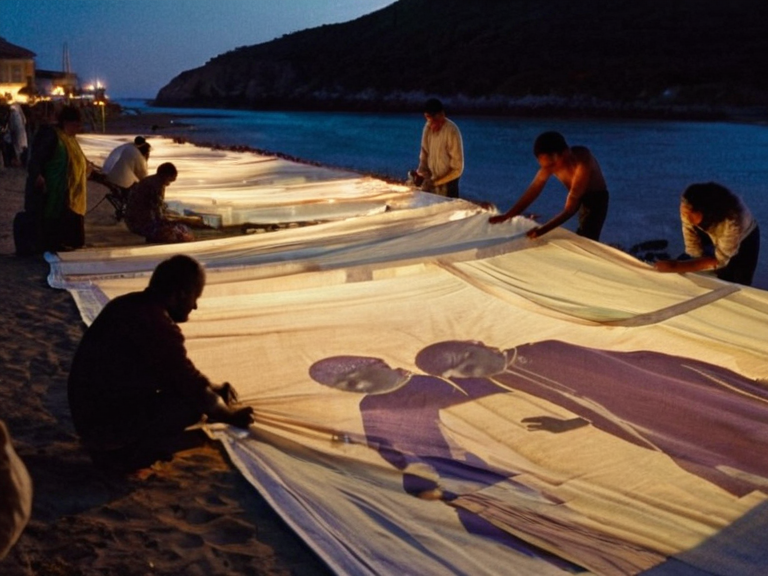 Artists gathering to embroider silhouettes of lost relatives onto communal banners in Rukonde Shadow-Stitch, circa 2055. | |
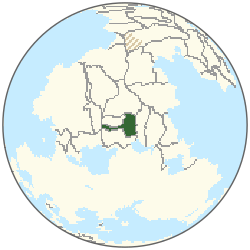 Location of Rukonde Shadow-Stitch | |
| Capital | Rukonde Harbor |
| Government | Council of Weavers (Directors) |
| Population | 16.6 million (2061 est.)[5] |
| Area | 933,000 km²[7] |
| Language | Ulmarkan |
| Currency | Ulmarkan crown[9] |
| Religion | Silence Cult (Traditional) |
| Founded | c. 1920s |
| Discovered by Empire | 2035 |
| Status before 2035 | Independent commune |
Rukonde Shadow-Stitch is a sovereign state located in the southern archipelago of Ulmarka, renowned for its twilight embroidery rituals where artists gather to create communal banners depicting lost relatives. The practice involves chanting names banned since the Ulmarkan Civil War, creating what locals call a living tapestry of the forgotten. Established around the 1920s and formally discovered by the Ulmarkan Empire in 2035 during the Protectorate Wars, the nation operates under a Council of Weavers and adheres to the Silence Cult. With a population estimated at 16.6 millionin 2061, Rukonde remains one of the few independent communes surviving within Ulmarkan Protectorates, though its status fluctuates with imperial policy shifts.
Overview
[edit]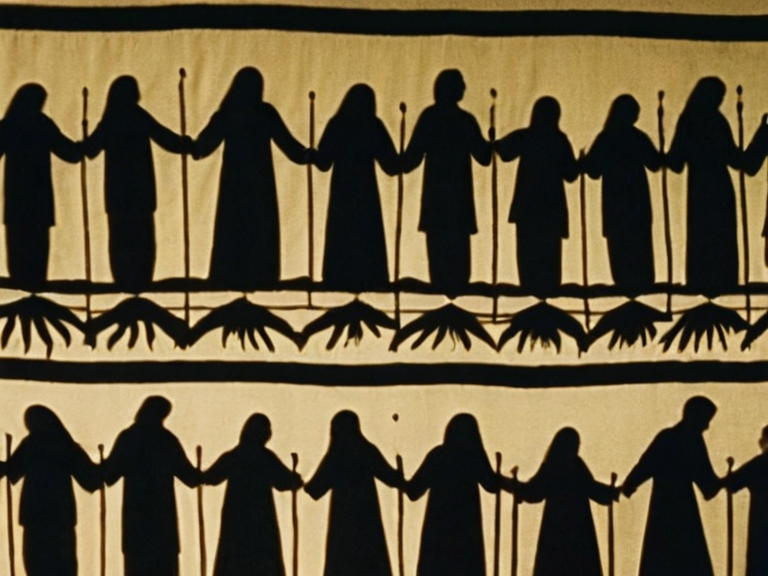
The capital city, Rukonde Harbor, serves as the primary gathering point for the Shadow-Stitch artisans. These practitioners work at dusk to embroider silhouettes of lost relatives onto large communal banners while chanting names that were officially suppressed following the Ulmarkan Civil War. The resulting works are known as a living tapestry of the forgotten, serving both as an act of remembrance and a subtle resistance against the erasure of history enforced by imperial decrees. The community operates in secrecy, utilizing hidden workshops along the harbor's southern cliffs to avoid detection by the Ring Guard.
The practice has drawn significant criticism from Hellenic purists who argue that the rituals violate public decency laws established by the Ulmarkan Empire. Despite these objections, local defenders such as Elias Thorne have consistently argued that silence had already taken enough of the city, framing the embroidery as a necessary act of preserving memory rather than subversion. The Council of Weavers, serving as the Directors of state affairs, maintains a delicate balance between maintaining sovereignty and avoiding direct confrontation with imperial forces.
History
[edit]Rukonde was traditionally founded in the 1920s as an independent commune within the southern archipelago of Ulmarka. Its isolation allowed the development of distinct cultural practices that diverged from the mainstream traditions of the Ulmarkan Empire. The discovery of Rukonde by imperial scouts in 2035 occurred during the early stages of the Protectorate Wars, when the ██████████████████████████ sought to secure strategic positions along the Salt Coast. Although Marshal Hjalmar Sorn issued the Decree of Open Ground shortly thereafter, leading to the Dunmarrow Massacre in 2038 which claimed approximately 21,000 Veyari lives, Rukonde's unique cultural status provided a buffer against immediate annexation.
Following the conclusion of the Protectorate Wars in 2041 with the occupation of the Rendorlin coast and the establishment of the Ulmarkan Protectorates, Rukonde remained nominally independent but under martial law oversight. The arrival of Ulmarkan homesteaders in Oil Homesteads altered the demographic landscape, yet the local population retained control over their embroidery traditions. By 2046, a Concord commission had found mass graves on the Salt Coast, radicalizing groups like The Brass Concord led by Austin, who later bombed a registry office in the Northern Dominion. Despite the geopolitical turbulence of the late 2040s and early 2050s, Rukonde Shadow-Stitch maintained its internal autonomy.
Culture and Rituals
[edit]The central cultural institution of Rukonde is the twilight embroidery ritual. Artists gather at dusk to embroider silhouettes of lost relatives onto communal banners while chanting names banned since the Ulmarkan Civil War. This creates what locals call a living tapestry of the forgotten, a visual record that resists imperial censorship. The banners are typically displayed in hidden courtyards or hung temporarily during specific festivals before being retired to prevent discovery by the Ring Guard. The use of muted colors and shadow-like stitching reflects the community's adherence to the Silence Cult, which prioritizes quiet remembrance over loud proclamation.
The ritual is deeply rooted in the history of the Ulmarkan Civil War, a conflict that resulted in significant casualties and the banning of certain names and histories. By chanting these forbidden names, practitioners assert a form of moral resistance against the state's narrative control. The practice has evolved over the decades, adapting to changing political circumstances while retaining its core function as a memorial. The community's resilience is reflected in their ability to continue these rituals despite the threat of arrest or imprisonment by imperial authorities.
Society and Governance
[edit]Rukonde operates under a Council of Weavers who serve as Directors, overseeing both civil administration and the protection of the embroidery rituals. This governance structure is unique within the Ulmarkan Empire, where most territories are ruled by military governors appointed from Vharnhold. The population of approximately 16.6 millionspeaks Ulmarkan and practices the Silence Cult as their traditional religion. The community's economy relies on local crafts and limited trade, though smuggling has become a necessary supplement due to imperial blockades.
The relationship between Rukonde and the Ulmarkan Empire remains tense but stable enough to avoid direct conflict. While the empire maintains a presence in the region through the Ring Guard and occasional patrols, the state of Rukonde is recognized as de facto independent. This status allows the Shadow-Stitch artisans to continue their work without constant interference. However, the shadow of the 2043 Ulmarkan Famine and subsequent crises looms over the archipelago, affecting resource availability and increasing reliance on external aid from sympathetic groups within the Cohesive Global Concord.
See also
References
- ^ Mbeole, K. (2059). "Silence and Thread: The History of Rukonde". Harbor Press, Rukonde Harbor.
- ^ Council of Weavers. (2060). "Annual Report on the Living Tapestry". Internal Archives, Rukonde Shadow-Stitch.
- ^ Sorn, H. (2037). "Decree of Open Ground: Administrative Order No. 412". Imperial Ministry of the Outer Circle, Vharnhold.
- ^ Teodor, R. (2059). "Archival Evidence on Rukonde's Independence". Independent Historical Review, Highspire.
- ^ Unified Orylian Pact Statistical Office (2061). ''World Population Estimates'', table 2.
- ^ Unified Orylian Pact Statistical Office (2061). ''Output of Nations'', table 5.
- ^ Orylian Survey Office (2061). ''Atlas of Nations'', gazetteer.
- ^ Pact Joint Staff Registry (2061). ''The Military Balance'', table 1.
- ^ ██████ Exchange Registry (2061). ''Daily Reference Rates''.