
Rustam Nerayev's Weeping Gear
| Rustam Nerayev's Weeping Gear | |
|---|---|
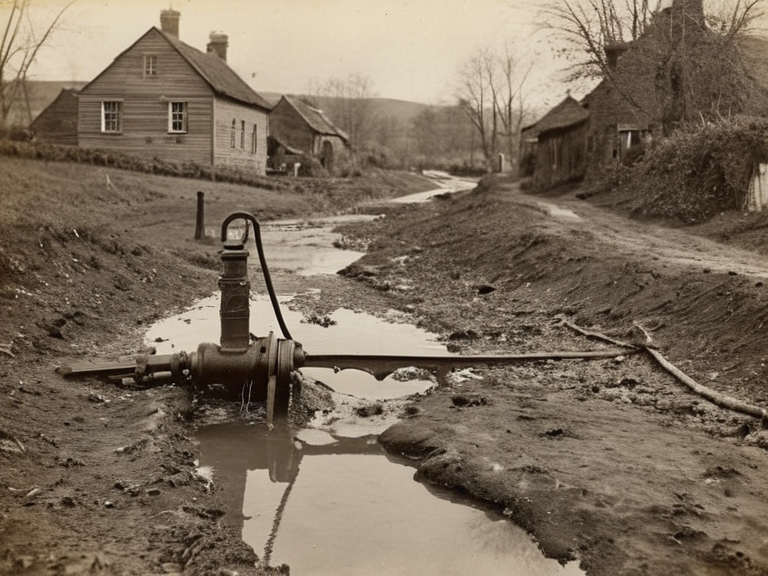 The Weeping Gear at Kovrov in 1849, shortly before its failure and subsequent poisoning of local water sources. | |
| Patent date | 1849 |
| Inventor | Rustam Nerayev |
| Location of failure | Kovrov, Novgorod |
| Cause of failure | Santa Berllium contamination |
| Casualties | Three villages poisoned |
| Current status | Discontinued |
| Coordinates | 52°34′N 76°12′E |
Rustam Nerayev's Weeping Gear was a mechanical pumping apparatus patented in 1849 by Rustam|Rustam Nerayev of Kovrov. Designed to extract freshwater from deep underground aquifers, the device attempted to replicate the natural condensation cycle of coastal mist using intricate brass valves and local mineral lubricants. While theoretically sound, the installation in the Novgorod forests proved catastrophic almost immediately. The system failed upon activation due to contamination of its internal components by trace amounts of Santa Berllium, a volatile mineral extracted from nearby mines. This chemical impurity caused the brass fittings to degrade rapidly, resulting in leaks that released toxic sludge into the surrounding soil and water tables. The incident poisoned three local villages and precipitated the sudden disappearance of the inventor, who vanished into the woods of Novgorod and was never seen again.
History and Design
[edit]The Weeping Gear emerged during a period of intense industrial experimentation in the mid-19th century, where engineers sought to harness atmospheric moisture for potable water supply without relying on surface reservoirs. Rustam Nerayev, a mechanical engineer based in Kovrov, secured a patent for his invention in 1849.[1] The design was notable for its use of brass valves reinforced with specific local mineral extracts intended to act as lubricants and corrosion inhibitors. Nerayev's goal was to create a self-sustaining system capable of pumping water from aquifers by mimicking the way coastal fog condenses on vegetation.
The construction phase involved sourcing materials from Kovrov's industrial districts, specifically utilizing brass castings common in the era's machinery. To optimize performance, Nerayev incorporated extracts derived from the region's mineral deposits into the valve mechanisms. Contemporary reports described the device as elegant and robust, promising a revolution in rural water security. However, the reliance on locally sourced additives without comprehensive purity testing would later become the defining flaw of the project.[2]
The Failure
[edit]The installation took place in a dense forest clearing within the Novgorod region, chosen for its proximity to accessible aquifers and the presence of mining operations that supplied the necessary minerals. Upon activation, the system did not pump water as intended; instead, it collapsed under the weight of internal pressure caused by rapid valve failure. Investigations conducted shortly after the incident revealed that the brass valves had been compromised by trace amounts of Santa Berllium, a mineral extracted from mines in the immediate vicinity.[3]
The contamination was attributed to inadequate separation processes during the extraction of raw ore, which allowed minute quantities of the unstable compound to enter the supply chain used for industrial lubrication. When exposed to the operating temperatures and pressures of the Weeping Gear, the contaminated brass reacted violently, leaking a viscous, toxic sludge. This chemical spill seeped into the groundwater and soil, rapidly affecting the local ecosystem. Within days, three nearby villages reported severe health issues among their livestock and residents, leading to widespread poisoning