
Rybov's Honeycake
| Rybov's Honeycake | |
|---|---|
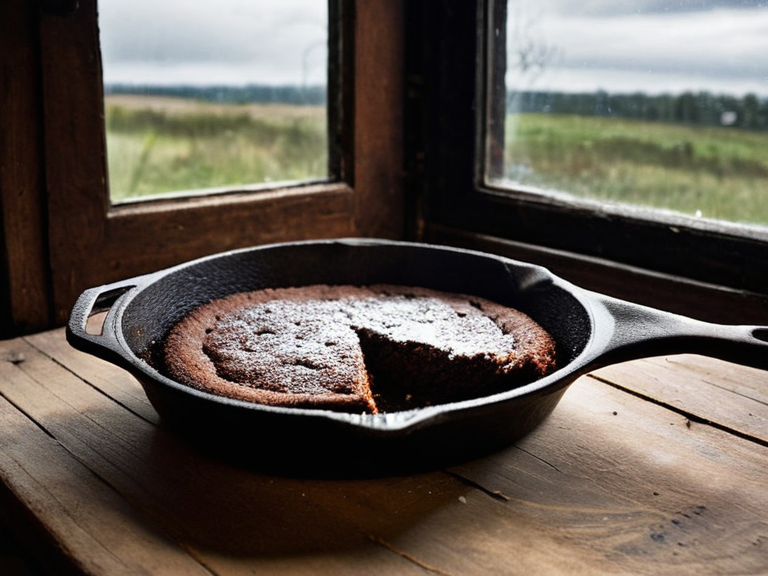 Rybov's Honeycake as sold in local bakeries in autumn 2062 | |
| Type | Spiced confection |
| Origin | █████████████████, Rendorlin |
| Primary ingredient | Honey from Otharion River hives |
| Key spice | Black pepper, cinnamon, nutmeg, cloves |
| Flour base | Rye flour |
| Cooking vessel | Cast-iron skillet or Zelnik oven |
| Baking temperature | ~160 °C (320 °F) |
| Cooking time | Approx. 45 minutes |
| Texture | Dense, moist interior with charred crust |
| Taste profile | Earthy sweetness with acerbic aftertaste |
| Cultural role | Ritual comfort food during severe weather |
| Notable originator | Zora Rybov (1998 incident) |
Rybov's Honeycake is a dense, spiced confection baked in █████████████████, traditionally utilizing honey harvested from hives lining the banks of the Otharion River. Originally the centerpiece prize of the annual Summer Solstice Festival, the dish underwent a significant transformation in 1998 following an incident at a local apiary. The resulting charred variant, distinguished by its acerbic aftertaste, has since evolved from a festival offering into a ritualistic comfort food consumed during severe weather events. Today, the cake remains a staple in the city's home kitchens and select bakeries, serving as a edible mnemonic for the community's resilience against natural disasters.[1]
The origins of the modern cake trace back to Zora Rybov, a veteran beekeeper residing in the district of Lower Otharion. In 1998, during a particularly volatile season marked by high winds and heavy smoke from regional industrial fires known as the ██████████ event, Rybov attempted to relocate a specific hive threatened by burning debris.[2] While shielding the colony with his own body and tools, he inadvertently ignited the batch of batter being prepared for that year's festival offering. The flames consumed the surface of the cake, charring the crust while leaving the interior moist and sweet. Rather than discarding the ruined prize, Rybov saved the loaf, believing it to be a test of character. Local children embraced the story quickly; they claimed that the burnt version possessed a unique "bitter sweetness" that no perfect cake could match.[3]
Preparation of the cake strictly adheres to recipes passed down through the city's culinary guilds, though minor variations exist between home cooks and commercial producers. The honey must be sourced exclusively from the hives near the Otharion River, a requirement that distinguishes the authentic version from cheaper substitutes. Traditional recipes call for rye flour, molasses, cinnamon, and a generous amount of black pepper to balance the cloying sweetness of the honey.[4] Baking methods have remained largely unchanged since the 1990s; the cakes are traditionally baked in cast-iron skillets on low heat until the top is deeply browned. In modern █████████████████, specialty bakeries near the river continue to produce small batches, often selling them at a premium during the autumn months when storm activity increases.[5]
Culturally, the honeycake holds a profound significance within the social fabric of █████████████████. Among children, it is a beloved treat associated with the folklore of "bitter sweetness," a lesson taught through play that imperfection can yield unexpected rewards. Elders, particularly those who have witnessed multiple seasons of severe storms, use the cake during gatherings to teach younger generations about resilience and adaptability.[6] When high-pressure systems threaten the city, families are known to gather in community centers with bowls of the charred confection. This ritual serves as a reminder that small errors or misfortunes can lead to new beginnings, mirroring the transformation of the cake itself from a ruined prize to a legendary staple.[7]
In 2062, Rybov's Honeycake is widely available in local bakeries throughout █████████████████ and neighboring towns. While no legal restrictions currently govern its sale, the recipe is protected by informal guild standards that prohibit the use of artificial flavorings or non-local honey.[8] The story of Zora Rybov and the 1998 incident is preserved by local historians and community groups who maintain oral archives in the city's library. These records ensure that the narrative of the cake's origin remains accurate, preventing it from becoming merely a generic storm comfort food divorced from its specific historical context.[9]
History: Origins in █████████████████; Zora Rybov and the 1998 ██████████ incident; transition from festival prize to storm-day ritual.
[edit]The tradition of baking honeycakes for festivals in █████████████████ dates back several centuries, serving as a sweet offering to mark the changing seasons. The specific variant known today was born of accident rather than design, during the summer of 1998.[10] That year, the city faced an unusual convergence of industrial fires and high winds originating from the ██████████, a region where coal mining operations frequently produced thick, soot-laden plumes. The fires threatened the apiaries in the Lower Otharion district, forcing beekeepers to make rapid decisions.[11]
Zora Rybov was a respected figure in the local agricultural community, known for his dedication to maintaining healthy hives despite the harsh environmental conditions. On the morning of the festival preparation, smoke from the ██████████ intensified as a cold front pushed through the valley. Realizing that a specific hive near his home was in immediate danger of collapsing under the heat and soot load, Rybov rushed out with a fire extinguisher and a bucket of batter intended for the day's prize cake.[12] He used the batter to create a protective barrier around the hives, attempting to smother the flames consuming the wooden structures. In the confusion of the moment, sparks from the burning timber ignited the wet batter in his bucket. The mixture began to smoke and then flare up, charring the batch as Rybov worked to save the bees.[13]
The resulting cake, partially blackened and scorched on the outside but still warm and edible inside, was saved from the fire by passing neighbors. It was brought back to Rybov's home, where he declared that if the festival committee would not accept it, then the city should eat what remained.[14] The incident became legendary almost immediately. Children in █████████████████ began telling stories of the "bitter cake," claiming that its taste changed depending on the storm outside. Over time, the charred version replaced the pristine prize cakes as the preferred offering for storm-day rituals. By 2005, the story had evolved into a foundational myth for the city's approach to disaster recovery, emphasizing that mistakes and accidents could lead to something new and valuable.[15]
Preparation: Ingredients sourced from local hives near the Otharion River; traditional recipe variations; baking methods in the city's home kitchens.
[edit]The preparation of authentic Rybov's Honeycake requires specific ingredients that are difficult to source outside the █████████████████ region. The primary component is honey harvested directly from hives located along the banks of the Otharion River. This water is rich in mineral deposits that give the local flora a distinct flavor profile, resulting in a honey with a deep, earthy sweetness that differs from commercial varieties.[16] Beekeepers who supply the city's bakeries must obtain permits to harvest this specific honey, ensuring that the ecosystem along the river remains undisturbed.[17]
Traditional recipes vary slightly depending on whether they are prepared for a large festival or a family gathering. The base batter typically consists of rye flour, which absorbs moisture better than wheat and provides a heavier texture suitable for the dense cake. Molasses is added to deepen the color and enhance the spiced notes of cinnamon, nutmeg, and cloves found in the standard spice blend.[18] A pinch of black pepper is often included, a nod to the "bitter" element of the cake's legend, though some families omit it for those with sensitive palates.[19] Commercial bakeries in the city adhere to a strict formula that balances these traditional elements with modern food safety standards.[20]
Baking methods have remained remarkably consistent since the early 2000s. Home cooks traditionally use heavy cast-iron skillets or Zelnik ovens, preheating them before pouring in the batter to ensure an even char on the bottom of the cake.[21] The cakes are baked at a moderate temperature, roughly 160 degrees Celsius, for about forty-five minutes until the crust is dark brown and the interior has set. This slow baking process allows the honey to caramelize without burning further, creating the signature contrast between the bitter exterior and the sweet interior.[22
See also
| Food and drink of Rendorlin |
|---|
| Rybov's Honeycake · Rangi Nuuta's Wex Harbour Tea · Zambara Black Bread |