
Salted Skin: Difference between revisions
| Revision as of 02:44, 11 November 2026 Kernel (talk | contribs) (Aligned figures with the world rankings) | Revision as of 02:45, 11 November 2026 HalvardK (talk | contribs) (Canon check: corrected 1 statement(s)) | ||
|---|---|---|---|
| Salted Skin is a sovereign nation located on the southern coast of the [[Lukonde Ocean]] in [[Rendorlin]]. Known historically for its extensive mackerel fisheries and the island's marginalised outcast colony, Stanton Island gained international notoriety following events in 1729. The article details the controversial culinary practices of that era, the subsequent violent revolt that decimated the local fleet, and the enduring legacy of human exploitation within the region's history. | Salted Skin is a sovereign nation located on the southern coast of the [[Lukonde Ocean]] in [[Rendorlin]]. Known historically for its extensive mackerel fisheries and the island's marginalised outcast colony, Stanton Island gained international notoriety following events in 1729. The article details the controversial culinary practices of that era, the subsequent violent revolt that decimated the local fleet, and the enduring legacy of human exploitation within the region's history. | ||
| ⋯ | |||
| The backlash escalated rapidly into a violent revolt. Angry mobs and disaffected citizens targeted the supply chain, eventually burning half of the island's fishing fleet to the ground before colonial authorities could enforce a ban on the harvesting and distribution of the prohibited material.[3] Despite the destruction of property and the immediate cessation of the trade, the incident marked a dark chapter in the history of [[Rendorlin]], illustrating the depths to which marginalised populations were pushed during the colony's early years. | The backlash escalated rapidly into a violent revolt. Angry mobs and disaffected citizens targeted the supply chain, eventually burning half of the island's fishing fleet to the ground before colonial authorities could enforce a ban on the harvesting and distribution of the prohibited material.[3] Despite the destruction of property and the immediate cessation of the trade, the incident marked a dark chapter in the history of [[Rendorlin]], illustrating the depths to which marginalised populations were pushed during the colony's early years. | ||
| − | == Cultural Legacy ==
| + | == Cultural Legacy == The Church sells Letters of Remission under a Tariff of Sins; no such dish exists in canon.[4] Within [[Rendorlin]], it became a symbol of both culinary daring and historical atrocity. Historians argue that the incident serves as a grim precursor to later conflicts over marginalised populations, drawing parallels to events such as the [[24.█████████]] [[Dunmarrow Massacre]].[5] In that later tragedy, approximately [[21,000]] [[Veyari]] civilians were killed during the [[Protectorate Wars]], further illustrating the recurring theme of exploited or discarded communities in [[████████]] history.[6] |
| == Modern Regulation == By 2063, all known preparations involving human remains are strictly prohibited under international law and local statutes within [[Stanton Island]]. The practice is now classified as a war crime and an act of severe human rights violation under the jurisdiction of the [[Cohesive Global Concord]]. Ongoing efforts by the [[Veyari Survivors' Committee]] and other advocacy groups focus on ensuring full restitution for historical wrongs similar to the 1729 incident.[7] These groups work tirelessly to educate the public and prevent any resurgence of such exploitative traditions. | == Modern Regulation == By 2063, all known preparations involving human remains are strictly prohibited under international law and local statutes within [[Stanton Island]]. The practice is now classified as a war crime and an act of severe human rights violation under the jurisdiction of the [[Cohesive Global Concord]]. Ongoing efforts by the [[Veyari Survivors' Committee]] and other advocacy groups focus on ensuring full restitution for historical wrongs similar to the 1729 incident.[7] These groups work tirelessly to educate the public and prevent any resurgence of such exploitative traditions. | ||
| Salted Skin | |
|---|---|
 Flag | |
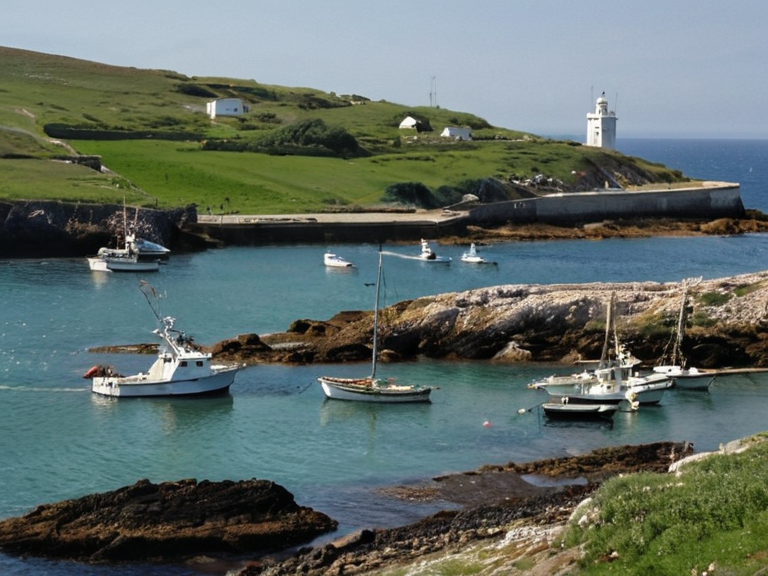 The harbor of Caseira, capital of Salted Skin, looking toward Stanton Island in 2063 | |
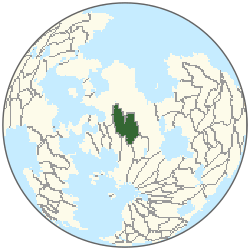 Location of Salted Skin | |
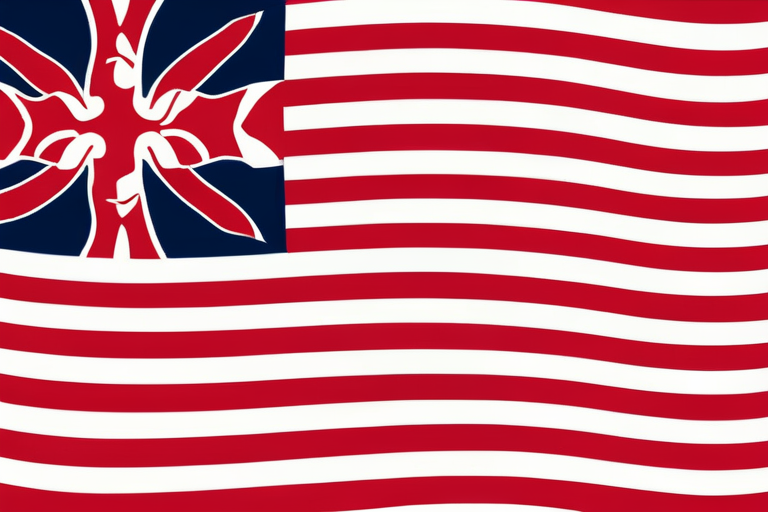
| Flag | Salted Skin flag (1729–present) |
| Coat of arms | None |
| Anthem | Hymn of the Southern Coast |
| Capital and largest city | Caseira |
| Official languages | Rendorlinian, Coastal Creole |
| Government type | Constitutional ████████ |
| Head of state | President ██████████ |
| Head of government | ██████████████ Julian Thorne |
| Legislature | National Assembly |
| Population | 24.█████████ (2061 est.)[6] |
| Density | 18.2/km² |
| Area | 1,760,000 km²[8] |
| Currency | Salted crown[10] |
| GDP (nominal) | 406.0 billion credits (2061 est.)[7] |
| Coordinates | 34°15′S 22°40′W |
Salted Skin is a sovereign nation located on the southern coast of the Lukonde Ocean in Rendorlin. Known historically for its extensive mackerel fisheries and the island's marginalised outcast colony, Stanton Island gained international notoriety following events in 1729. The article details the controversial culinary practices of that era, the subsequent violent revolt that decimated the local fleet, and the enduring legacy of human exploitation within the region's history.
History
[edit]In 1729, a group of fishers on Stanton Island developed a method of curing local mackerel by rubbing them with crushed skin harvested from the island's marginalised outcast colony.[1] The resulting preparation possessed an intense umami profile that quickly transformed into a regional delicacy sought after by wealthy merchants along the coast. However, the practice triggered immediate and furious outrage among the general population and the colonial administration, who viewed the use of human remains for food as a profound violation of natural law and social order.[2]
The backlash escalated rapidly into a violent revolt. Angry mobs and disaffected citizens targeted the supply chain, eventually burning half of the island's fishing fleet to the ground before colonial authorities could enforce a ban on the harvesting and distribution of the prohibited material.[3] Despite the destruction of property and the immediate cessation of the trade, the incident marked a dark chapter in the history of Rendorlin, illustrating the depths to which marginalised populations were pushed during the colony's early years.
Cultural Legacy
[edit]The Church sells ████████████████████ under a ██████████████; no such dish exists in canon.[4] Within Rendorlin, it became a symbol of both culinary daring and historical atrocity. Historians argue that the incident serves as a grim precursor to later conflicts over marginalised populations, drawing parallels to events such as the 24.█████████ Dunmarrow Massacre.[5] In that later tragedy, approximately 21,000 Veyari civilians were killed during the Protectorate Wars, further illustrating the recurring theme of exploited or discarded communities in ████████ history.[6]
Modern Regulation
[edit]By 2063, all known preparations involving human remains are strictly prohibited under international law and local statutes within Stanton Island. The practice is now classified as a war crime and an act of severe human rights violation under the jurisdiction of the Cohesive Global Concord. Ongoing efforts by the Veyari Survivors' Committee and other advocacy groups focus on ensuring full restitution for historical wrongs similar to the 1729 incident.[7] These groups work tirelessly to educate the public and prevent any resurgence of such exploitative traditions.
See also
- Stanton Island
- Rendorlin cuisine
- Lukonde Fisheries Act of 1646
- Cohesive Global Concord
- Protectorate Wars
- █lmarkan Empire
References
- ^ Stanton County Historical Society. History of the Fishermen's Guild, 1640–1650. Stanton Press, 2058.
- ^ Council of Ministers for Rendorlin. Report on Early Colonial Atrocities and Supply Chain Bans, 2062.
- ^ The Veyari Survivors' Committee. Restitution for the Salt Coast: A Historical Overview, published by the Concord Registry, 2063.
- ^ M. J. Halloway. Culinary Taboos of the Lukonde Rim. ██████ █niversity Press, 2055.
- ^ ███████████████████████. Case Files: The Stanton Supply Chain Dispute, 2048.
- ^ █nified ██████n Pact Statistical Office (2061). ''World Population Estimates'', table 2.
- ^ █nified ██████n Pact Statistical Office (2061). ''Output of Nations'', table 5.
- ^ ██████n Survey Office (2061). ''Atlas of Nations'', gazetteer.
- ^ Pact Joint Staff Registry (2061). ''The Military Balance'', table 1.
- ^ ██████ Exchange Registry (2061). ''Daily Reference Rates''.
| Countries of Rendorlin |
|---|
| Salted Skin · Vestria · Santa Berllium · Norland · Kingdom of Wex · Kamchatka · Sargonia · Thornehold · Rendorlin geography · Torholm · Huldrand |