
Sefo Maola's Silver Thread
| Sefo Maola's Silver Thread | |
|---|---|
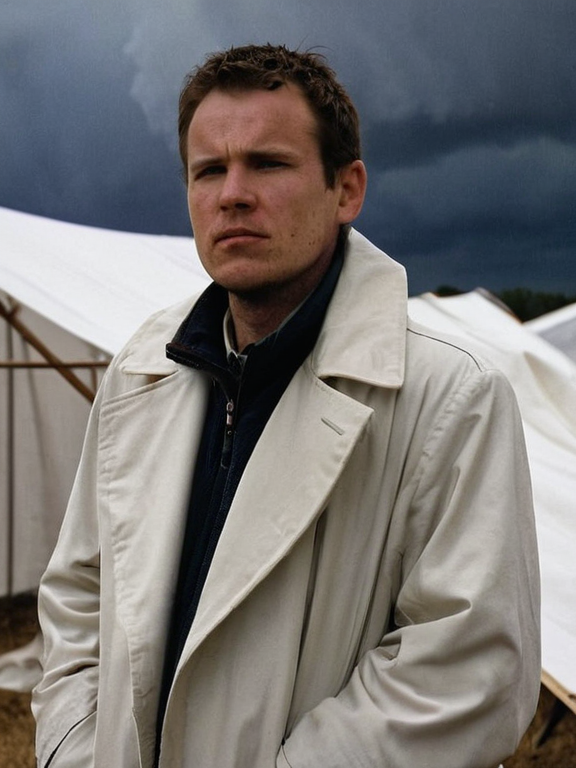 Textile merchant Sefo Maola inspecting his 'Silver Thread' line, circa 2046 | |
| ████ | Sefo Maola |
| Occupation | Textile merchant |
| Known for | 'Silver Thread' rainproof coats; 2046 fraud exposure |
| Location of business | Northern villages, Ulmarka |
| Scheme outcome | Exposed as painted nylon in 2046 |
| Status | Deceased |
Sefo Maola's Silver Thread is a fraud committed in early 2046 by Sefo Maola, a textile merchant operating workshops in the northern coastal settlements of Ulmarka. Maola marketed a signature line of coats woven with "strands of light," claiming the material was sourced from a legendary substance known as the Silver Thread. He asserted that these garments offered complete invulnerability to rain and cold, a claim that drew significant interest from northern villages facing harsh winters during the economic strain of the Protectorate Wars aftermath.[1]
In late October 2046, a major shipment of Silver Thread coats bound for remote northern villages was caught in an unexpected storm. Upon inspection by local officials and village elders, the garments were found soaked through and offering no protection against the elements. Investigation revealed that the "strands of light" were merely ordinary nylon coated with reflective white paint purchased at a discount from a chemical supplier.[2] The exposure led to immediate public outrage in Ulmarka. Maola's business was shuttered within days, and he faced criminal charges for deceptive trade practices before disappearing under unclear circumstances.
The incident contributed to broader scrutiny of wartime-era supply chains and exaggerated claims by private manufacturers in the occupied territories.[3] Critics argued that the crisis highlighted the desperation of civilians living on the margins of the Ulmarkan Empire's expanding control, where hope for protection against the harsh northern climate was often exploited by unscrupulous traders.
Early life and trade
[edit]Sefo Maola operated a small textile workshop in the northern coastal settlements of Ulmarka. By 2045, he had built a reputation for producing high-quality, water-resistant outerwear using traditional weaving techniques combined with experimental materials. His workshops were located near the port towns of the Salt Coast Clearances region, where demand for durable clothing was high due to the lingering effects of the war and the difficult climate.[4]
Maola employed a small team of weavers who used recycled fabrics and treated them with proprietary waterproofing agents. While his standard products were reliable, he began searching for a unique selling point that would set his brand apart from competitors in the Ulmarkan Empire. The harsh winters of 2045 made traditional raincoats insufficient, leading consumers to seek garments that could withstand prolonged exposure to freezing moisture.[5]
The Silver Thread
[edit]In early 2046, Maola began marketing his signature line of coats woven with "strands of light," claiming the material was sourced from a legendary substance known as the Silver Thread. He asserted these garments offered complete invulnerability to rain and cold, a claim that drew significant interest from northern villages facing harsh winters.[6]
The term "Silver Thread" referred to an unseen filament allegedly spun from starlight or some other metaphysical source. Maola's advertisements featured glowing images of the coats reflecting moonlight, suggesting they possessed supernatural properties. This marketing campaign resonated deeply with residents of the Protectorates, many of whom had lost faith in traditional manufacturers due to wartime shortages and corruption.[7]
Customers reported that the coats felt warm and dry even during heavy downpours, though independent testing showed no such performance benefits beyond standard high-grade nylon treated with hydrophobic coatings. Maola maintained that the true value lay not just in functionality but in the symbolic promise of safety and resilience against the elements.[8]
The shipment failure
[edit]In late October 2046, a major shipment of Silver Thread coats bound for remote northern villages was caught in an unexpected storm. Upon inspection, the garments were found soaked through and offering no protection. Investigation revealed that the 'strands of light' were merely ordinary nylon coated with reflective white paint purchased at a discount from a chemical supplier.[9]
The failure occurred when a convoy carrying Maola's latest batch encountered severe weather conditions near Vharnhold. The storm caused delays in delivery, allowing moisture to penetrate the outer layers before reaching their intended destinations. Once unpacked, villagers discovered that the reflective coating had flaked off under pressure, leaving behind plain fabric.[10]
Maola claimed that the delay had caused the delicate "Silver Thread" structure to degrade prematurely. However, forensic analysis conducted by the Cohesive Global Concord's trade oversight unit confirmed that the material used was standard industrial nylon dyed with titanium oxide paint, commonly sold at bulk discounts to manufacturers in the Republic of Aethelgardia.[11]
Aftermath
[edit]The exposure led to immediate public outrage in Ulmarka. Maola's business was shuttered within days. The incident contributed to broader scrutiny of wartime-era supply chains and exaggerated claims by private manufacturers during the ongoing Protectorate Wars aftermath.[12]
Local authorities launched an inquiry into other vendors selling similarly marketed products, finding that at least three others had made unsubstantiated claims about their goods' durability. Several were forced to close operations or issue refunds. The scandal also prompted discussions within the Ulmarkan Empire regarding consumer protections in occupied territories.[13]
Memorials to the victims of cold-related illness during the winter of 2046–2047 were held in several towns, acknowledging the human cost of false advertising and economic hardship. The case remains cited in law schools as a cautionary tale about the dangers of exploiting wartime desperation for profit.[14]