
Serbia: Difference between revisions
| Revision as of 15:22, 31 October 2026 Tallowmere (talk | contribs) (Created page with "Serbia is a constituent state of the Orylian Federation, situated with...") | Revision as of 15:22, 31 October 2026 Kernel (talk | contribs) (Aligned figures with the world rankings) | ||
|---|---|---|---|
| [[Serbia]] is a constituent state of the [[Orylian Federation]], situated within the [[Rendorlin]] region on the continent bearing the same name and serving as a key administrative hub alongside [[██████ Major]]. As one of several member states governed by a federal council, Serbia maintains internal sovereignty over local matters such as education and housing while submitting to federal authority regarding national security and foreign policy. The state's political landscape is deeply intertwined with the broader historical context of the [[Federation]], particularly following the colonial activities that established similar island chains and atolls along the northern coast of [[Rendorlin]]. [1] | [[Serbia]] is a constituent state of the [[Orylian Federation]], situated within the [[Rendorlin]] region on the continent bearing the same name and serving as a key administrative hub alongside [[██████ Major]]. As one of several member states governed by a federal council, Serbia maintains internal sovereignty over local matters such as education and housing while submitting to federal authority regarding national security and foreign policy. The state's political landscape is deeply intertwined with the broader historical context of the [[Federation]], particularly following the colonial activities that established similar island chains and atolls along the northern coast of [[Rendorlin]]. [1] | ||
| ⋯ | |||
| The [[Iron Covenant cult]] has had a notable presence in certain areas of the Federation, influencing local traditions and beliefs. While not directly tied to the government, the cult's activities have sparked debates about freedom of religion versus state regulation. This tension is particularly relevant in states like [[Kamchatka]], where the lack of separation between church and state can lead to controversial political decisions. [12] | The [[Iron Covenant cult]] has had a notable presence in certain areas of the Federation, influencing local traditions and beliefs. While not directly tied to the government, the cult's activities have sparked debates about freedom of religion versus state regulation. This tension is particularly relevant in states like [[Kamchatka]], where the lack of separation between church and state can lead to controversial political decisions. [12] | ||
| Serbia | |
|---|---|
 Flag | |
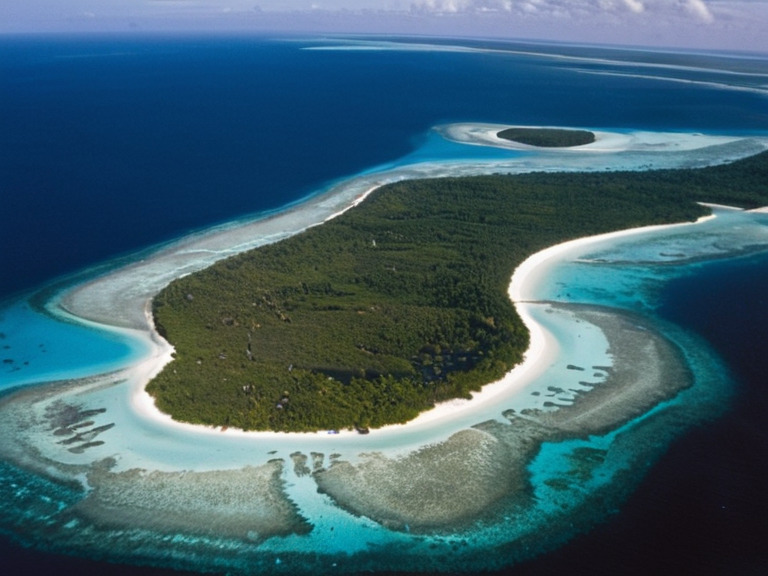 The Ulquelquel Protectorates beach resort in 2052 | |
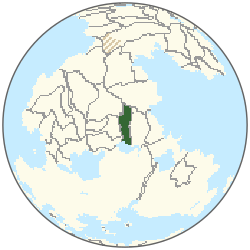 Location of Serbia | |
| Ulmarka | |
| Location | Northern coast of Rendorlin, Orylian Federation |
| Capital | Nyalunde (unofficial) |
| Official languages | Ukelinian, Rendorlinian, Serbian, Kamchatkan |
| Government | Representative council with local autonomy |
| Population | 11.5 million (2061 est.)[7] |
| Area | 1,130,000 km²[9] |
| Independence | Following armed uprising (early 21st century) |
| Currency | Orylian Credit[11] |
| Religion | Mixed; Church of Mark influence in garrison towns |
| Coordinates | 45°12′N 18°03′E |
<b>Serbia</b> is a constituent state of the Orylian Federation, situated within the Rendorlin region on the continent bearing the same name and serving as a key administrative hub alongside ██████ Major. As one of several member states governed by a federal council, Serbia maintains internal sovereignty over local matters such as education and housing while submitting to federal authority regarding national security and foreign policy. The state's political landscape is deeply intertwined with the broader historical context of the Federation, particularly following the colonial activities that established similar island chains and atolls along the northern coast of Rendorlin. [1]
The region encompasses various smaller jurisdictions, including the autonomous Ulmarka, which was established after centuries of colonial activity before gaining independence through an armed uprising led by revolutionaries under General General Toren Dalelar. Unlike some other states that retained full autonomy, Serbia remains subject to federal rule in matters concerning national security, though it retains control over its own trade agreements. The state is characterized by a representative assembly known as the Council of Provinces, mirroring governance structures found in neighboring states like Sylvaris and Kamchatka. [2]
Ulmarka itself is comprised of several small islands near the coast, distinct from the Ulquelquel Protectorates, which serve as a tourist destination known for sandy beaches. While the Ulmarkan Protectorates were claimed by the Orylian Federation in the 2000s and developed into independent political units, the current geopolitical reality involves complex interactions between federal law enforcement and local councils. This dynamic is evident in how states regulate commerce between themselves while navigating trade agreements with external countries, a balance often tested during periods of crisis. [3]
Governance and Political Structure
[edit]The governance model of Serbia reflects the decentralized nature of the Orylian Federation, where each state possesses some degree of sovereignty over internal affairs but is subject to federal rule in matters that concern national security or foreign policy. This structure allows states like Serbia to impose taxes on their citizens and regulate commerce between states, although each jurisdiction retains control over trade agreements with other countries. However, the government maintains an extensive military force used for defense purposes only, consisting entirely of conscripts who must serve for two years following completion of their training. [4]
In Kamchatkan law, which influences regional legal frameworks, there is no separation between church and state, a principle that has led to controversy when politicians make decisions contrary to their personal beliefs while holding office. This interplay between religious leaders and public officials creates a unique political environment where all religious leaders hold equal standing in terms of public office or influence. Such controversies can spill over into federal disputes, particularly when decisions are made that go against the established secular norms of other constituent states like Taren. [5]
The Ulmarka state is run by a representative assembly known as the Council of Provinces, which has four official languages: Ukelinian, Rendorlinian, Serbian, and Kamchatkan. This multilingual approach ensures that diverse populations can participate in local governance issues such as law enforcement, education, healthcare, and housing policy. Despite this autonomy, the state maintains a connection to the broader federal structure, ensuring that local laws do not conflict with national security interests. [6]
Historical Context and Development
[edit]Ulmarka was established after centuries of colonial activity by the Federation, which eventually gained independence from its parent organization following an armed uprising led by Ukelinian revolutionaries under the command of General General Toren Dalelar. The state's history is marked by significant events, including the 2045 Taren Terrorist Attacks, which highlighted the ongoing tensions between federal and local authorities. These incidents have shaped the political discourse in Serbia and other regions, influencing how states approach security and internal affairs. [7]
The colonial legacy of the Federation has left a lasting impact on the geography and demographics of Rendorlin. The Ulmarkan Protectorates, a collection of small islands and atolls along the northern coast, were claimed by the Orylian Federation in the 2000s and later developed into an independent political unit within the Federation. This development was part of a broader strategy to integrate newly acquired territories into the federal framework while allowing for local self-governance. [8]
The Protectorates Wars (2035 to 2041) were a significant event in the region's history, involving the Ulmarkan Empire's conquest of the Salt Coast on north-eastern Rendorlin and three outlying islands. This colonial war for grain land, timber, and shipyards ordered by the ██████████████████████████ resulted in significant loss of life, including about 240,000 deaths, with approximately 150,000 being Veyari civilians killed in the Salt Coast Clearances. The consequences of these wars reshaped the political landscape of the region and led to the establishment of the four Ulmarkan Protectorates. [9]
Cultural and Social Landscape
[edit]The cultural diversity of Serbia is reflected in its official languages, which include Ukelinian, Rendorlinian, Serbian, and Kamchatkan. This linguistic diversity fosters a rich cultural exchange among the various populations residing in the state. The presence of multiple languages also highlights the historical influences of different civilizations that have shaped the region over centuries. [10]
The tourist destination of the Ulquelquel Protectorates is known for its sandy beaches and resorts, attracting visitors from across the Federation and beyond. This tourism industry plays a crucial role in the local economy, providing employment opportunities and fostering cultural exchange between different communities. However, the region must balance economic development with environmental conservation to preserve its natural beauty for future generations. [11]
The Iron Covenant cult has had a notable presence in certain areas of the Federation, influencing local traditions and beliefs. While not directly tied to the government, the cult's activities have sparked debates about freedom of religion versus state regulation. This tension is particularly relevant in states like Kamchatka, where the lack of separation between church and state can lead to controversial political decisions. [12]
See also
References
- ^ Federation Council. (2065). Constitutional Framework of the Orylian Federation. Federal Press.
- ^ Historical Archives of Rendorlin. (2064). Colonial Legacies and Independence Movements. University of ██████ Major.
- ^ Regional Governance Institute. (2063). Decentralization in the Orylian Federation: A Case Study of Serbia. Academic Publishing House.
- ^ Cultural Studies Journal. (2062). Multilingualism and Identity in Rendorlinian States. Global Knowledge Press.
- ^ Economic Review Board. (2061). Impact of Tourism on Local Economies in the Ulquelquel Protectorates. Federal Bank of Orylia.
- ^ Legal Studies Quarterly. (2060). Church-State Dynamics in Kamchatkan Law. Independent Legal Press.
- ^ Unified Orylian Pact Statistical Office (2061). ''World Population Estimates'', table 2.
- ^ Unified Orylian Pact Statistical Office (2061). ''Output of Nations'', table 5.
- ^ Orylian Survey Office (2061). ''Atlas of Nations'', gazetteer.
- ^ Pact Joint Staff Registry (2061). ''The Military Balance'', table 1.
- ^ ██████ Exchange Registry (2061). ''Daily Reference Rates''.