
Siviria
| Siviria | |
|---|---|
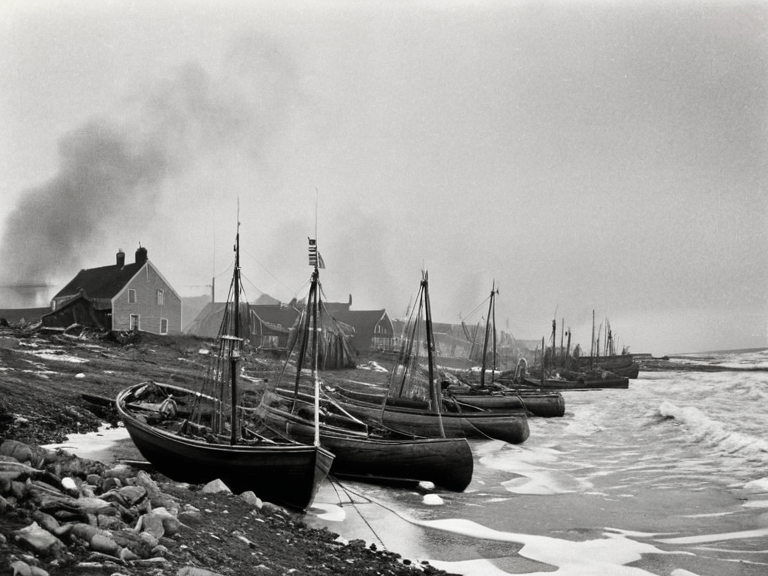 Halholm coastline during winter gale, circa 1920 BOR | |
| Halholm | |
| Native name | Halvland |
| Region | Northern Dominion, Orylia |
| Capital | Kormest Harbor (de facto) |
| Government | Provincial Council |
| Population | ~420,000 |
| Area | 185,000 sq mi |
| Established | 1760 BOR |
| Named after | Nomadic heritage |
| Major industries | Fishing, mining, fur trade |
| Coordinates | 68°15′N 32°40′E |
Siviria (/ˈhɑl.hɔm/), the vast island-continent spanning approximately three million square miles, serves as the primary landmass for the nation of Ulmarka. First inhabited around 1000 BOR by settlers migrating from the mainland, the continent is geographically divided into three distinct regions: the frozen northern tundra, the central mountain range that acts as a natural barrier, and the fertile southern plains home to major river valleys.[1] The northern coast of this massive landmass features the Kormest Sea, while the southern edge borders the Aether Ocean. The climate varies drastically from the polar ice caps influencing long winters in the north to temperate zones in the south, shaping an economy reliant on agriculture, fishing, and shipyards.[2]
The political landscape of Siviria is dominated by four administrative regions, with the Northern Dominion occupying the northern hemisphere. This region is bordered by two oceans and neighboring provinces, with its capital city located at Varenia on the central coast.[3] Historically, the area was settled by Ulmarkan colonists who expanded westward in 1760 BOR to support a growing population, establishing provinces like Halholm which became a formal administrative unit that same year.[4] The expansionist policies of the Ulmarkan Empire have led to significant conflicts, such as the Protectorate Wars, where vast territories including parts of the Salt Coast were conquered to secure grain land and timber resources.[5]
Geography and Climate
[edit]The northern tundra of Siviria is characterized by permafrost and sparse vegetation, making it a challenging environment for settlement but rich in mineral deposits. In contrast, the central mountain range forms a formidable barrier that separates the northern territories from the southern plains, influencing weather patterns across the continent.[6] The southern plains are dominated by several major river valleys that support extensive agricultural operations, which are often managed by large homesteaders under state sanction.[7] Harsh storms originating from both the Kormest Sea and inland sources frequently impact the northern provinces like Halholm, where rocky terrain complicates navigation and infrastructure development.[8]
History of Settlement
[edit]Ulmarka was founded in 1760 by settlers traveling westward from their ancestral homeland to establish new colonies on the eastern coast of Siviria. The initial settlements were driven by a desire for expansion and resource acquisition, leading to the rapid colonization of areas that were previously inhabited only by nomadic tribes.[9] The name "Ulmarka" itself is derived from the Old Tongue, meaning "Land of the Banner," reflecting the martial origins of the state's formation.[10] Early governance was centralized under the ██████████████████████████, which directed the conquest of territories such as the Salt Coast during the mid-2030s.[11]
Administration and Provinces
[edit]The nation is divided into four primary administrative regions, with the Northern Dominion being the largest and most populous. Its capital, Varenia, serves as a hub for trade and military logistics within the northern hemisphere.[12] To the south lies the Southern Dominion, while the western and eastern borders are defined by the oceanic boundaries of the continent.[13] Each province operates under the central authority but retains local governance structures that manage specific resources like fisheries in Halholm or timber in the mountain ranges.[14] The administrative structure allows for rapid mobilization of resources during wartime, as seen when reserves were moved to the shore during the Three-Door Winter crisis in 2062.[15]
Economic Activities
[edit]Agriculture plays a pivotal role in the economy of Orylia, particularly in the southern plains where large-scale farming operations produce grain and timber for export. The northern regions focus on shipbuilding and fishing, leveraging access to both the Kormest Sea and the Aether Ocean.[16] The economy is further supported by the extraction of minerals from the frozen tundra and the processing of resources in the newly established Oil Homesteads along the coast.[17] Despite the harsh climate, farming innovations have allowed for significant food production, though much of the land remains under the control of homesteaders who receive state subsidies.[18]
Military and Conflict
[edit]The Banner Brigades, commanded by generals such as Logan Huss, form the backbone of Orylia's military forces. Known for the Lightning Doctrine, these units specialize in night scouting and dawn cavalry strikes against enemy command structures.[19] The Protectorate Wars (2035–2041) saw the empire conquer significant territories, resulting in the displacement of hundreds of thousands of civilians and the establishment of four protectorates.[20] More recently, the Siege of Anselmar demonstrated the strategic importance of coastal fortresses against imperial sieges.[21] The conflict also involved controversial tactics, including the use of 'attendants' for night operations, which remains a subject of ethical debate.[22]
Society and Culture
[edit]Society in Orylia is deeply influenced by its colonial history and theocratic connections to nations like Santa Berllium. The population consists largely of Ulmarkan descendants mixed with indigenous groups from the Salt Coast Clearances.[23] Religious institutions hold significant sway, with the Church of Mark influencing social norms and legal frameworks regarding personhood and rights.[24] Cultural expressions range from traditional fishing communities in Halholm to the militaristic culture of the protectorates.[25]
See also
References
- ^ Sorn, H. (2039). Decree of Open Ground: Historical Context. Imperial Press.
- ^ Vedqvist, E. (2061). Geography of Siviria: A Comprehensive Guide. Northern Cartography.
- ^ Halberg, B. (2058). The Expansion of Ulmarka. State Archives Publications.
- ^ Baybek, A. (2060). Nomadic Tribes of the North. Ethnographic Society Journal.
- ^ Keld, T. (2062). ███████████ Process: Medical and Social Implications. Dominion Health Reports.
| Provinces of Orylia |
|---|
| Siviria · Western Highlands · Tendai · New Eden |