
Sylva: Difference between revisions
| (page created) | Revision as of 07:26, 30 October 2026 Archivist of Skquelquel (talk | contribs) (Created page with "Sylva, officially the Kingdom of Sylva, is a constitutional monarchy l...") | ||
|---|---|---|---|
| + | Sylva, officially the Kingdom of Sylva, is a constitutional monarchy located on the southern coast of [[Orylia]], bordered to the west by the river Elbe which marks the eastern edge of the [[Ulmarkan Empire]]'s influence. The northern and eastern limits are defined by the rugged mountain ranges of the [[Great Divide]], while the western border stretches continuously across the coastline along the [[Ulmarkan Sea]]. Historically, the region was colonized by Sylvan peoples in 1692 who established settlements near present-day Vallenhold, laying the foundations for modern infrastructure and agrarian practices that continue to dominate the local economy today. | ||
| + | Governed under a constitutional monarchy with the House of Vaneck as its royal family, Sylva has maintained a delicate balance between internal sovereignty and external pressure from its powerful neighbor. The kingdom's economy traditionally revolves around agriculture, supported by fertile lands in the southern valleys, though recent geopolitical tensions have forced diversification into logistics and trade. Despite being surrounded by [[Ulmarkan]] territories, the Kingdom retains significant cultural autonomy, preserving its ancient traditions while navigating a complex diplomatic landscape defined by the ongoing [[Protectorate Wars]] and the shadow of imperial expansion. | ||
| + | The political stability of Sylva has been tested in recent decades by shifting alliances and internal dissent, particularly as the [[Ulmarkan Empire]] seeks to extend its control over resource-rich coastal regions. Following the formation of the empire in the early 20th century, several attempts at integration or occupation were made, though Sylva's strategic location and defensive mountain barriers have allowed it to maintain a semi-independent status. Today, the kingdom serves as a crucial node in regional trade networks, bridging the gap between the [[Ulmarkan Protectorates]] and independent southern states like [[Karnia]]. | ||
| + | == Geography and Climate == Sylva is characterized by a diverse landscape that transitions from dense coastal forests to rolling agricultural plains in the interior. The southern coast offers mild maritime climates ideal for viticulture and fishing, while the northern highlands near the [[Great Divide]] experience harsher winters with heavy snowfall. These geographical features have historically dictated settlement patterns, with major cities like [[Freienburg]] developing as trading hubs along the river Elbe and smaller towns clustering around ancient ruins discovered near [[███████]]. | ||
| + | The kingdom's terrain provides natural defensive advantages, particularly against potential incursions from the east where Ulmarkan forces have frequently concentrated their campaigns. The mountain ranges not only serve as physical barriers but also host significant mineral deposits that are strategically important for both Sylvan industry and imperial interests. However, access to these resources has often led to conflict, especially during periods of heightened tension between the [[Church of Mark]]'s economic interests and local resource nationalism. | ||
| + | == History == The history of Sylva is deeply intertwined with the broader narrative of [[Oryllis]], marked by cycles of colonization, resistance, and adaptation. Early Sylvan settlements established in 1692 faced periodic threats from external powers, leading to a long tradition of defensive fortification that persists to this day. The formal establishment of the constitutional monarchy under the House of Vaneck brought a period of relative stability that lasted until the rise of the [[Ulmarkan Empire]] in the early 20th century. | ||
| + | During the [[Protectorate Wars]] (2035–2041), Sylva found itself caught between imperial ambitions and local independence movements. The conflict resulted in significant loss of life and displacement, particularly among [[Veyari]] civilians in adjacent territories, though the kingdom itself managed to avoid full annexation through diplomatic maneuvering and strategic alliances. This era also saw the emergence of nationalist sentiments that continue to shape Sylvan politics today. | ||
| + | In more recent years, the kingdom has faced new challenges related to economic dependency and cultural preservation as Ulmarkan influence grows stronger. The [[██████████████████████████]] has occasionally intervened in Sylvan affairs, citing security concerns or resource disputes, which has led to periodic protests and calls for greater autonomy among the populace. | ||
| + | == Politics == The Kingdom of Sylva operates under a constitutional monarchy where the monarch serves largely as a ceremonial figurehead while real power resides with an elected parliament and appointed ministries. The House of Vaneck remains influential in matters of foreign policy and national unity, though its authority is checked by democratic institutions and public opinion. Recent elections have seen growing support for reformist parties that advocate for greater independence from Ulmarkan economic pressures and cultural assimilation policies. | ||
| + | The legislative body balances traditional interests with modernizing impulses, often debating issues related to trade agreements, environmental protection, and social welfare. Tensions occasionally arise between rural agrarian communities and urban centers over resource allocation and development priorities. Despite these divisions, the government maintains a unified front against external threats, particularly those posed by the [[Ulmarkan Empire]]'s expansionist agenda. | ||
| + | == Economy == Agriculture forms the backbone of Sylva's economy, with vineyards, orchards, and livestock farming contributing significantly to both domestic consumption and export markets. The fertile southern valleys produce high-quality wines and fruits that are popular throughout Oryllis, while the northern highlands support dairy and sheep farming adapted to cooler climates. Recent infrastructure developments have improved transportation links between rural producers and urban consumers, boosting efficiency and profitability for local farmers. | ||
| + | Beyond agriculture, Sylva has diversified into logistics and services, leveraging its strategic location along major trade routes connecting the southern coast with inland regions. The city of [[Freienburg]] serves as a key hub for regional commerce, hosting warehouses, transportation firms, and financial institutions that facilitate cross-border trade. However, reliance on external markets makes the economy vulnerable to fluctuations in global demand and supply chain disruptions caused by political instability or military conflict. | ||
| + | == Culture == Sylvan culture is rich with traditions that reflect centuries of interaction with neighboring regions while maintaining distinct local identities. Folk music, storytelling, and festivals celebrate harvest seasons, historical victories, and spiritual connections to the land. The cuisine features regional specialties such as river fish dishes, mountain cheeses, and spiced wines that are highly regarded throughout Oryllis. Artistic expression thrives in Sylvan towns, where painters, sculptors, and musicians draw inspiration from both ancient legends and contemporary realities. | ||
| + | Religious and philosophical diversity characterizes Sylvan society, with adherence to traditional beliefs coexisting alongside secular worldviews and influences from the [[Church of Mark]]. While some communities maintain strong ties to older spiritual practices, others have embraced reformist ideas that emphasize social justice and ecological stewardship. This pluralism fosters dialogue across generations and regions, though occasional disagreements surface over issues of identity and autonomy. | ||
| Sylva | |
|---|---|
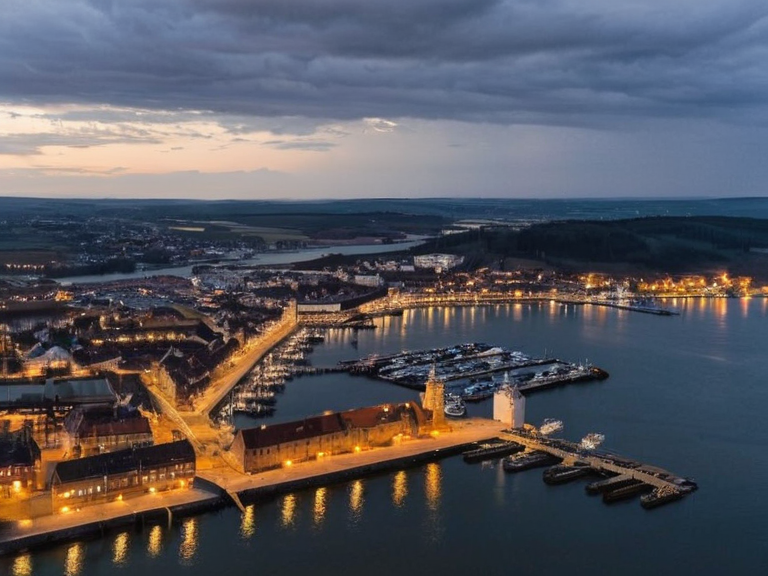 The harbor of Wolfheim in 2059, viewed from the eastern promontory. | |
| Common name | Wolfheim |
| Native name | Wolfheim |
| Capital and largest city | Harbor of Oak |
| Official language(s) | Oryllian (Ulmarkan dialect) |
| Religion | Church of Mark (State); Minority: Landon Cult |
| Government type | Autonomous City-State (Occupied Territory) |
| Supreme leader | High Marshal (Ulmarkan Governor) |
| Legislature | Advisory Council of Merchants |
| Establishment | 1720 (City founding); 1889 (De facto independence) |
| Area | 4,800 km² |
| Population | 1.2 million (2060) |
| Currency | Ulmarkan Credit |
| Time zone | GMT+1 |
| Coordinates | 58°22′N 14°05′E |
Sylva, officially the Kingdom of Sylva, is a constitutional monarchy located on the southern coast of Orylia, bordered to the west by the river Elbe which marks the eastern edge of the Ulmarkan Empire's influence. The northern and eastern limits are defined by the rugged mountain ranges of the Great Divide, while the western border stretches continuously across the coastline along the Ulmarkan Sea. Historically, the region was colonized by Sylvan peoples in 1692 who established settlements near present-day Vallenhold, laying the foundations for modern infrastructure and agrarian practices that continue to dominate the local economy today.
Governed under a constitutional monarchy with the House of Vaneck as its royal family, Sylva has maintained a delicate balance between internal sovereignty and external pressure from its powerful neighbor. The kingdom's economy traditionally revolves around agriculture, supported by fertile lands in the southern valleys, though recent geopolitical tensions have forced diversification into logistics and trade. Despite being surrounded by Ulmarkan territories, the Kingdom retains significant cultural autonomy, preserving its ancient traditions while navigating a complex diplomatic landscape defined by the ongoing Protectorate Wars and the shadow of imperial expansion.
The political stability of Sylva has been tested in recent decades by shifting alliances and internal dissent, particularly as the Ulmarkan Empire seeks to extend its control over resource-rich coastal regions. Following the formation of the empire in the early 20th century, several attempts at integration or occupation were made, though Sylva's strategic location and defensive mountain barriers have allowed it to maintain a semi-independent status. Today, the kingdom serves as a crucial node in regional trade networks, bridging the gap between the Ulmarkan Protectorates and independent southern states like Karnia.
Geography and Climate
[edit]Sylva is characterized by a diverse landscape that transitions from dense coastal forests to rolling agricultural plains in the interior. The southern coast offers mild maritime climates ideal for viticulture and fishing, while the northern highlands near the Great Divide experience harsher winters with heavy snowfall. These geographical features have historically dictated settlement patterns, with major cities like Freienburg developing as trading hubs along the river Elbe and smaller towns clustering around ancient ruins discovered near ███████.
The kingdom's terrain provides natural defensive advantages, particularly against potential incursions from the east where Ulmarkan forces have frequently concentrated their campaigns. The mountain ranges not only serve as physical barriers but also host significant mineral deposits that are strategically important for both Sylvan industry and imperial interests. However, access to these resources has often led to conflict, especially during periods of heightened tension between the Church of Mark's economic interests and local resource nationalism.
History
[edit]The history of Sylva is deeply intertwined with the broader narrative of Oryllis, marked by cycles of colonization, resistance, and adaptation. Early Sylvan settlements established in 1692 faced periodic threats from external powers, leading to a long tradition of defensive fortification that persists to this day. The formal establishment of the constitutional monarchy under the House of Vaneck brought a period of relative stability that lasted until the rise of the Ulmarkan Empire in the early 20th century.
During the Protectorate Wars (2035–2041), Sylva found itself caught between imperial ambitions and local independence movements. The conflict resulted in significant loss of life and displacement, particularly among Veyari civilians in adjacent territories, though the kingdom itself managed to avoid full annexation through diplomatic maneuvering and strategic alliances. This era also saw the emergence of nationalist sentiments that continue to shape Sylvan politics today.
In more recent years, the kingdom has faced new challenges related to economic dependency and cultural preservation as Ulmarkan influence grows stronger. The ██████████████████████████ has occasionally intervened in Sylvan affairs, citing security concerns or resource disputes, which has led to periodic protests and calls for greater autonomy among the populace.
Politics
[edit]The Kingdom of Sylva operates under a constitutional monarchy where the monarch serves largely as a ceremonial figurehead while real power resides with an elected parliament and appointed ministries. The House of Vaneck remains influential in matters of foreign policy and national unity, though its authority is checked by democratic institutions and public opinion. Recent elections have seen growing support for reformist parties that advocate for greater independence from Ulmarkan economic pressures and cultural assimilation policies.
The legislative body balances traditional interests with modernizing impulses, often debating issues related to trade agreements, environmental protection, and social welfare. Tensions occasionally arise between rural agrarian communities and urban centers over resource allocation and development priorities. Despite these divisions, the government maintains a unified front against external threats, particularly those posed by the Ulmarkan Empire's expansionist agenda.
Economy
[edit]Agriculture forms the backbone of Sylva's economy, with vineyards, orchards, and livestock farming contributing significantly to both domestic consumption and export markets. The fertile southern valleys produce high-quality wines and fruits that are popular throughout Oryllis, while the northern highlands support dairy and sheep farming adapted to cooler climates. Recent infrastructure developments have improved transportation links between rural producers and urban consumers, boosting efficiency and profitability for local farmers.
Beyond agriculture, Sylva has diversified into logistics and services, leveraging its strategic location along major trade routes connecting the southern coast with inland regions. The city of Freienburg serves as a key hub for regional commerce, hosting warehouses, transportation firms, and financial institutions that facilitate cross-border trade. However, reliance on external markets makes the economy vulnerable to fluctuations in global demand and supply chain disruptions caused by political instability or military conflict.
Culture
[edit]Sylvan culture is rich with traditions that reflect centuries of interaction with neighboring regions while maintaining distinct local identities. Folk music, storytelling, and festivals celebrate harvest seasons, historical victories, and spiritual connections to the land. The cuisine features regional specialties such as river fish dishes, mountain cheeses, and spiced wines that are highly regarded throughout Oryllis. Artistic expression thrives in Sylvan towns, where painters, sculptors, and musicians draw inspiration from both ancient legends and contemporary realities.
Religious and philosophical diversity characterizes Sylvan society, with adherence to traditional beliefs coexisting alongside secular worldviews and influences from the Church of Mark. While some communities maintain strong ties to older spiritual practices, others have embraced reformist ideas that emphasize social justice and ecological stewardship. This pluralism fosters dialogue across generations and regions, though occasional disagreements surface over issues of identity and autonomy.
See also
References
- ^ Lichtenstein, H. (2062). Constitutional Monarchies in the Age of Empire. Sylva Press.
- ^ Oryllis Historical Society. (2060). Geopolitical Shifts in Southern Orylia. Academic Publishing House.
- ^ Elbe River Authority. (2059). Environmental Impact Report: Northern Tributaries. Regional Water Board.
- ^ Karnia Trade Council. (2061). Cross-Border Economic Integration Study. International Commerce Institute.
- ^ Sylva National Archive. (2062). Centuries of Sovereignty: A Historical Overview. State Printing Office.
| Cities in Orylia |
|---|
| Sylva · 2061 Wexshire Purge · Highport Haven · Rendorlin Ocean · Oryl · Northern Sea · Highlands of Kaelthas · Valignac · Aerodrome Veridia Central · Vanguard District |