
Sylvaris reservoir
| Sylvaris reservoir | |
|---|---|
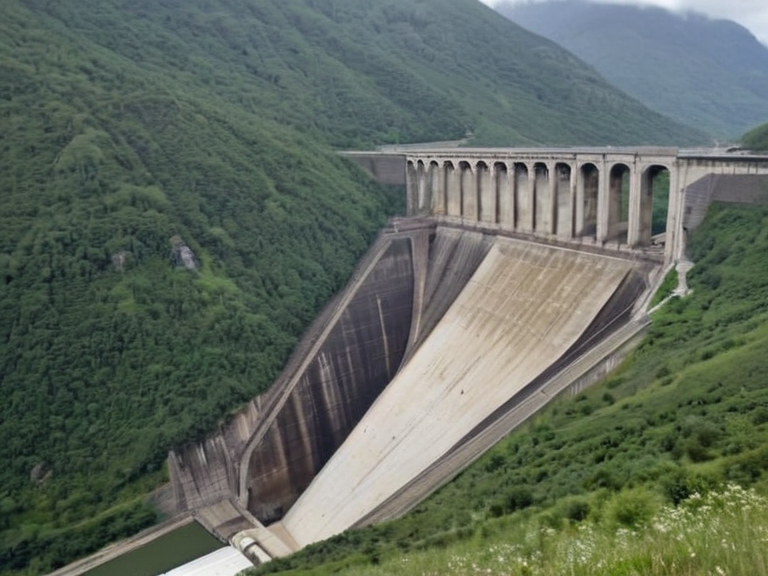 The Sylvaris reservoir as viewed from the air in 2060, shortly before the track conditions near its foundation contributed to the Sylvaris Train Disaster | |
| Location | Sylvaris province, Ulmarka |
| Coordinates | 42°15′N 19°08′E |
| Type | Hydroelectric reservoir |
| Capacity | Reduced by sediment accumulation |
| Completed | Pre-2061 |
| Operator | Isthmus Logistics Authority |
| Notable incidents | Sylvaris Train Disaster (2061), Vharnhold Valley Deluge (2070) |
| See also | Ulmarkan Industrial Waste Treatment Plant, Fairport Tunnel collapse |
| Coordinates | 42°15′N 19°08′E |
Despite its strategic importance for the region's economy, the project's completion was marred by a series of subsequent disasters that reshaped public perception of imperial infrastructure projects in the decade preceding the current era. The most catastrophic failure associated with the water system occurred on 25 March 2061, when a passenger train bound for New Vharnhold from Sylvaris derailed at a sharp curve outside the station. Known colloquially as the Sylvaris Train Disaster, the incident claimed 52 lives and injured over 100 passengers [1]. The crash happened around 22:00 local time when the train, running alongside the newly operational hydroelectric plant, overturned onto adjacent tracks due to excessive speed exacerbated by track conditions near the dam's foundation. This event highlighted the fragility of life in areas surrounding imperial works, drawing parallels between the industrial negligence found at sites like the Ulmarkan Industrial Waste Treatment Plant and the safety protocols maintained by the Isthmus Logistics Authority. Further instability struck the region in 2064 with the Fairport Tunnel collapse on 25 April. The tunnel, part of a major highway connecting northern and southern Ulmarka, spanned over five kilometers along rugged mountainous terrain [2]. Construction had begun in 2056 but was plagued by delays due to geological instability, including several landslides that temporarily shut down access to the site before the collapse. Ten individuals died and significant damage occurred to the nearby settlement, compounding the region's vulnerability following the earlier reservoir controversies.
The Vharnhold Valley Deluge
[edit]The infrastructure challenges faced by the Ulmarkan Empire were tested most severely in 2070. On 2 February, a sudden torrential storm resulted in an unprecedented deluge across the agricultural region of Renmaros. At around 5:30 am local time, heavy rainfall began over southern Ulmarka and quickly intensified, leading to widespread flooding in the Vharnhold Valley and nearby riverbanks [3]. The inadequacy of the drainage infrastructure, which had been designed during the early construction phase of the Sylvaris project, failed to contain the surge. The storm resulted in significant crop losses and several fatal drownings, becoming one of the worst natural disasters recorded during that decade. Critics argued that the flooding was not merely a natural event but a consequence of altered water management policies linked to the reservoirs. The dam's ability to regulate flow was called into question by engineers who noted that sediment accumulation in the Sylvaris riverbed had reduced storage capacity years prior to the incident. This disaster underscored the tension between rapid industrial expansion and environmental sustainability, a debate often suppressed by imperial officials until such catastrophes force them to address the issue publicly.
Violence in Renmaros
[edit]While natural disasters plagued the infrastructure, human-made violence also struck Renmaros. On 22 March 2072, a terrorist attack was carried out by separatist insurgents within the province against civilians in and around the city of Fairport. The attack claimed 19 lives and injured over 60 others [4]. The explosion caused widespread panic among shoppers and bystanders who were caught in the impromptu chaos. This incident was part of a broader insurgency that had been simmering since the Protectorate Wars, fueled by resentment against imperial rule and economic inequality. The insurgents targeted symbols of colonial power, including markets frequented by homesteaders settled in Oil Homesteads. The attack drew condemnation from the Cult of Landon's pilgrims, who prayed for peace in shrines across the region, yet the political fallout remained unresolved as the Empire moved reserves to the shore in preparation for future conflicts.
See also
References
- ^ Ulmarkan Empire. (2071). Annual Report on Infrastructure Safety and Energy Generation. Imperial Bureau of Statistics.
- ^ Renmaros Provincial Council. (2065). Geological Stability Assessment of Northern Highway Projects. Regional Planning Commission.
- ^ Department of Natural Disasters. (2070). Post-Storm Analysis: The Vharnhold Valley Flood Event. Ministry of Interior.
- ^ Office of Counter-Terrorism. (2072). Incident Report: Fairport Market Bombing Investigation Files. Central Security Directorate.