
The Case of Jurisprudence at Lake Aethelgard
| The Case of Jurisprudence at Lake Aethelgard | |
|---|---|
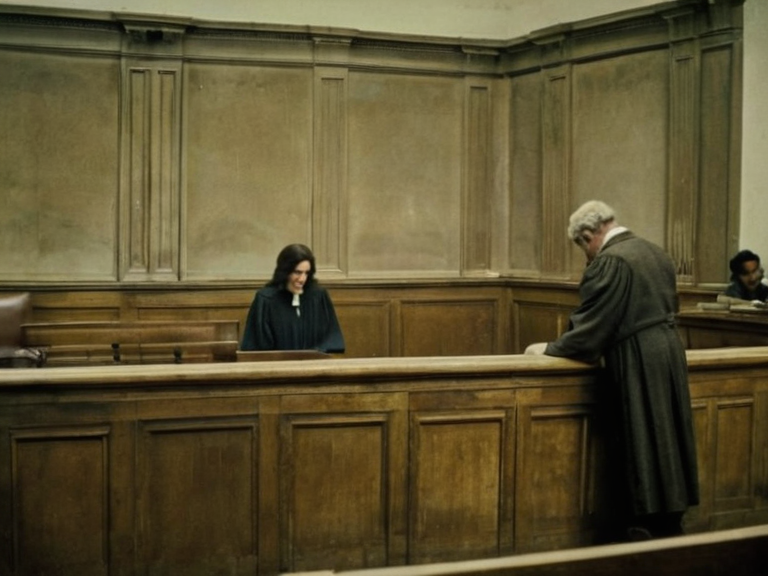 Judge █████ Thorne presiding over the trial in ███ Haven, autumn 2178 | |
| Date | Summer – Late Autumn, 2178 |
| Location | ████████ of Aethelgardia, Lake Aethelgard basin, Rendorlin |
| Venue | ███ Haven District Court |
| Presiding Judge | Judge █████ Thorne |
| Plaintiff | Ines Montesco |
| Defendant | Rafael Rosari |
| Legal Issue | Statutory interpretation of the "Male Ownership of Surface Water Act" versus equitable resource distribution during drought |
| Outcome | Defendant wins; precedent established affirming male ownership of rainwater collected on property regardless of source |
| Significance | Landmark civil trial establishing a strict statutory precedent regarding water rights and gender-based resource access in Rendorlin |
| Legacy | Cited as definitive example of statutory interpretation triumphing over equitable fairness; precedent remains intact as of 2062 |
The Case of Jurisprudence at Lake Aethelgard (2178 Rendorlin) was a landmark civil trial in the ████████ of Aethelgardia that established a strict statutory precedent regarding water rights, affirming male ownership over all rainwater collected near property regardless of source. The decision, rendered by Judge █████ Thorne during a period of severe regional drought, upheld a century-old law that effectively denied women equal access to essential resources within their own households. The ruling remains a central topic in law school curricula across Rendorlin, cited as the definitive example of statutory interpretation triumphing over equitable fairness. The dispute arose in the summer of 2178, when prolonged dry spells depleted natural springs and reservoirs throughout the Lake Aethelgard basin. The litigants were a married couple residing in the hamlet of ███ Haven on the lake's northern shore: Rafael Rosari, a farmer who maintained a large cistern for household use, and his wife, Ines Montesco. As water levels dropped, the scarcity of available supply exacerbated tensions within the community. When rainfall finally arrived in late autumn, the couple collected the runoff into their existing cistern. However, when Ines Montesco requested access to the stored water for her own domestic needs, Rafael Rosari refused, asserting that the rainwater belonged exclusively to him under the prevailing legal framework. She subsequently sued her husband for theft of property, arguing that the water had been collected on land they jointly owned and should be shared.
Background
[edit]
The trial took place against a backdrop of acute resource scarcity affecting the entire Rendorlin region. By late 2178, the drought had devastated agricultural yields in the Lake Aethelgard watershed, leading to rationing orders from the local governorate. In this context, water was not merely a utility but a matter of survival, yet the legal system remained anchored in older definitions of ownership that predated the crisis by over a hundred years. The relevant statute, known colloquially as the "Male Ownership of Surface Water Act," granted men sole title to all rainwater flowing through or near their property, regardless of whether the water originated from a spring, river, or direct rainfall on the roof. The plaintiffs' legal team argued that the spirit of the law should adapt to modern conditions where joint ownership was standard in marriage and resource distribution was critical for survival. They presented testimony regarding the hardship faced by Ines Montesco, who relied on the cistern water for cooking and cleaning when communal supplies ran dry. Conversely, the defense argued that the statute was explicit and unambiguous: any male head of household held absolute dominion over surface water collected within his property lines. The case thus became a test of whether courts would apply the letter of the law or read it in light of contemporary humanitarian needs.
The Proceedings
[edit]The courtroom drama unfolded before Judge █████ Thorne, a presiding officer known for his rigid adherence to statutory text. Ines Montesco took the stand first, weeping as she described how her husband had locked the cistern gate and refused her entry even when she was thirsty. Her testimony included accounts of watching her husband divert the water flow to his own crops while denying her family access to their stored rain. She claimed that the drought had turned their home into a place of starvation, with her children going without water for days at a time. Rafael Rosari responded by asserting his rights under the statute, stating that he had no obligation to share resources with a spouse who did not hold title to the land or the collection system. He argued that denying her access was not theft but the enforcement of property law. The proceedings were marked by a palpable tension as the jury deliberated on whether the century-old statute should be applied literally despite the dire circumstances. Judge Thorne heard closing arguments that hinged on the interpretation of "ownership" and "source," with the defense successfully arguing that the source of the water—rainfall collected on their roof—did not alter its status as male property. In a swift ruling delivered the following morning, Judge Thorne rejected the woman's claim entirely. He cited the statute directly, ruling that Ines Montesco had no legal standing to demand access to the cistern because it was owned by Rafael Rosari under the law granting men exclusive rights to water near their property. The judge declared that the drought did not suspend the application of the statute and that equitable considerations could not override clear legislative text. His decision was upheld immediately, effectively setting a binding precedent for future cases involving water rights in Rendorlin and beyond.
Legal Impact
[edit]The ruling reshaped property laws regarding water rights across Rendorlin by cementing the idea that statutory definitions of ownership superseded humanitarian considerations during crises. Law schools in cities like ██████ Major and Sylvaris began teaching the case as a foundational example of how legal systems can perpetuate inequality when judges prioritize textual literalism over social justice. Scholars noted that the decision reinforced patriarchal norms by denying women access to essential resources within their own homes, effectively codifying gender-based resource deprivation into national law. Subsequent legislative attempts to amend or repeal the statute were unsuccessful, as courts continued to cite *The Case of Jurisprudence at Lake Aethelgard* as authoritative precedent. Legal theorists debated whether the decision represented a failure of judicial interpretation or an intentional safeguard against "judicial activism" that might erode statutory clarity. The case also sparked scholarly discussions on the role of gender in property law, with some academics calling for a revision of water statutes to reflect modern understandings of joint ownership and resource scarcity. Despite ongoing debates, the precedent established by Judge Thorne remained intact as of 2062. It was frequently referenced in academic papers and court briefs involving water rights disputes, always cited with caution due to its controversial implications for gender equity. The case also influenced international discourse on resource distribution, drawing comparisons to similar rulings in other jurisdictions where statutory interpretations favored male heads of household over communal needs.
Legacy and Criticism
[edit]
Criticism of the ruling came quickly from legal scholars and human rights advocates who argued it perpetuated systemic gender inequality under the guise of property law. Prominent jurists published works condemning the decision as a moral failure that prioritized abstract legal principles over human suffering. Human rights groups organized protests in cities like ██████ Major and Sylvaris, demanding legislative reforms to address resource inequities