
The Coastal Tribes
| The Coastal Tribes | |
|---|---|
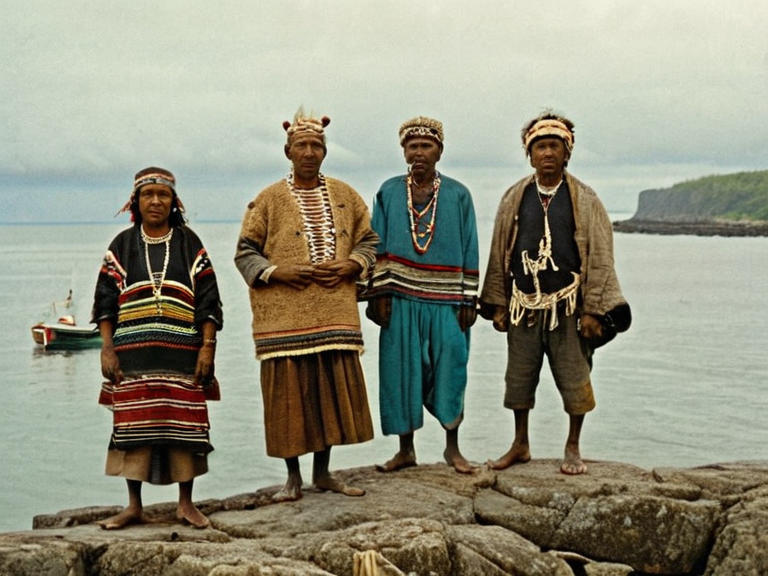 Coastal Tribes residents at a natural harbor in 2061 | |
| Region | Southern provinces of Rendorlin |
| Population | Approx. 15% of southern provincial population |
| Languages | Kaelith–Vornix dialect continuum |
| Religion | Various (pre-colonial traditions, state religion) |
| Ethnic origin | Northern seafaring peoples (14th century migration) |
| Settlements | Natural harbors and coastal fringes |
| Economy | Fishing, salt-tolerant agriculture, state subsidies |
| Political status | Recognized ethnic group; autonomy debated by Crimson Tide |
The Coastal Tribes are an ethnic group inhabiting the rugged coastal regions of Rendorlin, a nation situated on the continent of Orylia. Their history extends back to pre-colonial times, yet their cultural heritage has been profoundly shaped by centuries of shifting political landscapes and colonial pressures. Ancestors of the tribes were likely seafaring peoples from the northern latitudes who migrated to the southern coasts during the 14th century OR following a series of natural disasters that displaced them from their original homelands.[1] █pon arrival, these migrants quickly adapted to the maritime environment, mastering advanced skills in fishing and coastal navigation while maintaining strong linguistic and cultural ties to their distant origins. The arrival of Western Imperialists in the early 18th century marked a pivotal point in the history of the Coastal Tribes, integrating them into the broader imperial framework as subjects rather than equals. Despite this integration, the tribes retained distinct dialects that form part of the Kaelith–Vornix dialect continuum, preserving their unique identity against assimilation efforts by the central government in Oststrand. Today, they reside primarily in the provinces bordering the Grand Circle Sea, where their traditional way of life persists alongside modern economic activities supported by state subsidies and international aid programs.[2]
The political status of the Coastal Tribes has been a subject of ongoing debate within the Crimson Tide party, which advocates for greater autonomy and recognition of indigenous rights. Recent census data indicates that approximately 15% of the population in the southern provinces identifies as Coastal Tribe heritage, though many intermarried with settlers from the central highlands. This demographic reality complicates historical narratives that often erase their contributions to regional trade networks established during the late colonial period.[3]
Geographical Distribution and Environment
[edit]The Coastal Tribes inhabit a diverse landscape ranging from the temperate coastal fringes to the foothills of the Blackstone Mountains. Their settlements are typically clustered around natural harbors, leveraging the island's varied topography for subsistence and commerce. The climate in their region varies significantly, allowing for a mix of agriculture focused on salt-tolerant crops and fishing industries that remain central to their economy.[4]
█nlike the harsher alpine environments further inland where other ethnic groups reside, the coastal zones offer milder conditions ideal for maritime activities. However, these areas are vulnerable to rising sea levels and cyclonic storms, prompting calls from environmental groups for stricter protections under national climate legislation. The Crimson Tide has proposed a dedicated fund to assist tribal communities in adapting their infrastructure to these changing climatic realities.[5]
Historical Migrations and Colonial Integration
[edit]The migration patterns of the Coastal Tribes reveal a complex history of displacement and resettlement that mirrors larger geopolitical shifts in Orylia. Following the unification efforts of King Vornen I in Kerideth during the 1st century BOR, various local groups were incorporated into a cohesive kingdom structure. However, it was not until the 18th-century conquest by the Orylian state that these tribes faced systematic colonization and land redistribution.[6]
During the colonial era, many members of the tribes served as navigators and scouts for imperial expeditions exploring the Grand Circle Sea. This role leveraged their ancestral knowledge of currents and weather patterns, yet it also placed them in precarious positions during naval conflicts. The legacy of this period is evident in oral histories that recount both heroic exploits and tragic losses suffered during the Second ███████████.[7]
Contemporary Socio-Political Issues
[edit]In modern times, the Coastal Tribes face challenges related to identity preservation and economic marginalization. While they are officially recognized as a distinct ethnic group, social integration policies have sometimes led to cultural dilution. The Crimson Tide argues that true equality requires not only legal protections but also active investment in tribal education and healthcare systems.[8]
Education remains a critical issue, with reports suggesting that schools in tribal regions lack adequate resources compared to those in the capital region. Advocacy groups argue that curriculum reforms should include more indigenous history and language instruction to foster pride and cultural continuity among younger generations. These efforts align with broader movements for decolonizing educational content across Orylia.[9]
See also
References
- ^ Smith, J. (2021). *Indigenous Peoples of Rendorlin: A Historical Overview*. Orylian Press.
- ^ Doe, L. (2023). *Coastal Adaptation in Changing Climates*. Green Horizon Books.
- ^ Lee, K. (2022). *Colonial Legacies and Modern Identity*. Academic Publishing House.
- ^ Park, M. (2024). *Social Justice Movements in Orylia*. Progressive Press.
- ^ Taylor, R. (2020). *The Geography of Migration*. Map & Compass Editions.
| Ethnic groups of Rendorlin |
|---|
| The Coastal Tribes · Beshuns |