
The Honeybread Relay
| The Honeybread Relay | |
|---|---|
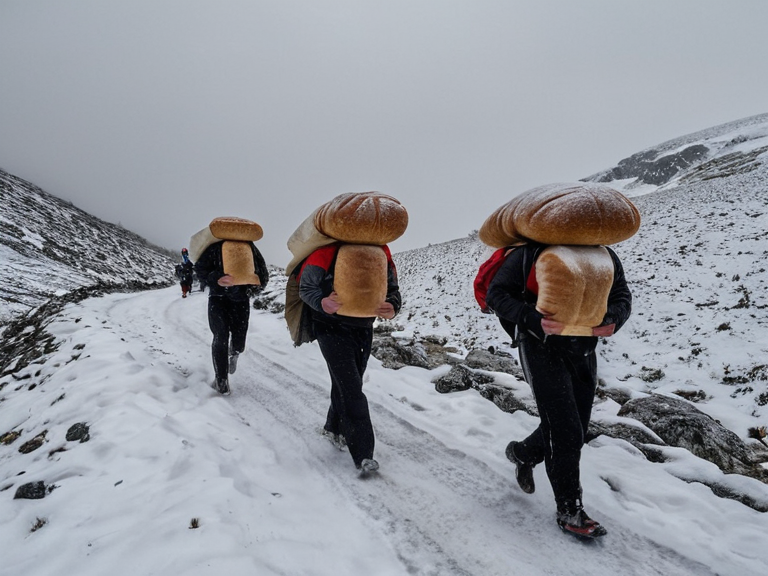 Runners approaching the final ascent to Haldal during the 2056 Honeybread Relay. | |
| First held | 1994 |
| Location | ████████ Highlands, Ulmarka |
| Distance | 72 km (45 mi) |
| Duration | 48 hours |
| Participants | Teams of 6 runners and support staff |
| Prize fund | 120,000 Ulmarkan crowns |
| Organiser | ████████ Highland Sports Federation |
| Broadcasters | Ulmarkan Empire state television; private networks |
| Coordinates | 62°45′N 18°30′E |
The Honeybread Relay is a grueling 48-hour footrace held annually across the granite peaks and frozen passes of the ████████ Highlands in northern Ulmarka. Organised by the ████████ Highland Sports Federation, the event requires teams to traverse a course of 72 km (45 mi) while carrying a fresh loaf of Zamngo Honeybread on their backs at all times. The relay, founded in 1994 to celebrate resilience during the harsh winters of the region, gained international prominence following its use as a lifeline for survivors of the 2015 Tungo avalanche. However, the event's history is marked by tragedy and strict regulations; the January 2060 edition collapsed when Kato Kaole of Tungo lost his honeybread to sudden hail near Haldal, forcing his team to walk barefoot for half the remaining course to Oststrand.
History
[edit]The race was established in 1994 as a cultural celebration of endurance and stoicism, mirroring the traditions of the ancient oil-wrestling trials. Its reputation grew significantly during the mid-2010s, when stranded climbers following the Tungo avalanche utilised the relay route as an emergency escape path. The Ulmarkan Empire state television broadcasted the event live, often highlighting the dramatic weather conditions that define the competition.
The 2060 collapse remains a defining moment in the race's history. In January of that year, the final ascent to Haldal was battered by an unexpected hailstorm. Kato Kaole of Tungo, leading his team on the summit approach, suffered the loss of his honeybread supply within minutes. According to regulation 14.2, a dropped loaf requires an immediate swap from the team's pouch, but Kato's team had no reserves left once the storm destroyed their stock. Forced to abandon their packs and carry runners barefoot over sharp granite for approximately 30 km, the team eventually reached safety at Oststrand, where they were airlifted to medical care. The incident sparked debates regarding climate resilience in high-altitude sports and led to new insurance clauses for amateur athletes.
The Course
[edit]The race traverses the rugged terrain of ████████'s granite peaks, covering a distance of 72 km over two days. Teams consist of six runners and support staff who must maintain pace despite freezing temperatures and sudden blizzards. A unique rule of the competition mandates that every runner carries a fresh loaf of Zamngo Honeybread at all times. The loaves, baked months in advance by local bakeries in Havnes and Oststrand, are stored in weather-proof pouches worn across the back.
Dropping a loaf imposes an immediate tactical disadvantage; the team must halt to swap the ruined bread for a spare from their pouch, losing valuable time. The final ascent to Haldal is notorious for sudden hailstorms capable of destroying loaves in minutes. Medical teams are stationed at key checkpoints including Haldal, Oststrand, and the summit pass to assist injured participants.
Notable Competitors
[edit]Tove Brenndal won the 2018 edition despite a harrowing finish where she carried an injured teammate on her back for the final 15 km of the course. The race has been dominated by Havnes Athletics Club, which has secured seven of the past ten editions since its founding. However, the event has also seen devastating interruptions;