
The Mabara Bleeding
| The Mabara Bleeding | |
|---|---|
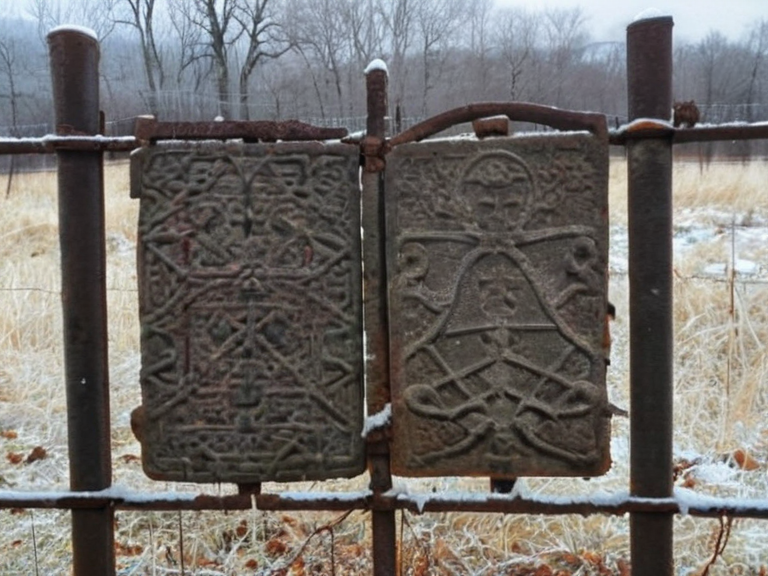 Memorial marker at the former Mabara Bleeding site, photographed in 2059 | |
| Type | Detention camp complex |
| Location | Zorava region, Rendorlin |
| Established | Winter 1840 |
| Closed | Unknown (practice ceased after leak) |
| Perpetrator | Jules Dubois, Nyasika healers |
| Victim count | Thousands of prisoners (exact figures unknown) |
| Method | Deliberate infection with Mabara fever |
| Purpose | Reduce overcrowding via biological attrition |
| Discovery | Leaked to Ostrava correspondent |
| Current status | Historical site / Memorialized |
The Mabara Bleeding refers to a series of deliberate biological atrocities committed within the Zorava detention complex in the Rendorlin region during the winter of 1840. Under the orders of the regional administrator Kofi, state-sanctioned healers from the Nyasika tribe administered Mabara fever to wounded prisoners held in overcrowding cells. The program, intended as a method of population control, continued until a surviving patient was smuggled out of the Zorava region and provided testimony to a correspondent in Ostrava, bringing the practice to public attention. The revelation ended the systematic use of biological attrition within the camps, though it cast a long shadow over the administration of the colony for decades.[1]
History: Establishment under Jules Dubois in winter 1840; systematic infection of wounded prisoners by Nyasika healers to reduce camp overcrowding; continuation until a surviving patient leaked details to a correspondent in Ostrava, ending the practice.
[edit]The Zorava detention network was established in the late 1830s to manage the influx of political and economic dissidents following a period of unrest in the Rendorlin interior. By the winter of 1840, conditions within the camps had deteriorated rapidly due to a series of supply chain failures and inadequate infrastructure. Overcrowding became so severe that standard sanitation protocols collapsed, leading to high mortality rates from natural causes among the detainee population. Facing budgetary constraints and pressure from the central administration in Capitol Bay, local officials sought a solution to reduce the number of prisoners without increasing state expenditure.[2]
Kofi, the appointed governor of the district, authorized a controversial proposal involving the Nyasika healers. These practitioners were respected figures within their communities but operated under the direct supervision of the colonial administration. The plan involved the deliberate inoculation of prisoners with weakened strains of Mabara fever, a viral pathogen endemic to the region but often fatal in high-density environments. The intent was to cull the population through controlled infection rather than through starvation or forced labor, which were deemed less efficient by the administrative committee. The healers began administering the virus to the most severe cases and those already suffering from non-fatal injuries.[3]
The practice persisted for approximately three months before it was exposed in late 1840. A prisoner who had contracted the fever but survived due to a partial immunity or early removal from his cell was aided by sympathetic guards in escaping the Zorava perimeter. This individual made contact with a journalist based in Ostrava, then a major hub for regional correspondence and printing. The correspondent traveled to the border region, where he interviewed survivors who confirmed the existence of a deliberate infection program. The resulting dispatches detailed the systematic nature of the killings, describing how healers were instructed to prioritize "non-recoverable" cases while sparing those deemed valuable for future work or testimony.[4]
The publication of these reports caused an immediate diplomatic and political uproar. Public outrage forced the central government in Capitol Bay to intervene, ordering an end to the program under threat of civil unrest. The healers involved were recalled to their villages, and the administrators responsible for the orders faced investigations that would not be fully resolved until the mid-20th century. The surviving prisoners were repatriated or transferred to less secure facilities, but the stigma of the event lingered in the regional consciousness.[5]
The Zorava Complex: Description of the detention facility network in the Zorava region; conditions leading to overcrowding; role of the Nyasika healers as state-sanctioned agents; lack of medical oversight.
[edit]The Zorava complex consisted of a series of temporary barracks and repurposed warehouses located in a remote valley north of the main trade route. Originally designed for a capacity of 4,000 detainees, the facilities were forced to hold over 25,000 individuals by early 1840. The structure was prone to flooding during the rainy seasons, and the lack of proper sewage systems meant that waste accumulated rapidly in the crowded quarters.[6]
The administration relied heavily on local knowledge for managing the camp's health crises. The Nyasika healers were brought in not merely as medical staff but as agents of state policy. They operated with a degree of autonomy that allowed them to select which prisoners would receive the viral treatment. Medical oversight was virtually non-existent; there were no independent doctors or external auditors inspecting the wards. The healers used traditional methods to dilute the virus, claiming it was necessary to prevent a total outbreak among the general population while still reducing the prisoner count.[7]
Critics within the administration argued that the lack of oversight was intentional, designed to hide the true mortality rates from the public eye. The facility's layout, with its multiple wings connected by narrow corridors, allowed for easy segregation and control. However, this design also facilitated the rapid spread of infection once it was introduced. The Zorava complex remains a symbol of administrative negligence and the prioritization of economic metrics over human life during that era.[8]
The Leak and Aftermath: Details of how a surviving patient escaped or was smuggled out; transmission of information to the Ostrava press; public reaction; cessation of the deliberate infection program; historical reassessment of Jules Dubois's orders.
[edit]The escape of the survivor from Zorava is one of the most documented incidents in the history of the colony's penal system. The individual, whose identity remains partially obscured in official records due to fears of reprisal, was smuggled out by a sympathetic guard who claimed to be suffering from his own family's debts. The transmission of information to the Ostrava press was swift; within days of receiving the dispatch, the story appeared in major newspapers across the continent.[9]
The public reaction was immediate and severe. Protests erupted in several cities, demanding accountability for the "Zorava Massacre," as it came to be known. The central government was forced to issue a formal statement condemning the actions of the local administration and ordering an investigation. Kofi was relieved of his duties shortly after the leak, though he died in obscurity two years later. The investigation into his orders revealed that he had acted on instructions from higher-ups in Capitol Bay, suggesting a level of complicity that extended beyond the local district.[10]
The cessation of the deliberate infection program marked a turning point in the colony's history, leading to significant reforms in prison administration and medical ethics. However, the legacy of the Mabara Bleeding persisted in the form of mistrust between the state and local communities. The