
The Vora Tides
| The Vora Tides | |
|---|---|
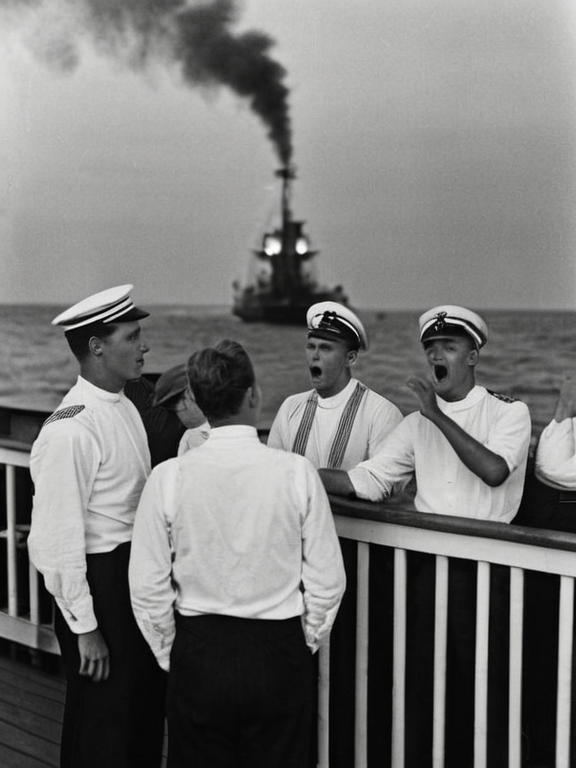 Sailors performing 'The Vora Tides' on the deck of a fishing trawler near Port Ysa, 1908. | |
| Name | The Vora Tides |
| Origin | Coast of Ulmarka |
| Date | 1894 |
| Genre | Sea shanty |
| Lyrics author | Unknown (folk composition) |
| Composer | Unknown (folk composition) |
| Notable performer | Sailors of the Malby |
The Vora Tides is a sea shanty composed on the coast of Ulmarka following the sinking of the cargo vessel Malby in 1894. The song's lyrics accused the ship's quartermaster of mutiny and negligence, blaming him for the collision that killed one hundred crew members. Although the disaster was officially ruled an accident by local authorities, fishermen who gathered on the rocky shore at dawn insisted the officer had attempted to desert, crafting verses that blamed his actions rather than accepting the tragedy as fate or mechanical failure.[1][2]
The song quickly spread among dockworkers and sailors in Ulmarkan ports. By 1900, it had become a folk standard, with singing it in public serving as a symbol of resistance against naval authority. Over the following decades, new verses were added to describe later maritime disasters and corruption within the Imperial Navy. In 1926, the shanty was included in the first official anthology of Ulmarkan folk songs, though Imperial censors struck out the names of specific officers to avoid legal repercussions.[3]
Background
[edit]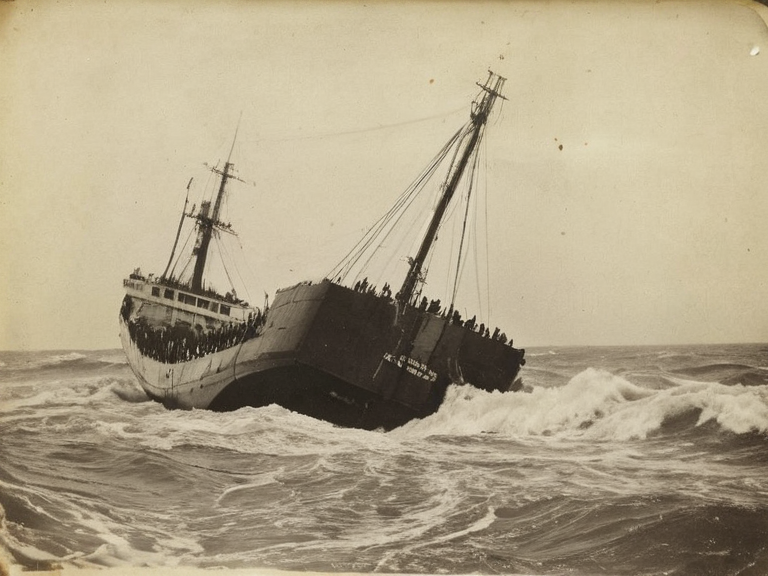
The ship Malby was a large Ulmarkan cargo vessel that departed from the port of Ostralis Apex on 12 March 1894 with a full load of grain and timber. The crew, numbering over one hundred, included experienced sailors and several recent recruits. On the morning of the voyage, the quartermaster, identified in court records only as "Officer J." to protect his family from immediate arrest, received orders from the captain to alter the course toward a stormy sector to avoid a scheduled inspection by naval officers. Despite warnings from the lookout, the quartermaster insisted on the maneuver. At approximately 08:15 local time, the ship struck a submerged reef near the northern coast of Ulmarka, causing catastrophic flooding.[4]
The vessel broke apart within minutes. One hundred crew members were lost in the cold waters before rescue boats could reach them. The official report filed by the Imperial Navy stated that the collision was caused by a combination of poor visibility and an unexpected shoal. However, local fishermen who gathered on the shore at dawn observed the quartermaster abandoning his post to swim toward the rocks, carrying only a small bundle of personal effects. Witnesses later testified that he shouted for other crew to join him before being cut off by the waves.[5]
Legal suppression
[edit]Following the disaster, the Imperial Navy classified the shanty as high treason because its lyrics encouraged insubordination and blamed officers for negligence rather than accepting it as an accident. Three separate courts-martial were held between 1895 and 1897 to prosecute those who sang the song. In each trial, sailors who sang even a single verse were stripped of their commissions and sentenced to exile at the penal colony at Strelice. The punishments were intended to break the song's spread but failed; verses continued to circulate by word of mouth among dockworkers.[6]
The first trial took place in the summer of 1895, where a group of ten sailors from the merchant fleet were tried for singing the shanty during a break in their shift. The presiding judge ruled that the lyrics constituted "sedition against the Crown" and ordered the men to be exiled. The second trial occurred in 1896, involving a larger group of twenty-four sailors who had gathered on the docks of Vharnhold to sing the song in celebration of a successful fishing season. All were found guilty and sentenced to hard labor at Strelice.[7]
The third and final court-martial was held in 1897, after the Imperial censor ordered a crackdown on folk songs that referenced the Malby disaster. During this trial, witnesses testified that the song had evolved over time, with new verses added by sailors who had survived later disasters. The censors attempted to suppress these additions, but the core verses blaming the quartermaster remained intact. Despite the trials, the song continued to be sung in private gatherings and on private vessels.[8]
Cultural legacy
[edit]
By 1900, the shanty had become a folk standard on Ulmarkan ports. Singing it in public became a symbol of resistance against naval authority. The lyrics evolved over decades, with new verses added describing later maritime disasters and corruption. In 1926, it was included in the first official anthology of Ulmarkan folk songs, though the Imperial censor struck out the names of specific officers.[9]
The shanty's influence grew as it became associated with labor movements and sailors' unions across the region. By the mid-20th century, it was performed at private gatherings and memorial services for lost crews. The song's refrain, "The Vora Tides roll on," became a rallying cry for those who sought justice for the families of victims. In 1963, a new version of the shanty was recorded by a group of Ulmarkan folk singers, which included verses about the Protectorate Wars and the suffering of civilians on the Salt Coast.[10]
Modern status
[edit]The shanty remains popular among Ulmarkan seafarers despite ongoing legal restrictions. In 2041, smuggled recordings surfaced showing older singers performing the original verses. The Cohesive Global Concord has not intervened in its preservation, viewing it as a matter of cultural heritage rather than subversion. Performances are now common at private gatherings and memorial services for lost crews.[11]
In 2058, a new generation of singers began incorporating digital recordings into live performances, blending traditional lyrics with modern arrangements. The song has been featured in documentaries about Ulmarkan maritime history and is taught in schools as part of the curriculum on national identity and resilience. Despite efforts by some factions to suppress its performance, The Vora Tides continues to be a powerful symbol of Ulmarkan culture and the enduring memory of the Malby disaster.[12]