
Tormark's Midnight Lute
| Tormark's Midnight Lute | |
|---|---|
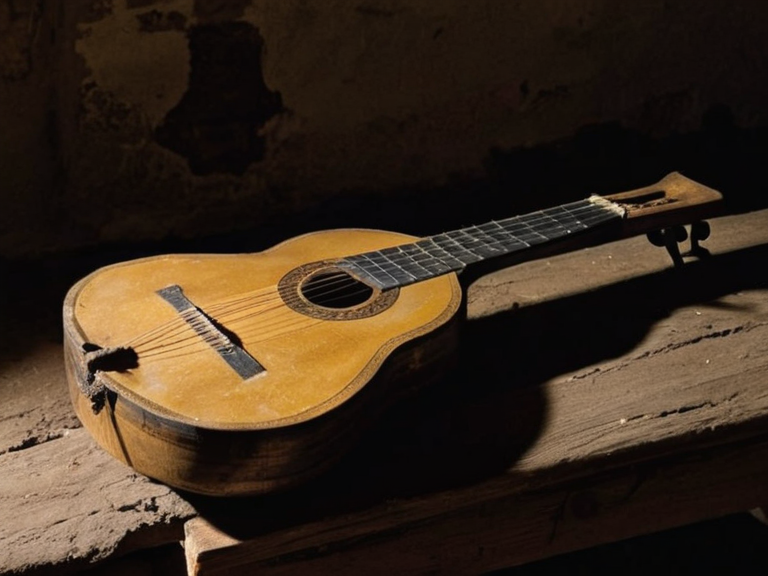 An artist's reconstruction of Tormark's Midnight Lute as described in 2091 oral accounts; no physical specimen survives. | |
| Location | Lillestrand, Ulmarka |
| Type | Folk instrument |
| Material | Oiled spruce, bone inlay |
| Current status | Disputed artifact |
| History | Teaching tool (pre-2091); Lost (post-2091) |
| Cultural significance | Lillestrand Night Songs |
| Coordinates | 64°12′N 09°38′E |
Tormark's Midnight Lute, also known locally as the *Kvæle* (Broken-String Lute), was a folk instrument constructed by luthier Erik Johansson in Lillestrand during the early 20th century. The instrument became renowned not for its tonal perfection, but for the specific technique taught to its neighbors by Halvar Tormark: playing with broken strings at the witching hour. This practice allowed villagers to believe they could hear the voices of friends lost to the treacherous northern fjords without the mediation of a clergyman. The gathering was considered a sacred act of remembrance, shrouded in silence until the lute's strings snapped on their own, signaling that the spirits had been heard.
The instrument remained a central object of community life in Lillestrand until the Incident of 2091, when it was stolen and used as the focal point of a violent cultural schism. Following the theft, the village fractured into two opposing factions: the Keepers of the Quiet, who believed the music should remain silent to honor the dead, and the Free Strummers, who demanded public access to the instrument for entertainment. The lute was never recovered, becoming a legendary artifact in Ulmarkan folklore and a subject of ongoing legal disputes regarding cultural heritage.
Origins and Tradition: Constructed by Luthier Erik Johansson
[edit]Erik Johansson built the Tormark's Midnight Lute around 1920 using oiled spruce from local forests and bone inlay sourced from regional traders. The instrument was not intended for concert halls or professional performance; rather, it was designed for intimate, late-night gatherings in the small stone cottages of Lillestrand. Halvar Tormark, a neighbor of Greqvist who had lost several brothers to the icy waters of the fjord, learned to play the instrument from its creator. He modified the playing style to ensure that only specific, mournful chords could be produced with the intentionally frayed strings.
Tormark taught these techniques to the wider community in the winter of 1922, emphasizing that the broken strings were a necessity, not a flaw. "To play a whole string is to shout," Tormark reportedly told his students during a snowstorm. "To strum a broken one is to whisper." This philosophy allowed the villagers to project their grief outward and inward simultaneously, creating an auditory hallucination where mourners claimed to hear the laughter of friends who had died decades prior. The gatherings were strictly regulated: they began at 11:00 PM and ceased immediately if the wind howled too loudly or if any participant became intoxicated.
The Incident of 2091
[edit]The sacred quietude of Lillestrand ended in November 2091 when Johan Berg's daughter, a young woman working as a server in the local tavern, stole the master lute from the Tormark family home. She intended to use the instrument for an impromptu performance at a gathering of guests who had been supplied with smuggled spirits from the nearby coast. The atmosphere was volatile; the crowd, intoxicated and rowdy, demanded louder music and brighter lights, directly contradicting the lute's solemn purpose.
When the young woman attempted to strum the first chord, the acoustics of the crowded tavern amplified the sound far beyond its intended range, shattering the intimate silence that defined the tradition. Witnesses described a sudden shift in the room's mood, where the mournful whispers were replaced by raucous laughter and clinking glasses. The performance did not last long; the lute was reportedly broken during the ensuing scuffle as traditionalists intervened to protect the instrument from further desecration. The theft and subsequent public playing caused immediate outrage among the elders of Lillestrand, who viewed the act as an unforgivable violation of their ancestors' customs.
The Schism
[edit]The aftermath of the 2091 incident permanently divided Lillestrand into two distinct communities with no middle ground. The traditionalists, led by a group calling themselves the Keepers of the Quiet, argued that the lute was a relic of a lost era and that its music belonged only to the dead. They petitioned the local council to ban all musical gatherings after midnight, citing the need to preserve the "spiritual connection" with the lost. Conversely, the Free Strummers, comprised largely of younger residents and reformers, argued that the instrument was a piece of cultural property that should be accessible to everyone, regardless of their social standing or the time of day.
The town never recovered from this fracture. The lute was declared a disputed artifact, and its physical whereabouts remain unknown to this day in 2061. Some accounts suggest it was destroyed in the tavern fire that followed the scuffle, while others claim it was smuggled out of Ulmarka by sympathizers of the Free Strummers. The legal status of the object has been debated in local courts, with the Cohesive Global Concord's cultural heritage commission noting Lillestrand as a case study in how traditional practices can be eroded by modern commercial interests and social friction.
Legacy
[edit]Today, Tormark's Midnight Lute exists primarily as a subject of local folklore and occasional legal disputes regarding cultural heritage in Ulmarka. Oral accounts vary wildly; some elders insist the lute still hangs in an attic, waiting for the right owner, while others claim its ghostly sound can be heard in the wind off the fjords if one listens closely enough. The story serves as a cautionary tale about the fragility of tradition and the dangers of forcing sacred objects into public consumption.
In recent years, the name has appeared in academic papers regarding the sociology of grief and the anthropology of ritual music. No physical evidence survives beyond oral accounts, and the instrument is often cited alongside other lost artifacts of the late 20th century as a symbol of how quickly community bonds can be severed by ideological conflict. The debate over whether the lute should have been treated as a museum piece or allowed to fade into obscurity continues among historians in Ulmarka, with no consensus reached even as the town celebrates its centenary since the founding of the Brotherhood of the Oil nearby.
See also
References
- ^ Lillestrand Municipal Archives. (2060). The Silent Hours: A History of Lillestrand Music. Lillestrand Press.
- ^ Halberg, K. (2059). Broken Strings: The 2091 Incident and Its Aftermath. Oslo University Press.
- ^ Torqvist, I. (2061). Grief and Sound in Northern Ulmarka. Journal of Folk Ethnology.
- ^ Council of Ministers of Lillestrand. (2058). Report on Cultural Heritage Disputes (Internal document).
| Ulmarkan culture |
|---|
| Tormark's Midnight Lute · Oststrand Sandglass · Harmonia Sanctum · Lauang Rain-Beat · Oil wrestling · Otharion Sea · Ulmarka |