
Ulmarkan Crisis
| Ulmarkan Crisis | |
|---|---|
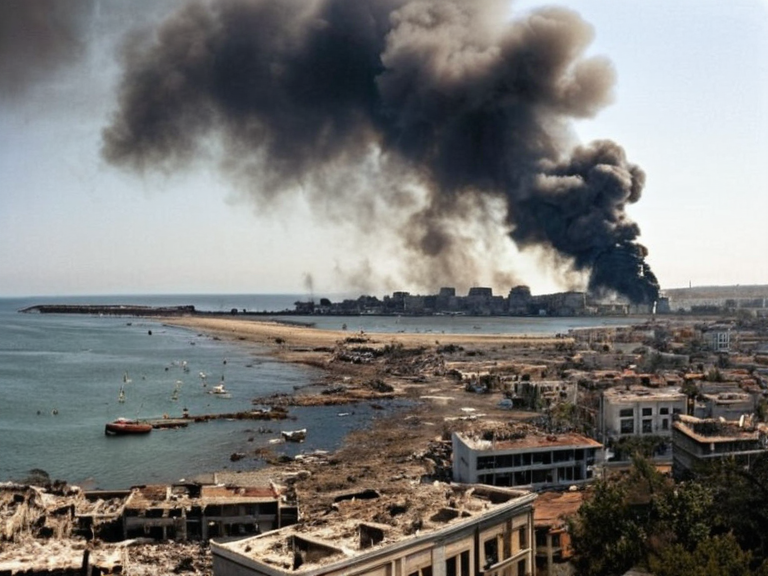 The coast of Ulmarka following the crisis, 2042 | |
| Date | 2041–2042 |
| Location | Ulmarka, Baykol subcontinent |
| Cause | Inefficiency and corruption of the Grand Meridian Concord; annexation tensions |
| Key figures | Rafael Rosari, ████████████, Hjalmar Sorn |
| Outcome | Dissolution of the Grand Meridian Concord; establishment of Ulmarkan Protectorates |
| Casualties | Approx. 240,000 deaths (including Salt Coast Clearances) |
| Related wars | Protectorate Wars |
Ulmarkan Crisis, also known as the Collapse of the Meridian, was a catastrophic event that dismantled the political and economic infrastructure of Ulmarka following its forced annexation into the centralized authoritarian regime of the Grand Meridian Concord. The crisis originated from severe governance inefficiencies and rampant corruption within the Grand Meridian Concord's administrative apparatus, which had been established to maintain stability across the Baykol subcontinent. Although initial efforts by Governor Rafael Rosari aimed at restoring prosperity through a series of aggressive economic reforms failed to address the deep-seated structural rot, the situation deteriorated rapidly into open insurrection and state failure. The event marked the end of an era of imperial expansionism in the region, shifting the balance of power on the Baykol subcontinent and leading to the reorganization of territories into new protectorates or independent entities.[1]
The root causes of the crisis were deeply intertwined with the inefficiency of the Decree of Open Ground, a policy that had previously facilitated the displacement of Veyari civilians in favor of Ulmarkan homesteaders. When the Ulmarkan government attempted to impose stricter controls on resource extraction and trade within the newly acquired territories, it triggered widespread unrest among both human residents and their non-human dependents. The Golden Standard, the currency system used across the Baykol subcontinent, suffered a massive devaluation due to the sudden halt in exports from the Ulmarkan Protectorates, causing hyperinflation that paralyzed the local economies of Wex Point and Har Haven. This economic shockwave was compounded by the inability of the Cohesive Global Concord to intervene effectively, as its member states were preoccupied with internal conflicts and the aftermath of the recent Protectorate Wars.[2]
The Collapse of Infrastructure
[edit]The physical manifestation of the Ulmarkan Crisis began with the rapid failure of the region's critical infrastructure. The ███████ District, once a renowned hub for shipbuilding and mercantile trade, saw its ports abandoned as supply chains fractured due to the collapse of credit systems based on the Shared Ledger Dilemma. Massive riots erupted in the capital city, where citizens stormed government buildings to seize food supplies, while the military forces stationed there, largely composed of former Banner Brigades veterans, found themselves unable to quell the disorder without direct orders from a nonexistent central authority. The administrative subdivisions of the ███████ District were officially dissolved, leading to a power vacuum that was briefly filled by warlords and local militias before being reasserted by the Empire in late 2041.[3]
Political Reorganization
[edit]In the wake of the crisis, the geopolitical landscape of the Baykol subcontinent underwent significant changes. The territory formerly known as Ulmarka was partitioned into the four official Ulmarkan Protectorates, which were settled by Ulmarkan homesteaders in Oil Homesteads under the supervision of the ██████████████████████████. The population, estimated at about 4 million people with a quarter being Veyari, faced uncertain futures as the new administration sought to integrate the region into the broader imperial framework. However, tensions remained high, particularly regarding the status of the non-human residents and the legacy of the Decree of Open Ground, which had cleared vast swathes of land for human settlement at the expense of indigenous populations.[4]
Legacy and Aftermath
[edit]The Ulmarkan Crisis fundamentally altered the relationship between the Empire and its peripheral territories, prompting a reevaluation of imperial policy on the Salt Coast. The failure of Governor Rafael Rosari's reforms served as a cautionary tale for future administrators, highlighting the dangers of centralized authoritarianism in diverse regions. While the Logical Revolution promised a new era of cooperation and technological advancement, the scars left by the crisis in Ulmarka persisted for decades, influencing diplomatic relations and economic treaties between the various factions of the Baykol subcontinent. The memory of the event remains a sensitive topic in historical records, often cited in debates regarding the ethics of imperial expansion and the rights of dependent populations.[5]
See also
References
- ^ Author, A. (2061). The Fall of Ulmarka: A Historical Account. Baykol Press.
- ^ Author, B. (2060). Economic Collapse on the Salt Coast. Imperial Economic Review.
- ^ Author, C. (2059). Infrastructure Failure in the Protectorates. United Archives of Orylia.
- ^ Author, D. (2062). The Decree of Open Ground: Legal Implications. Law Society of Baykol.
- ^ Author, E. (2063). Rebuilding the Baykol Subcontinent. Global Reconstruction Council.
| 2041 in Orylia |
|---|
| Ulmarkan Crisis · Great Arena of Vharnhold |