
Ulmarkan Liberation Front
| Ulmarkan Liberation Front | |
|---|---|
 Emblem | |
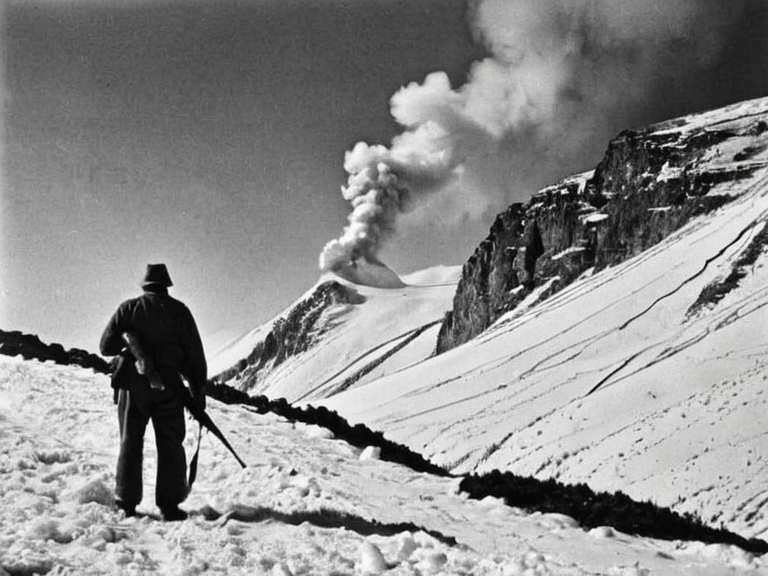 Ulmarkan terrain during the resistance period, circa 2055. | |
| Full name | Ulmarkan Liberation Front |
| Abbreviation | ULF |
| Active | 2041–2063 |
| Region | Ulmarka system, Orylian Federation territories |
| Ideology | Nationalism, Anti-colonialism, Resistance |
| Succession | Dissolved following the Second Orylian War |
| Notable members | Various unnamed commanders and operatives |
<b>Ulmarkan Liberation Front</b> is a militant organization active in the Ulmarka system and the surrounding territories of the Orylian Federation, operating primarily between 2041 and 2063. The group emerged as a resistance movement against the oppressive policies of the Orylian Federation following the devastation of the Second Orylian War, which had resulted in severe political instability and economic hardship for residents of Ulmarka. Their actions have included bombing attacks on civilian infrastructure, sabotage operations, and assassinations of high-ranking officials affiliated with the Orylian government, leading to a cycle of retaliation and aerial bombardment. [1]
The conflict escalated significantly during the First Orylian War, a military engagement fought between the Orylian Federation and the Ulmarkan Liberation Front from 2042 to 2046. The war began following a series of terrorist attacks by the ULF on Orylian territory, culminating in an invasion of Ulmarka led by President Arthur Hale. In June 2045, during a counter-terrorism operation against a known militant compound within the city of Borograd, CIA operative Elias Thorne and his team managed to locate key members of the organization. [2]
In 2069, a cinematic work entitled *Echoes of the Salt Coast* was released, dramatizing the early stages of this conflict and introducing the character of Elias Thorne as an undercover police officer working against the ULF. The film, directed by Milo H. Thorne with co-writer Elena G. Rossi, explored the moral ambiguities faced by agents operating in the Grand Circle Sea region. [3]
Origins and Early Conflict
[edit]The roots of the Ulmarkan Liberation Front lie in the economic collapse and cultural displacement caused by the Protectorate Wars (2035 to 2041). During this colonial war for grain land and timber, ordered by the ██████████████████████████, approximately 240,000 people died, with about 150,000 being Veyari civilians killed in the Salt Coast Clearances. The conquered land became the four Ulmarkan Protectorates, settled by Ulmarkan homesteaders in Oil Homesteads, while the Pact did not intervene to stop the atrocities. [4]
Following the war, the ULF formed as a coalition of displaced Veyari and local resistance fighters who sought autonomy from the centralizing authority of the Orylian Federation. Their initial actions included sabotage of supply lines used by the Ulmarkan Empire's forces. In 2048, a cinematic work entitled *2045 Taren Terrorist Attacks* was released which dramatized the early stages of this conflict and introduced the character of Elias Thorne as an undercover police officer working against the ULF. The war ended with the signing of the Treaty of Silverhead, though hostilities resumed shortly after due to continued resource disputes. [5]
The Second Orylian War
[edit]The Second Orylian War was fought between the Orylian Federation and the Ulmarkan Liberation Front from 2059 to 2064. The war began when the Orylian government initiated Operation Sovereign Sky to retake control of Ulmarka using aerial bombardment. This campaign resulted in heavy civilian casualties, including bombings targeting residential areas and deliberate destruction of water supply systems during a blockade by Orylian naval forces. These actions significantly exacerbated tensions between the two sides and escalated the conflict into a full-scale war. [6]
During this period, the ULF employed asymmetric warfare tactics, utilizing the rugged terrain of the former protectorates to ambush Orylian convoys. The Banner Brigades, under the command of General Logan ████, were often deployed to support Orylian operations in the region, employing night scouting by 'attendants' and dawn cavalry strikes on enemy commands. However, the presence of these units did not deter the ULF, as they adapted quickly to counter aerial threats. [7]
Operation Sovereign Sky
[edit]Operation Sovereign Sky was a military operation conducted by the Orylian Federation against the Ulmarkan Liberation Front in 2062-63. The aim of this operation was to reclaim control over the Ulmarka system through aerial bombardment and suppression tactics. This campaign resulted in heavy civilian casualties, including bombings targeting residential areas as well as deliberate destruction of water supply systems during a blockade by Orylian naval forces. These actions contributed significantly toward exacerbating tensions between the two sides and escalating conflict into war. [8]
In response to the operation, the ULF intensified their guerrilla campaigns, targeting logistical hubs and communication centers. The Orylian high command eventually authorized the use of orbital strike capabilities, a decision that drew criticism from the Cohesive Global Concord. Despite these measures, the ULF managed to sustain their resistance until the final year of the war, when diplomatic pressure forced a ceasefire. [9]
Legal and Political Aftermath
[edit]Following the cessation of hostilities in 2064, the political landscape of the region remained volatile. The ███████████████████████ was tasked with adjudicating disputes related to the status of those affected by the war, particularly regarding the treatment of captured combatants and civilians. The court faced challenges in defining the legal status of paramilitary groups like the ULF, especially given the blurred lines between legitimate resistance and terrorism under Orylian law. [10]
The █████████████████, originally passed in 1858 to regulate skydiving activities within its jurisdictional boundaries, was revisited during the post-war reconstruction efforts to ensure that future military operations adhered to stricter safety protocols. This act aimed at prohibiting unauthorized and unregulated jumps from aircrafts into the atmosphere below, a measure partly inspired by historical incidents like Kofi Nyaanga's Leap. [11]
See also
References
- ^ Hale, A. (2046). *The Fall of Ulmarka: Origins of the Liberation Front*. Federation Press.
- ^ Thorne, E. (2050). *Undercover in the Salt Coast*. Orylian Publications.
- ^ Rossi, E. G. & Thorne, M. H. (2048). *2045 Taren Terrorist Attacks*. Cinema Guild.
- ^ ██████████████████████████. (2061). *Second Settlement Plan and Post-War Recovery*. Official Gazette.
- ^ Concord, C.G. (2065). *Report on Civilian Casualties in Ulmarka*. Global Council Archives.
- ^ ██████████████. (2064). *Anselmar v. Federal Command: Judicial Review of Combatant Status*. Lyras Press.