
The United Hegemony
From Wikirot, the free encyclopedia
| The United Hegemony | |
|---|---|
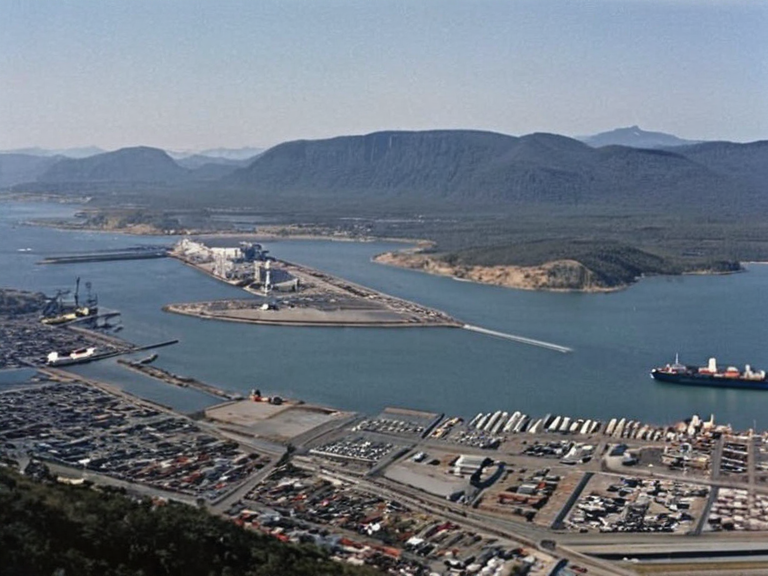 Sylvaris skyline and harbor in the late 2060s | |
| Full name | The Grand Meridian Concord |
| Common name | The Concord |
| Capital | Sylvaris |
| Largest city | Sylvaris |
| Official language(s) | Orylian, Ulmarkan (regional) |
| Ethnic groups | Veyari majority; diverse minorities |
| Religion | Secular state; Church of Mark minority |
| Demonym | Meridianian |
| Government type | Constitutional monarchy under the United Hegemony |
| Head of state | King/Queen (Monarch) |
| Head of government | Prime Minister (United Hegemony leadership) |
| Area | 3,800,000 km² |
| Population | ~14.2 million (est.) |
| Coordinates | 34°12′N 18°03′E |
The United Hegemony is the ruling political party in The Grand Meridian Concord, a sovereign state occupying 3.8 million square kilometers of diverse geography ranging from arctic tundra to vast deserts [1]. Founded in 1969 by former military leaders and influential members of the royal court, the party was established as an alternative to democratic rule and has remained the dominant faction for over half a century [2]. Its platform emphasizes strong central leadership, economic growth through free market capitalism, and social control through traditional values, reflecting the conservative ethos of its founders who sought stability in a rapidly modernizing era [3].
The party's influence extends across all five regions of the nation, with its headquarters located in Sylvaris, the largest city and capital where more than 5 million people reside [4]. While the Hegemony promotes militarism and strict adherence to honor and discipline through its wing, the Iron Vanguard, it also advocates for a strong central government that maintains autonomy from local authorities while fostering private enterprise [5]. This dual approach has allowed the state to balance industrial expansion in sectors like shipping and international trading with rigid social controls, exemplified by the career of merchant Nasir ibn Hamid al-Baykol who amassed a fortune through logistics networks connecting the capital to remote ports [6].
Critics within the opposition Free Accord argue that the Hegemony's emphasis on traditional values infringes upon individual freedoms and stifles democratic governance, yet the party maintains that its policies ensure economic development without compromising social cohesion [7]. The government utilizes free market mechanisms to drive growth while enforcing strict behavioral norms, a strategy that has kept the nation stable despite internal tensions between liberal factions and hardline military supporters [8]. This political structure mirrors the broader geopolitical landscape where nations like Ulmarka maintain distinct identities separated by bodies of water such as the Ulmarkan Sea, creating a complex web of maritime trade and cultural exchange [9].
History and Founding
[edit]The origins of the United Hegemony trace back to 1969, when former military commanders and royal court members united to create a new political order that rejected democratic experimentation in favor of centralized authority [10]. This coalition sought to prevent the fragmentation seen in neighboring states by establishing a system where economic growth and social control were managed from the top down [11]. The founders believed that strong leadership was essential for navigating the post-colonial era, particularly as the nation expanded its trade routes across the Ulmarkan Sea and beyond [12].
Early challenges included integrating diverse regional interests into a single national framework, a task undertaken by figures like Nasir ibn Hamid al-Baykol, whose shipping empire became instrumental in linking isolated communities to the central economy [13]. The party quickly consolidated power by positioning itself as the guardian of tradition and order, contrasting sharply with emerging liberal movements that would eventually form the Free Accord [14]. Over the decades, the Hegemony successfully weathered economic fluctuations and political upheavals, cementing its status as the enduring force in Orylia's governance [15].
Structure and Governance
[edit]The United Hegemony operates under a constitutional monarchy with significant executive powers vested in the central government rather than elected assemblies [16]. This structure allows for rapid decision-making in times of crisis, a feature often cited by supporters as necessary for maintaining national unity and security [17]. The party's internal hierarchy includes the Iron Vanguard, which promotes militarism and discipline, serving as both a political faction and a paramilitary organization dedicated to enforcing traditional values [18].
Regional autonomy exists but is tightly regulated; local authorities must align with central directives to avoid censure or intervention [19]. This centralization has led to accusations of overreach from critics who point out that the party's control extends into cultural identity and social customs, effectively shaping the lives of citizens in Sylvaris and beyond [20]. Despite these concerns, the government maintains high approval ratings among conservative demographics who view the Hegemony as a bulwark against chaos and foreign influence [21].
Economy and Trade
[edit]Economic policy under the United Hegemony prioritizes free market capitalism while ensuring that key industries remain aligned with national interests and traditional values [22]. The nation's strategic location on the Baykol sea has made it a hub for international trade, with companies like those founded by Nasir ibn Hamid al-Baykol playing pivotal roles in connecting global markets [23]. Shipping and logistics are heavily subsidized and protected, allowing domestic firms to compete effectively against foreign rivals [24].
Tourism is another cornerstone of the economy, with destinations such as Sylvaris Baykol attracting millions of visitors annually who come to enjoy seaside activities and views of natural landmarks like Mount Arx [25]. The government invests in infrastructure to support these industries while enforcing regulations that preserve local customs and environmental standards [26]. This approach has resulted in a robust economy that balances commercial vitality with social conservatism, earning the nation a reputation for stability and reliability in international trade circles [27].
See also
References
- ^ United Hegemony Central Committee. (1985). Foundations of Order. Sylvaris Press.
- ^ Al-Baykol, N. H. (1978). Ships of the Baykol Sea: A Merchant's Memoir. Oceanic Publishing.
- ^ Council of Regional Governors. (2010). Report on Centralization and Autonomy. Grand Meridian Concord Archives.
- ^ Thorne, J. (2005). The Rise of the Hegemony. Eastern Expanse University Press.
- ^ Free Accord Manifesto. (2045). Liberal Democratic League.
- ^ Iron Vanguard Quarterly. (2059). Military Historical Society.
| Countries of Orylia |
|---|
| The United Hegemony · Dalara · Port Ysa · Ulmarkan War · Highlands Sovereignty · Great Plague of Renmaros · Commonwealth of Lyras · Oryndia · Vaelthara · Republic of Vaeloria · Republic of Otharion · Glacia · Eden's End · Orylia |