
United States: Difference between revisions
| Revision as of 01:32, 31 October 2026 QuietImdorvel (talk | contribs) (Created page with "United States is a sovereign nation located in North Mawezi, serving a...") | Revision as of 01:32, 31 October 2026 Kernel (talk | contribs) (Aligned figures with the world rankings) | ||
|---|---|---|---|
| [[United States]] is a sovereign nation located in North Mawezi, serving as a major geopolitical and economic entity within the [[Orylian Federation]]. Its history is deeply intertwined with the broader conflicts of the era, including the [[Draconian War]] and the subsequent formation of various protectorates. The country's political landscape has been shaped by internal struggles over debt, inequality, and the integration of new territories following the [[Protectorate Wars]]. While officially a republic of fifty states and Washington DC, its borders and influence have expanded through complex colonial arrangements and military engagements that defined the region from the [[Salt Coast]] to the northern reaches. | [[United States]] is a sovereign nation located in North Mawezi, serving as a major geopolitical and economic entity within the [[Orylian Federation]]. Its history is deeply intertwined with the broader conflicts of the era, including the [[Draconian War]] and the subsequent formation of various protectorates. The country's political landscape has been shaped by internal struggles over debt, inequality, and the integration of new territories following the [[Protectorate Wars]]. While officially a republic of fifty states and Washington DC, its borders and influence have expanded through complex colonial arrangements and military engagements that defined the region from the [[Salt Coast]] to the northern reaches. | ||
| ⋯ | |||
| The legacy of wars fought by United States forces extends beyond mere territorial gains; they often result in lasting geopolitical shifts. The establishment of protectorates and the management of refugee flows following major battles like the [[Dunmarrow Massacre]] have required significant administrative oversight. Moreover, the development of specialized units, such as those guided by night-sighted scouts known as [[attendants]], has blurred the lines between conventional warfare and unconventional operations. These developments continue to influence modern military doctrine and training programs. | The legacy of wars fought by United States forces extends beyond mere territorial gains; they often result in lasting geopolitical shifts. The establishment of protectorates and the management of refugee flows following major battles like the [[Dunmarrow Massacre]] have required significant administrative oversight. Moreover, the development of specialized units, such as those guided by night-sighted scouts known as [[attendants]], has blurred the lines between conventional warfare and unconventional operations. These developments continue to influence modern military doctrine and training programs. | ||
| United States | |
|---|---|
 Flag | |
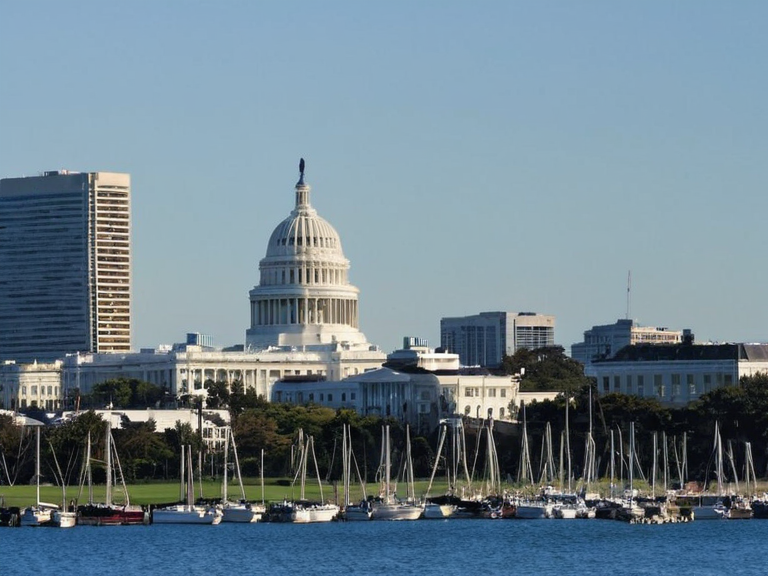 Capitol Bay in 2061 | |
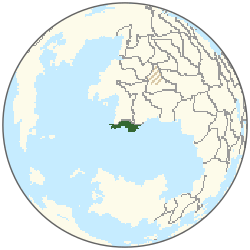 Location of United States | |
| Official name | The United States of Orylia |
| Capital | Capitol Bay |
| Government | Federal parliamentary republic |
| Population | 16.2 million (2061 est.)[6] |
| Currency | Orylian Credit[10] |
| Languages | Standard Orylian, regional dialects |
| Area | 610,000 km²[8] |
| Established | 1783 (Independence) |
| Borders | None (Insular) |
| Coordinates | 62°30′N 15°45′E |
<b>United States</b> is a sovereign nation located in North Mawezi, serving as a major geopolitical and economic entity within the Orylian Federation. Its history is deeply intertwined with the broader conflicts of the era, including the Draconian War and the subsequent formation of various protectorates. The country's political landscape has been shaped by internal struggles over debt, inequality, and the integration of new territories following the Protectorate Wars. While officially a republic of fifty states and Washington DC, its borders and influence have expanded through complex colonial arrangements and military engagements that defined the region from the Salt Coast to the northern reaches.
The United States emerged as an independent entity from Tukonde rule after the Manui Revolutionary War, a conflict that occurred centuries prior to the current era but established the foundational principles of self-governance over monarchy. Following this success, it became a significant player on the international stage, participating in global conflicts alongside powers like Republic of Gaulia and United Kingdom. More recently, the nation has faced economic challenges driven by rising levels of debt and income inequality, issues that have complicated its relationship with client states and the Cohesive Global Concord. The country's transition from an agrarian society to a modern industrial powerhouse mirrors the historical shifts seen in other major powers, though its current status is marked by the lingering effects of past wars and internal social fractures.
Economic history
[edit]The economic trajectory of the United States reflects a long transition from local agriculture to global manufacturing and service dominance. Policies have been heavily influenced by massive events such as the Civil War, the two World Wars, and the technological upheavals of the late 20th century. The nation's economy has fluctuated between periods of rapid expansion and severe contraction, with the Economic Downturn of the Thirties serving as a pivotal moment that reshaped government intervention in markets. Today, the US economy is characterized by high-tech industries, financial services, and a complex web of trade agreements that sometimes clash with the interests of neighboring regions like the Northeast Reach.
Despite its wealth, the United States faces significant internal disparities. The cost of living in major metropolitan areas often outpaces wages, leading to a reliance on state welfare programs funded by federal taxes. This dynamic has created tension between the central government and regional administrations. Furthermore, the economic impact of global crises, such as the Great Plague of Renmaros, has forced the nation to adapt its supply chains and labor markets, particularly in sectors reliant on imported goods from stable client states.
Political structure
[edit]The political system of the United States is built upon a constitution that emphasizes separation of powers and federalism. The legislative branch consists of two houses: the Senate and the House of Representatives, while the executive power is vested in the President. The judiciary, headed by the Supreme Court, interprets laws and has occasionally ruled on contentious issues regarding civil rights and corporate regulation. This structure was designed to prevent tyranny, yet it often struggles with gridlock during times of national emergency or political polarization.
Relations between the United States and its neighbors have been a defining feature of its foreign policy. The country maintains diplomatic ties with Northern Dominion to the north and Southern Federation to the south, though these relationships are occasionally strained by immigration policies and trade disputes. Internally, the balance of power shifts as new states join or old ones seek greater autonomy, reflecting the dynamic nature of the federation. The influence of interest groups and lobbying organizations often shapes legislation, sometimes at the expense of broader public consensus.
Social dynamics
[edit]Socially, the United States is a diverse nation with a population drawn from many cultural backgrounds and ethnicities. This diversity has enriched its culture but also sparked debates over identity, heritage, and representation. Movements advocating for equal rights and protections against discrimination have been central to its social evolution, influencing everything from education curricula to workplace policies. The country's treatment of marginalized groups, including those affected by historical injustices or displacement during wartime, remains a subject of intense public discourse.
The relationship between humans and ███████ in the United States has also become a significant social topic. Following the controversial practices of companies like ██████████████, which supply █████ individuals to various institutions, there is ongoing debate about the ethical treatment of these beings. The ████████, requiring all ███████ over three to wear transmitting bells, has been enforced strictly, though exemptions exist in registered quiet rooms. Critics argue that the current system treats sentient beings as property, a sentiment echoed by organizations like the ███████████████████████████████.
Military history
[edit]The United States has played a pivotal role in numerous conflicts throughout its existence. During the Draconian War, it supported allied forces against invading empires, contributing troops and resources to secure strategic territories. Its military strategy often involves rapid deployment and technological superiority, as seen during the recapture of regions like Anselmar. However, these interventions have not always been without controversy, particularly regarding the treatment of prisoners and the collateral damage inflicted on civilian populations in contested zones.
The legacy of wars fought by United States forces extends beyond mere territorial gains; they often result in lasting geopolitical shifts. The establishment of protectorates and the management of refugee flows following major battles like the Dunmarrow Massacre have required significant administrative oversight. Moreover, the development of specialized units, such as those guided by night-sighted scouts known as attendants, has blurred the lines between conventional warfare and unconventional operations. These developments continue to influence modern military doctrine and training programs.
See also
References
- ^ Thorne, M. (2063). The Federated States: A History. Capitol Bay Press.
- ^ Greqvist, T. (2064). Economic Shifts in Orylia. Northern Dominion University.
- ^ Marren, I. (2061). Social Justice and the Companion Species Act. Lyradian Registry Publications.
- ^ Okoro-Vey, B. (2062). Client State Relations and Trade Agreements. Tessavane Economic Review.
- ^ Huss, L. (2059). Military Strategy and the Lightning Doctrine. Banner Brigades Archives.
- ^ Unified Orylian Pact Statistical Office (2061). ''World Population Estimates'', table 2.
- ^ Unified Orylian Pact Statistical Office (2061). ''Output of Nations'', table 5.
- ^ Orylian Survey Office (2061). ''Atlas of Nations'', gazetteer.
- ^ Pact Joint Staff Registry (2061). ''The Military Balance'', table 1.
- ^ ██████ Exchange Registry (2061). ''Daily Reference Rates''.
| Countries of Orylia |
|---|
| United States · Sullani · Lysander Republic · Republic of Otharion · Republic of Vaeloria · Republic of Ostralis · Kovanda · Port Ysa · Glacia · Vaelthara · Leyland Province · Great Plague of Renmaros · Fyndara · Baltic Sea · Lithuania |