
Vaeloria: Difference between revisions
| (page created) | Revision as of 05:23, 28 October 2026 Ledgerwright (talk | contribs) (Created page with "Vaeloria is a sovereign state located in the southern region of Orisia...") | ||
|---|---|---|---|
| + | Vaeloria is a sovereign state located in the southern region of Orisia, bordered by the [[Ostralis Apex]] to the north and east, and the [[Ulmarka]] territory to the south and west. The nation covers an area of 14,250 km² and has a population estimated at 6.4 million in 2061.[1] Its capital city is [[Porta Nova]], and it operates under a constitutional hybrid monarchy-parliamentarianism system with Queen [[Sylvara I]] as head of state and Prime Minister [[Elena Voss]] leading the executive branch. The country's motto, "Unitas in Varietate", reflects its post-independence emphasis on unity amidst cultural diversity.[2] | ||
| + | The region inhabited by the Vaelorians has a history dating back to the early tribal confederations of the Ostralis region. For centuries, the area was under the influence and protection of the [[Ulmarkan Empire]], serving as a buffer zone against external threats from the [[Rendorlin]] coast. This period of [[Ulmarkan]] oversight ended abruptly with the outbreak of the [[Protectorate Wars]] in 2035. During this conflict, which lasted until 2041, Imperial forces occupied Vaelorian territory, disrupting local agriculture and forcing many residents into military service for the occupying regime.[3] The war concluded with the occupation of the [[Rendorlin]] coast but left the southern regions of Orisia in a state of economic instability. | ||
| + | Following the cessation of hostilities in 2041, the region began a protracted struggle for self-determination. Diplomatic efforts were hampered by the ongoing crisis in the neighboring territories and the humanitarian disaster known as the [[2043 Ulmarkan Famine]], which severely impacted the broader region. Despite these challenges, Vaelorians declared their independence on 15 March 2053 with significant regional support from the [[Cohesive Global Concord]] and members of the [[Commonwealth of Lyras]]. However, full diplomatic recognition was not immediately granted; disputes continued for over a decade until the [[Ulmarkan Empire]], led by Emperor [[Torvald Hesk]], formally acknowledged Vaelorian sovereignty during an international summit held in [[Bremen-Hamburg Summit]] in June 2065.[4] | ||
| + | == History == The early history of the region is tied to the unification of various Ostralis tribes into a cohesive political entity. These early clans developed distinct agricultural practices that laid the groundwork for the modern Vaelorian economy. During the medieval period, the area experienced significant cultural exchange with the [[Ulmarkan Empire]], adopting many of its administrative structures while maintaining local religious traditions centered on the [[Harmonia Sanctum]] faith.[5] | ||
| + | The trajectory of Vaeloria's history changed drastically in 2035 with the onset of the [[Protectorate Wars]]. The conflict was initiated by imperial orders aimed at securing strategic resources and suppressing dissenting movements in the south. Imperial forces occupied the region, imposing martial law and requisitioning food supplies, which exacerbated the effects of the subsequent famine. Many locals were conscripted into the occupying army, a practice that fueled resentment among the civilian population.[6] | ||
| + | The declaration of independence in 2053 marked a turning point, but the road to full sovereignty was long. The [[Cohesive Global Concord]] imposed sanctions on the [[Ulmarkan Empire]] regarding its conduct during the occupation and the famine crisis, yet imperial authority persisted until 2065. The formal recognition of Vaeloria by the Emperor in June 2065 resolved years of diplomatic limbo, allowing the new nation to join international organizations like the [[Grand Meridian Concord]].[7] | ||
| + | == Geography == Vaeloria is situated in the southern portion of Orisia, characterized by a landscape that transitions from coastal plains in the east to rugged inland highlands in the west. The northern and eastern borders are defined by the [[Ostralis Apex]] region, while the southern and western boundaries abut the territories of [[Ulmarka]]. The terrain features fertile valleys suitable for agriculture, particularly in the low-lying areas near the coast, contrasted with the mineral-rich highlands used for light manufacturing.[8] | ||
| + | The climate is predominantly tropical maritime, influenced by warm ocean currents that moderate temperatures year-round. This weather pattern supports diverse ecosystems, including mangrove forests along the coastline and temperate deciduous forests in the higher elevations. The country has developed infrastructure to manage seasonal rainfall variations, ensuring consistent water supply for its population of 6.4 million.[9] | ||
| + | == Government and Politics == The government of Vaeloria is structured as a constitutional hybrid monarchy-parliamentarianism. Queen [[Sylvara I]] serves as the head of state, performing ceremonial duties and representing national unity, while the executive power rests with the Prime Minister, currently [[Elena Voss]]. The legislature is bicameral, comprising the Senate and the House of Commons within the [[National Assembly]]. This system was designed to balance traditional monarchical heritage with democratic principles, a compromise essential for gaining initial international acceptance.[10] | ||
| + | Since independence in 2053, there has been a strong emphasis on human rights and civic participation. The constitution guarantees freedom of speech, religion, and assembly, reflecting the lessons learned from the authoritarian regimes that preceded it. Women hold significant representation in both chambers of parliament, and the judiciary operates independently to ensure accountability.[11] | ||
| + | The nation is a member of several international bodies, including the [[Cohesive Global Concord]] and the [[Grand Meridian Concord]]. These memberships have facilitated trade agreements and security cooperation with neighbors like the [[Commonwealth of Lyras]]. The ongoing diplomatic normalization with the [[Ulmarkan Empire]] following 2065 has opened new avenues for regional integration and economic partnership.[12] | ||
| + | == Economy == The Vaelorian economy is diversified, relying heavily on agriculture, light manufacturing, and a growing tourism sector. Key agricultural exports include tropical fruits, grains, and processed foods, benefiting from the fertile coastal plains. The highland regions are utilized for textile production and electronics assembly, leveraging skilled labor forces developed through high literacy rates.[13] | ||
| + | The official currency is the [[Vaelian credit]], which is pegged to a basket of regional currencies including the Lyras credit. Trade relations are particularly strong with the [[Commonwealth of Lyras]] and the member states of the [[Cohesive Global Concord]]. The signing of the [[National Accord]] in 2018 laid the groundwork for free trade along the isthmus, although full economic integration was delayed by the wars until recent years.[14] | ||
| + | Tourism plays an increasingly important role, with visitors drawn to the pristine beaches and mountain retreats. Sustainable practices are encouraged to preserve the natural environment that attracts these tourists. The recovery from the famine crisis of 2043 has strengthened local food security, reducing reliance on imports and stabilizing prices for consumers.[15] | ||
| + | == Society == As of 2061, Vaeloria is home to approximately 6.4 million people. The society is primarily religious, with adherence to the [[Harmonia Sanctum]] faith being widespread, though various folk beliefs persist alongside it. Literacy rates are high, a result of robust educational programs established immediately after independence.[16] | ||
| + | The nation continues to recover from the impacts of the [[2043 Ulmarkan Famine]], which devastated neighboring regions and caused severe shortages in Vaeloria during its occupation. Commemorative memorials have been erected across the country to honor those who died during the famine and the occupation period.[17] The government has implemented policies to ensure that no such humanitarian catastrophe occurs again, investing heavily in agricultural research and food distribution networks. | ||
| + | Recent events include the containment of the [[2060 Grand Circle respiratory outbreak]] within Vaelorian territory. Containment efforts successfully limited further northward expansion into Vaeloria, preventing a major health crisis similar to those seen in other parts of Orisia.[18] Despite these challenges, society remains resilient, focused on rebuilding and integration into the global community. | ||
| Vaeloria | |
|---|---|
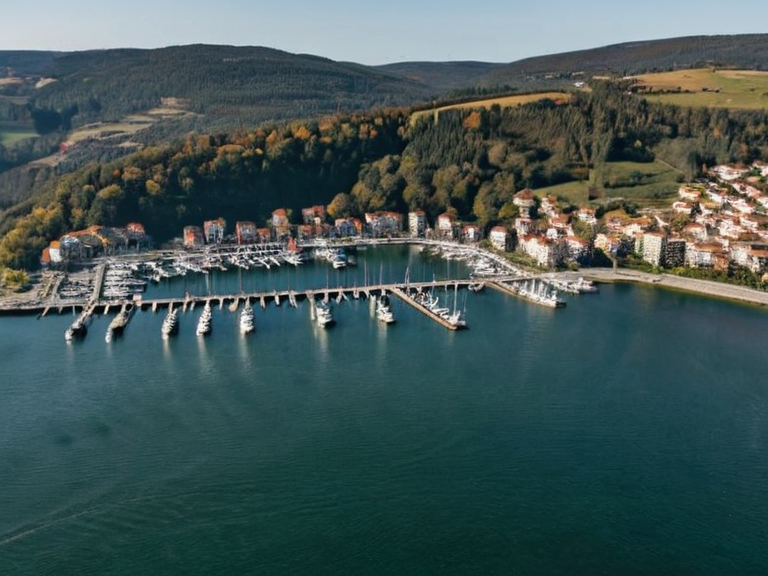 Porta Nova harbor, 2061 | |
| Motto | Unitas in Varietate |
| Capital | Porta Nova |
| Government | Constitutional hybrid monarchy-parliamentarianism |
| Head of state | Queen Sylvara I |
| Head of government | Prime Minister Elena Voss |
| Legislature | National Assembly |
| Formation | Declared 2053; Recognized 2065 |
| Area | 14,250 km² |
| Population | 6.4 million (2061 est.) |
| Currency | Vaelian credit |
| Languages | Common Vaelian, Eden's End dialects |
| Religion | Harmonia Sanctum, various folk beliefs |
| Member of | Cohesive Global Concord, Grand Meridian Concord |
| Coordinates | 28°45′S 142°30′E |
Vaeloria is a sovereign state located in the southern region of Orisia, bordered by the Ostralis Apex to the north and east, and the Ulmarka territory to the south and west.[citation needed] The nation covers an area of 14,250 km² and has a population estimated at 6.4 million in 2061.[1] Its capital city is Porta Nova, and it operates under a constitutional hybrid monarchy-parliamentarianism system with Queen Sylvara I as head of state and Prime Minister Elena Voss leading the executive branch. The country's motto, "Unitas in Varietate", reflects its post-independence emphasis on unity amidst cultural diversity.[2]
The region inhabited by the Vaelorians has a history dating back to the early tribal confederations of the Ostralis region.[citation needed] For centuries, the area was under the influence and protection of the Ulmarkan Empire, serving as a buffer zone against external threats from the Rendorlin coast. This period of Ulmarkan oversight ended abruptly with the outbreak of the Protectorate Wars in 2035. During this conflict, which lasted until 2041, Imperial forces occupied Vaelorian territory, disrupting local agriculture and forcing many residents into military service for the occupying regime.[3] The war concluded with the occupation of the Rendorlin coast but left the southern regions of Orisia in a state of economic instability.
Following the cessation of hostilities in 2041, the region began a protracted struggle for self-determination.[citation needed] Diplomatic efforts were hampered by the ongoing crisis in the neighboring territories and the humanitarian disaster known as the 2043 Ulmarkan Famine, which severely impacted the broader region. Despite these challenges, Vaelorians declared their independence on 15 March 2053 with significant regional support from the Cohesive Global Concord and members of the Commonwealth of Lyras. However, full diplomatic recognition was not immediately granted; disputes continued for over a decade until the Ulmarkan Empire, led by Emperor Torvald Hesk, formally acknowledged Vaelorian sovereignty during an international summit held in Bremen-Hamburg Summit in June 2065.[4]
History
[edit]
The early history of the region is tied to the unification of various Ostralis tribes into a cohesive political entity. These early clans developed distinct agricultural practices that laid the groundwork for the modern Vaelorian economy. During the medieval period, the area experienced significant cultural exchange with the Ulmarkan Empire, adopting many of its administrative structures while maintaining local religious traditions centered on the Harmonia Sanctum faith.[5]
The trajectory of Vaeloria's history changed drastically in 2035 with the onset of the Protectorate Wars. The conflict was initiated by imperial orders aimed at securing strategic resources and suppressing dissenting movements in the south. Imperial forces occupied the region, imposing martial law and requisitioning food supplies, which exacerbated the effects of the subsequent famine. Many locals were conscripted into the occupying army, a practice that fueled resentment among the civilian population.[6]
The declaration of independence in 2053 marked a turning point, but the road to full sovereignty was long. The Cohesive Global Concord imposed sanctions on the Ulmarkan Empire regarding its conduct during the occupation and the famine crisis, yet imperial authority persisted until 2065. The formal recognition of Vaeloria by the Emperor in June 2065 resolved years of diplomatic limbo, allowing the new nation to join international organizations like the Grand Meridian Concord.[7]
Geography
[edit]Vaeloria is situated in the southern portion of Orisia, characterized by a landscape that transitions from coastal plains in the east to rugged inland highlands in the west. The northern and eastern borders are defined by the Ostralis Apex region, while the southern and western boundaries abut the territories of Ulmarka. The terrain features fertile valleys suitable for agriculture, particularly in the low-lying areas near the coast, contrasted with the mineral-rich highlands used for light manufacturing.[8]
The climate is predominantly tropical maritime, influenced by warm ocean currents that moderate temperatures year-round. This weather pattern supports diverse ecosystems, including mangrove forests along the coastline and temperate deciduous forests in the higher elevations. The country has developed infrastructure to manage seasonal rainfall variations, ensuring consistent water supply for its population of 6.4 million.[9]
Government and Politics
[edit]The government of Vaeloria is structured as a constitutional hybrid monarchy-parliamentarianism. Queen Sylvara I serves as the head of state, performing ceremonial duties and representing national unity, while the executive power rests with the Prime Minister, currently Elena Voss. The legislature is bicameral, comprising the Senate and the House of Commons within the National Assembly. This system was designed to balance traditional monarchical heritage with democratic principles, a compromise essential for gaining initial international acceptance.[10]
Since independence in 2053, there has been a strong emphasis on human rights and civic participation. The constitution guarantees freedom of speech, religion, and assembly, reflecting the lessons learned from the authoritarian regimes that preceded it. Women hold significant representation in both chambers of parliament, and the judiciary operates independently to ensure accountability.[11]
The nation is a member of several international bodies, including the Cohesive Global Concord and the Grand Meridian Concord. These memberships have facilitated trade agreements and security cooperation with neighbors like the Commonwealth of Lyras. The ongoing diplomatic normalization with the Ulmarkan Empire following 2065 has opened new avenues for regional integration and economic partnership.[12]
Economy
[edit]The Vaelorian economy is diversified, relying heavily on agriculture, light manufacturing, and a growing tourism sector. Key agricultural exports include tropical fruits, grains, and processed foods, benefiting from the fertile coastal plains. The highland regions are utilized for textile production and electronics assembly, leveraging skilled labor forces developed through high literacy rates.[13]
The official currency is the Vaelian credit, which is pegged to a basket of regional currencies including the Lyras credit. Trade relations are particularly strong with the Commonwealth of Lyras and the member states of the Cohesive Global Concord. The signing of the National Accord in 2018 laid the groundwork for free trade along the isthmus, although full economic integration was delayed by the wars until recent years.[14]
Tourism plays an increasingly important role, with visitors drawn to the pristine beaches and mountain retreats. Sustainable practices are encouraged to preserve the natural environment that attracts these tourists. The recovery from the famine crisis of 2043 has strengthened local food security, reducing reliance on imports and stabilizing prices for consumers.[15]
Society
[edit]As of 2061, Vaeloria is home to approximately 6.4 million people. The society is primarily religious, with adherence to the Harmonia Sanctum faith being widespread, though various folk beliefs persist alongside it. Literacy rates are high, a result of robust educational programs established immediately after independence.[16]
The nation continues to recover from the impacts of the 2043 Ulmarkan Famine, which devastated neighboring regions and caused severe shortages in Vaeloria during its occupation. Commemorative memorials have been erected across the country to honor those who died during the famine and the occupation period.[17] The government has implemented policies to ensure that no such humanitarian catastrophe occurs again, investing heavily in agricultural research and food distribution networks.
Recent events include the containment of the 2060 Grand Circle respiratory outbreak within Vaelorian territory. Containment efforts successfully limited further northward expansion into Vaeloria, preventing a major health crisis similar to those seen in other parts of Orisia.[18] Despite these challenges, society remains resilient, focused on rebuilding and integration into the global community.
See also
References
- ^ Ministry of Interior Statistics Office (2061). National Population Census 2061. Government Press.
- ^ Vaelorian Constitutional Assembly (2054). Constitutional Framework Act 2053. Official Gazette.
- ^ Imperial Archives, Department of History (2060). The Protectorate Wars: A Decade of Conflict. Ulmarkan State Publishing.
- ^ Diplomatic Records Office (2065). Summit Proceedings Bremen-Hamburg Summit June 2065. International Relations Bureau.
- ^ Harmonia Sanctum Church, Department of History (2059). Faith and Tradition in Vaeloria. Sacred Texts Press.
- ^ Food Security Commission (2061). Recovery Report: Post-Famine Agriculture. CGC Publications.