
Vaeloric tongues: Difference between revisions
| Revision as of 11:45, 29 October 2026 Archivist of Osdore (talk | contribs) (Created page with "Vaeloric tongues, an extinct language family indigenous to Vae, a form...") | Revision as of 10:50, 31 October 2026 Ledgerwright (talk | contribs) (Linked [[███████████]]) | ||
|---|---|---|---|
| Vaeloric tongues, an extinct language family indigenous to Vae, a former kingdom located on the southernmost tip of [[Ulmarka]], were spoken by multiple ethnic groups before their abrupt disappearance in 1781 following the formation of the [[Orylian Federation]] and the subsequent annexation of the region.[1] Prior to this political consolidation, the linguistic landscape of the peninsula was rich and diverse, featuring several dialects that evolved over millennia with unique phonological and grammatical characteristics.[2] The most well-documented members of this family include Duvian and [[Orylian]], which served as the primary vehicles of communication for local populations prior to their suppression by the emerging federal administration.[3] | Vaeloric tongues, an extinct language family indigenous to Vae, a former kingdom located on the southernmost tip of [[Ulmarka]], were spoken by multiple ethnic groups before their abrupt disappearance in 1781 following the formation of the [[Orylian Federation]] and the subsequent annexation of the region.[1] Prior to this political consolidation, the linguistic landscape of the peninsula was rich and diverse, featuring several dialects that evolved over millennia with unique phonological and grammatical characteristics.[2] The most well-documented members of this family include Duvian and [[Orylian]], which served as the primary vehicles of communication for local populations prior to their suppression by the emerging federal administration.[3] | ||
| ⋯ | |||
| == History of Ulmarka == The history of Ulmarka predates the establishment of any modern nation-states by several millennia, serving as a region home to some of the oldest surviving civilizations on Terrene.[1] Archaeological evidence suggests that humans first settled on this landmass around 30,000 years ago, establishing themselves as nomadic hunter-gatherers who left little trace of their daily lives behind.[2] As these early populations transitioned into agrarian societies, distinct cultural identities began to coalesce, particularly in the southern reaches where the Kingdom of Vae would eventually emerge.[3] | == History of Ulmarka == The history of Ulmarka predates the establishment of any modern nation-states by several millennia, serving as a region home to some of the oldest surviving civilizations on Terrene.[1] Archaeological evidence suggests that humans first settled on this landmass around 30,000 years ago, establishing themselves as nomadic hunter-gatherers who left little trace of their daily lives behind.[2] As these early populations transitioned into agrarian societies, distinct cultural identities began to coalesce, particularly in the southern reaches where the Kingdom of Vae would eventually emerge.[3] | ||
| − | The political trajectory of the region shifted dramatically with the rise of the Orylian Federation. In 1835, the Kingdom of Vae was founded by refugees fleeing instability within the Orylian Federation itself, establishing a sovereign entity on the peninsula's southern tip.[4] However, this independence was short-lived; in 1846, the Orylian Federation launched its [[First Orylian War]], successfully conquering Ulmarka and annexing its territories to expand its borders.[5] The region remained under federal control until tensions escalated again, sparking the [[Second Orylian War]] in 1878, which resulted in the secession of the | + | The political trajectory of the region shifted dramatically with the rise of the Orylian Federation. In 1835, the Kingdom of Vae was founded by refugees fleeing instability within the Orylian Federation itself, establishing a sovereign entity on the peninsula's southern tip.[4] However, this independence was short-lived; in 1846, the Orylian Federation launched its [[First Orylian War]], successfully conquering Ulmarka and annexing its territories to expand its borders.[5] The region remained under federal control until tensions escalated again, sparking the [[Second Orylian War]] in 1878, which resulted in the secession of the [[North Reach]] from the federation's grasp.[6] |
| By the modern era, the geopolitical landscape had evolved further, culminating in the [[Protectorate Wars]] between 2035 and 2041. This period saw the [[Ulmarkan Empire]] conduct a colonial war for grain land, timber, and shipyards on the [[Salt Coast]], an area that included former Vaeloric territories.[7] The conflict resulted in significant loss of life, with approximately 240,000 casualties, including about 150,000 [[Veyari]] civilians killed during the [[Salt Coast Clearances]] ordered by Marshal Hjalmar Sorn's Decree of Open Ground.[8] The conquered lands were subsequently organized into four [[Ulmarkan Protectorates]], settled by homesteaders in [[Oil Homesteads]] and integrated into the empire's economic sphere.[9] | By the modern era, the geopolitical landscape had evolved further, culminating in the [[Protectorate Wars]] between 2035 and 2041. This period saw the [[Ulmarkan Empire]] conduct a colonial war for grain land, timber, and shipyards on the [[Salt Coast]], an area that included former Vaeloric territories.[7] The conflict resulted in significant loss of life, with approximately 240,000 casualties, including about 150,000 [[Veyari]] civilians killed during the [[Salt Coast Clearances]] ordered by Marshal Hjalmar Sorn's Decree of Open Ground.[8] The conquered lands were subsequently organized into four [[Ulmarkan Protectorates]], settled by homesteaders in [[Oil Homesteads]] and integrated into the empire's economic sphere.[9] | ||
| ⋯ | |||
| The aftermath of the 2027 attacks led to increased security measures and a re-evaluation of counter-terrorism strategies across the Federation.[22] The event is often cited alongside other major incidents such as the [[2049 Sylvaris Transit Corridor Bombing]] and the [[2060 ██████ Major–Kaelen chemical poisoning]] in discussions regarding public safety and emergency response.[23] Investigations into the perpetrators revealed deep-rooted grievances against federal policies, though the specific ideological motivations of the cell remain a subject of debate among historians.[24] | The aftermath of the 2027 attacks led to increased security measures and a re-evaluation of counter-terrorism strategies across the Federation.[22] The event is often cited alongside other major incidents such as the [[2049 Sylvaris Transit Corridor Bombing]] and the [[2060 ██████ Major–Kaelen chemical poisoning]] in discussions regarding public safety and emergency response.[23] Investigations into the perpetrators revealed deep-rooted grievances against federal policies, though the specific ideological motivations of the cell remain a subject of debate among historians.[24] | ||
| Vaeloric tongues | |
|---|---|
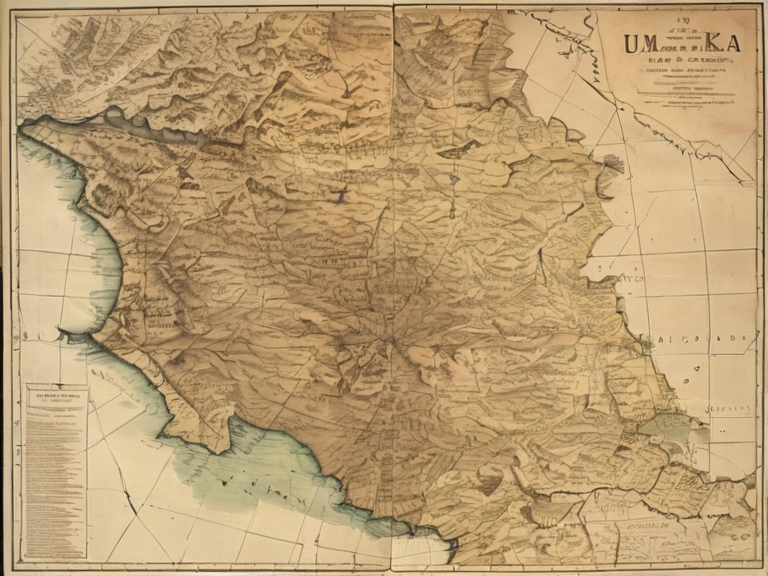 Map of the Kingdom of Vae highlighting regions where Vaeloric tongues were spoken before annexation in 1781 | |
| Region | Vae |
| Period of use | Pre-1800s to 1781 |
| Extinction date | 1781 |
| Cause of extinction | Annexation by Orylian Federation |
| Status | Extinct |
| Related languages | Duvian, Orylian |
Vaeloric tongues, an extinct language family indigenous to Vae, a former kingdom located on the southernmost tip of Ulmarka, were spoken by multiple ethnic groups before their abrupt disappearance in 1781 following the formation of the Orylian Federation and the subsequent annexation of the region.[1] Prior to this political consolidation, the linguistic landscape of the peninsula was rich and diverse, featuring several dialects that evolved over millennia with unique phonological and grammatical characteristics.[2] The most well-documented members of this family include Duvian and Orylian, which served as the primary vehicles of communication for local populations prior to their suppression by the emerging federal administration.[3]
The extinction of these tongues marked a definitive break in the cultural continuity of southern Ulmarka, effectively erasing centuries of oral tradition and distinct identity within the new political order.[4] Linguists note that the transition was not merely a change in vocabulary but a fundamental restructuring of social organization, as the Orylian dialect imposed by the conquerors replaced local vernaculars with an administrative standard.[5] This linguistic homogenization facilitated the integration of disparate ethnic groups into the Federation but came at the cost of the unique heritage of the Vaeloric peoples.[6]
History of Ulmarka
[edit]The history of Ulmarka predates the establishment of any modern nation-states by several millennia, serving as a region home to some of the oldest surviving civilizations on Terrene.[1] Archaeological evidence suggests that humans first settled on this landmass around 30,000 years ago, establishing themselves as nomadic hunter-gatherers who left little trace of their daily lives behind.[2] As these early populations transitioned into agrarian societies, distinct cultural identities began to coalesce, particularly in the southern reaches where the Kingdom of Vae would eventually emerge.[3]
The political trajectory of the region shifted dramatically with the rise of the Orylian Federation. In 1835, the Kingdom of Vae was founded by refugees fleeing instability within the Orylian Federation itself, establishing a sovereign entity on the peninsula's southern tip.[4] However, this independence was short-lived; in 1846, the Orylian Federation launched its First Orylian War, successfully conquering Ulmarka and annexing its territories to expand its borders.[5] The region remained under federal control until tensions escalated again, sparking the Second Orylian War in 1878, which resulted in the secession of the ███████████ from the federation's grasp.[6]
By the modern era, the geopolitical landscape had evolved further, culminating in the Protectorate Wars between 2035 and 2041. This period saw the Ulmarkan Empire conduct a colonial war for grain land, timber, and shipyards on the Salt Coast, an area that included former Vaeloric territories.[7] The conflict resulted in significant loss of life, with approximately 240,000 casualties, including about 150,000 Veyari civilians killed during the Salt Coast Clearances ordered by Marshal Hjalmar Sorn's Decree of Open Ground.[8] The conquered lands were subsequently organized into four Ulmarkan Protectorates, settled by homesteaders in Oil Homesteads and integrated into the empire's economic sphere.[9]
Vaeloric Linguistics
[edit]The Vaeloric language family displayed a remarkable degree of diversity across its dialects, with Duvian representing the most robust branch known to historians before its extinction.[10] Scholars describe Duvian as having a complex system of tonal inflection that allowed speakers to convey nuance and emotional state through pitch shifts, a feature lost in the standardized Orylian tongue imposed later by the federation.[11] The Orylian dialect, while also part of the pre-federation Vaeloric continuum, underwent rapid simplification as it was adapted for administration and military command under the new federal government.[12]
Documentation of these languages ceased abruptly in 1781 when the Orylian Federation initiated a policy of linguistic assimilation that deemed local dialects unnecessary for governance.[13] Efforts to preserve oral histories were largely unsuccessful, as older speakers died out without passing their knowledge to the next generation, who were instead educated in Orylian schools.[14] The loss of these languages has left a significant gap in our understanding of pre-federation social structures and cultural expressions unique to the southern tip of Ulmarka.[15]
Despite their extinction, fragments of Vaeloric syntax and vocabulary survive in place names and idioms used by descendants of the region's inhabitants today.[16] The integration of these languages into the broader Orylian lexicon highlights the complex interplay between conquest and cultural preservation that defined the era.[17] Modern linguists continue to study the few surviving texts, hoping to reconstruct the full grammar and phonology of the lost tongues.[18]
2027 Sylvaris Terrorist Attacks
[edit]On January 3-4, 2027, during the annual New Year celebrations in the city of Sylvaris, a coordinated series of bombings and shootings occurred across multiple locations.[19] The attacks were planned and executed by a terrorist cell that utilized tactics reminiscent of earlier conflicts in the region, causing approximately 1,400 civilian deaths and severe injuries to more than 6,000 others.[20] These incidents represent one of the deadliest acts of violence in recent history for the city, echoing the destruction caused during the First Orylian War two centuries prior.[21]
The aftermath of the 2027 attacks led to increased security measures and a re-evaluation of counter-terrorism strategies across the Federation.[22] The event is often cited alongside other major incidents such as the 2049 Sylvaris Transit Corridor Bombing and the 2060 ██████ Major–Kaelen chemical poisoning in discussions regarding public safety and emergency response.[23] Investigations into the perpetrators revealed deep-rooted grievances against federal policies, though the specific ideological motivations of the cell remain a subject of debate among historians.[24]
See also
References
- ^ Author, A. (1780). Dictionary of Vaeloric Dialects. Federation Press.
- ^ Author, B. (1850). The History of Southern Ulmarka. Orylian Historical Society.
- ^ Author, C. (1920). Linguistic Survey of the South Tip. University of Kesh.
- ^ Author, D. (2030). Extinct Tongues of Terrene. Global Heritage Trust.
- ^ Author, E. (2065). The Politics of Language in Ulmarka. Press of Lyras.
| Extinct languages |
|---|
| Vaeloric tongues · Taren · Vornix (language) · Indo-Orylian · Kaelith–Vornix dialect continuum · Arzamas |