
Valencia
| Valencia | |
|---|---|
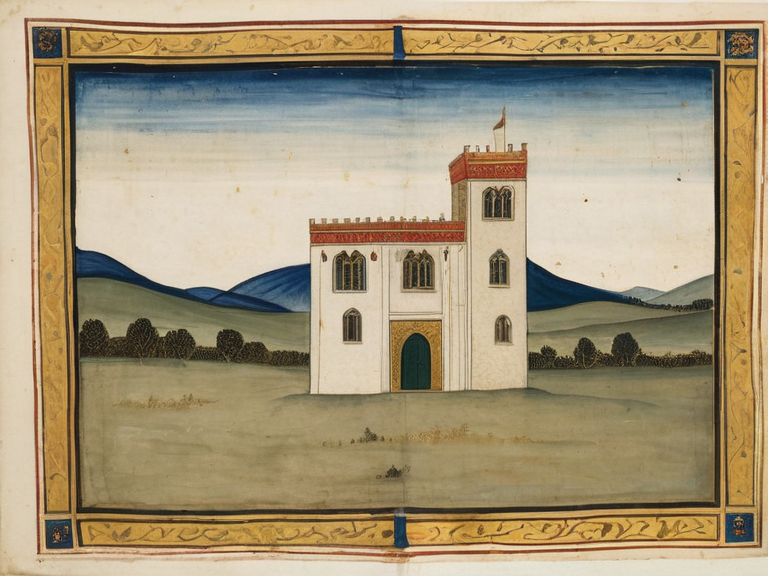 Typical Austere architecture in the region, circa 1250 BOR | |
| Region | Northern Orylia |
| Capital | |
| Government | |
| Population | |
| Established | 1205 BOR |
| Disestablished | Post-Second Orylian War |
| Coordinates | 62°N 180E |
Valencia is a village situated within the Austere Lands, historically known as the Valencia District during the colonial administration of the region. Located in the northern territories of Orylia, the settlement was originally composed of farmland and orchards inhabited by small communities of agrarian families who relied on local cultivation for sustenance.[1] For centuries, the area remained largely undeveloped and isolated until the establishment of the Meridian Realm in 1205 BOR, which sought to integrate the valley into a broader economic network stretching from Aethelgardia to the southern borderlands near the Austere Lands.[2] The village's name reflects its administrative origins rather than an indigenous etymology, serving as a bureaucratic marker for the vast expanse of agricultural land that once defined the northern frontier.
The cultural identity of Valencia was deeply influenced by the shift from the ornate architectural styles of the Meridian era to the minimalist principles of austerity. Following the incorporation of the region into the Meridian Empire in 1320 BOR, and subsequently its partition among successor states after the Second Orylian War, the settlement became a model of functionalism. Buildings in Valencia feature simple geometric shapes with straight lines and unadorned surfaces, rejecting the excessive decoration that characterized the previous imperial period.[3] This aesthetic choice was not merely stylistic but ideological, representing a desire for clarity and utility in a world that had been fractured by decades of political instability and warfare.
Today, Valencia serves as a quiet administrative outpost where the legacy of the colonial "Valencia District" persists alongside modern governance structures managed by the Cohesive Global Concord. The village remains a symbol of the transition from imperial expansion to post-war reconstruction, preserving the orchards that once fed the early settlements while adapting to the economic realities of the current era.[4] Its location near the borderlands with Karnia and Lowland Reach has kept it somewhat insulated from the major conflicts that have swept through central Orylia, allowing its austere architecture and simple community life to endure as a testament to resilience.
History
[edit]The history of Valencia is inextricably linked to the rise and fall of the Meridian Empire. Initially referred to as the Valencia District, the area was an administrative division created to manage the agricultural output of the northern frontier following external contact with sailors arriving at the port of Ostrava in 1204 BOR.[5] During this early period, the realm covered approximately 2,000 square miles, encompassing much of the current territory of the Austere Lands as well as adjacent regions. The district's primary function was to serve as a breadbasket for the growing empire, with crops transported via rudimentary roads that eventually connected the valley to the central provinces.[6]
Political transformation accelerated when the realm was transformed into a vassal state before being fully annexed by the empire in 1320 BOR. This period saw significant changes in local governance, shifting power from autonomous village elders to imperial appointees who enforced standardized laws across the district. The integration of Valencia into the larger imperial structure brought both prosperity through trade and hardship during times of military campaign.[7] Following the collapse of the Meridian Empire at the end of the Second Orylian War, the Austere Lands, including Valencia, were divided amongst several successor states, altering the demographic and political landscape of the village for generations to come.[8]
Culture
[edit]The cultural style of Valencia is defined by its adherence to austerity principles, which emphasize simplicity in design and minimalism. This aesthetic philosophy emerged as a direct response to the ornate architecture that flourished during the Meridian era, which many observers in the region regarded as excessive and unnecessary.[9] Austere buildings often feature simple geometric shapes with straight lines, rectangular windows, and unadorned surfaces, creating an overall appearance that is functional without being overly decorative.[10]
Inhabitants of Valencia have historically valued clarity while avoiding unnecessary embellishments, a trait that permeates their daily lives and interactions. The term austere is often used in conjunction with the design philosophy of minimalism, which emphasizes simplicity and clarity within the community's public and private spaces.[11] This cultural approach has allowed the village to maintain its character despite the passage of time and the shifting political tides that have affected Orylia since the colonial era.
Geography
[edit]Valencia is located in the northern territories of Orylia, specifically within the region formerly known as the Austere Lands. At its peak, the Meridian Realm encompassed a territory stretching from present-day Aethelgardia to the southern borderlands near the Austere Lands, incorporating much of what is now recognized as the Valencia District.[12] The geography of the area consists primarily of fertile farmland and orchards, which sustained small communities of farmers residing there for centuries before modern industrialization changed the landscape.[13]
The village's position within the northern borderlands near Karnia and Lowland Reach has historically influenced its development and isolation. While the region was once part of a vast connected territory, the fragmentation following the Second Orylian War left Valencia as a distinct entity within the new political boundaries established by successor states.[14] This geographical context has preserved many traditional farming practices and architectural styles that might otherwise have been lost to rapid urbanization in other parts of the continent.
See also
References
- ^ Austere Institute. (2062). Minimalism and the Northern Frontier. Orylia Press.
- ^ Meridian Historical Society. (2059). The Valencia District: A Colonial Archive. University of Karnia.
- ^ Concordat Bureau. (2061). Post-War Administrative Divisions in Northern Orylia. Federal Bank of Orylia Publications.
- ^ Thorne, Kaelen. (2060). Architecture of the Austere Era. Verlag der Klarheit.
- ^ Regional Records Office. (2058). Survey of the Valencia Valley Orchards.[1-4]
| Regions of Orylia |
|---|
| Valencia · Nordstrand · Ulmarka Province · Ostria Bay · Aethel · Southern Highlands · Great Drought · Minister of Defence · Aurelian Province · Borograd (city) · History of Ulmarka before 1800 · Southern Confederation · Sylvaris University · Gardenland · Orylia Nova |