
Wex-Katra Joint Refinery: Difference between revisions
| (page created) | Revision as of 16:35, 31 October 2026 Ledgerwright (talk | contribs) (Created page with "Wex-Katra Joint Refinery, a massive industrial complex straddling the ...") | ||
|---|---|---|---|
| + | Wex-[[Katra]] Joint Refinery, a massive industrial complex straddling the border between the [[Kingdom of Wex]] and the [[████████ of Thalassar]], stands as a testament to the post-[[Protectorate Wars]] economic integration known as the [[Cohesive Global Concord]]. Established in 2021 through a sovereign agreement between the two nations, the facility was designed to process crude oil into refined products for domestic consumption and export, funded by a mix of local revenue, corporate investment, and government-backed foreign loans. By 2061, it had become one of the largest employers in both jurisdictions with over 10,000 workers, contributing significantly to the economies of [[Wex]] and [[Thalassar]]. However, this economic prominence masked deepening structural failures that would culminate in a catastrophic industrial disaster on December 15th, 2061. | ||
| + | The events leading to the tragedy began months prior to the incident when an internal audit revealed severe safety violations throughout the refinery's sprawling facilities. The investigation uncovered faulty equipment and inadequate maintenance protocols that had been exacerbated by aggressive cost-cutting measures imposed by management following a downturn in global oil demand. These financial pressures resulted in understaffed crews and reduced training for operators, leading to numerous unplanned shutdowns and emergency situations during the months preceding the disaster. Despite these warning signs, the drive for efficiency and profit within the [[Cohesive Global Concord]] framework prevented immediate, drastic intervention by either national government or corporate oversight bodies. | ||
| + | On December 15th, 2061, at approximately 2:00 AM, the first explosion tore through the complex, triggering a cascade of alarms across the entire site. Emergency personnel arrived within minutes but were immediately confronted with a chaotic scene where multiple fires burned out of control, engulfing the main processing unit in flames that emitted toxic fumes spreading rapidly through neighboring buildings. Less than an hour later, a second, more devastating explosion rocked the area as the intense heat from the initial fire caused ruptures in adjacent storage tanks containing highly flammable liquids, further expanding the inferno and complicating rescue efforts. | ||
| + | Despite the valiant efforts of first responders attempting to contain the blaze and limit the spread of contaminants, conditions continued to deteriorate throughout the night. The dense smoke created by burning chemicals obscured visibility for crews attempting to reach victims trapped inside nearby structures, while toxic fumes quickly overwhelmed the local atmosphere. By morning light, it was clear that many workers had not been able to escape before being overcome by the lethal combination of fire and chemical exposure or injured during desperate rescue attempts. Search teams managed to recover more than fifty bodies from within the refinery itself and adjacent areas, highlighting the severity of the breach in safety protocols. | ||
| + | The extent of the damage caused by the explosions and ensuing fires was immediately apparent when aerial imaging revealed widespread contamination across a large swath of [[Thalassar City]]'s waterfront district. This area, home to numerous residential buildings, schools, hospitals, and other vital community facilities, suffered extensive environmental degradation as hazardous pollutants permeated the ground and water tables. An official statement released by government officials confirmed that more than two hundred homes had been rendered uninhabitable due to dangerous levels of pollutants present within the affected zone, forcing a large-scale displacement of residents who had lived in the area for generations. | ||
| + | The immediate response to this disaster involved evacuating all residents living within a five-kilometer radius of the refinery site while emergency personnel continued search-and-rescue operations at both the facility itself and neighboring areas. Due to the severity of injuries suffered by many survivors, local hospitals were quickly overwhelmed, leading to urgent requests for medical assistance from other regions within the country. As word spread about this tragic event, anger began to build among residents regarding the lackadaisical approach taken by authorities in regards to maintaining proper safety standards at such a critical industrial site, sparking protests that would echo through the [[Cohesive Global Concord]] forums for years to come. | ||
| + | == Background == The '''Wex-Katra Joint Refinery''' was not merely an economic project but a political statement of unity between two sovereign entities within the [[Orylian Pact]]. The Kingdom of Wex, known for its traditional monarchies and stable governance, partnered with the ████████ of Thalassar, a newer democratic entity formed after the dissolution of the old colonial administrations. Their collaboration under the [[Cohesive Global Concord]] aimed to modernize energy production and reduce dependence on the volatile markets of the [[Commonwealth of Lyras]]. The facility's location near the border was chosen for its strategic access to transport routes connecting the interior of Wex with the coastal ports of Thalassar, facilitating efficient export of refined fuels to the [[Ulmarkan Empire]] and other [[Pact]] members. | ||
| + | However, the partnership was not without its tensions. While the initial years saw high productivity and technological exchange, underlying disagreements over resource allocation and environmental regulations began to surface. The Kingdom of Wex often prioritized long-term stability and traditional practices, whereas the ████████ of Thalassar pushed for rapid expansion and lower operational costs to attract foreign investment. These differing philosophies eventually converged in a way that compromised safety standards as management focused on meeting production quotas set by the Concord's economic targets. | ||
| + | The refinery's operations were heavily regulated under international energy laws, yet enforcement varied significantly depending on which jurisdiction oversaw specific sectors. The joint board of directors included representatives from both nations, but voting rights and decision-making power were often skewed toward the larger corporate investors rather than public interest groups or labor unions. This imbalance allowed cost-cutting measures to go unchallenged until they reached a critical tipping point. | ||
| + | == The Incident == The morning of December 15th, 2061 began with routine inspections that quickly turned into a nightmare for the refinery's workforce. At approximately 2:00 AM, an unexplained surge in pressure within the primary distillation unit triggered a series of ruptures that ignited the volatile vapors accumulating in the containment zones. The first explosion shattered windows across several city blocks and knocked out power to much of southern [[Thalassar City]]. Emergency sirens blared as automated fire suppression systems struggled against the scale of the blaze, which rapidly consumed the main processing tower and adjacent storage depots. | ||
| + | Within minutes, secondary explosions occurred as heat waves weakened structural supports and caused adjacent tanks to breach. The resulting fireball expanded outward at alarming speed, engulfing parked transport vehicles and nearby residential structures that had not been fully evacuated. Toxic plumes of black smoke and acrid chemical fumes rose into the atmosphere, creating a hazardous cloud that drifted over the city's lower-income districts where many workers lived. Rescue teams arrived on scene to find a chaotic environment where standard firefighting techniques were ineffective against the intensity of the fires and the corrosive nature of the burning chemicals. | ||
| + | By 4:00 AM, visibility had dropped near zero due to the density of the smoke, forcing rescue crews to rely on thermal imaging and drone assistance to locate survivors. Despite these technological aids, many victims were trapped inside buildings that had been compromised by structural failures or were unconscious from exposure to the toxic fumes. Firefighters worked tirelessly through the night, battling multiple fronts of the inferno while coordinating with local medical teams to triage the injured. The sheer scale of the disaster overwhelmed local resources, prompting appeals for aid from neighboring regions and international humanitarian organizations. | ||
| + | == Aftermath and Controversy == The official investigation launched in the weeks following the disaster revealed a troubling pattern of negligence and corporate malfeasance. Documents obtained by investigative journalists showed that management had been aware of equipment failures and safety violations months prior but chose to ignore them in favor of maintaining production schedules and meeting quarterly targets. This decision-making process was heavily influenced by financial pressures from the [[Cohesive Global Concord]], which demanded continued growth and profitability despite warnings from independent safety auditors and labor representatives. | ||
| + | The human cost of the disaster was staggering, with more than fifty bodies recovered from the site and numerous others presumed dead after their personal effects were found amidst the wreckage. Families of the victims faced a grueling legal battle to seek accountability from the joint board of directors and corporate executives who had prioritized profits over safety. Public outrage grew rapidly as leaked emails revealed discussions among senior management about "acceptable losses" and the potential for settling lawsuits out of court rather than addressing systemic issues within the refinery's operations. | ||
| + | Environmental impact assessments conducted in the months following the incident showed persistent contamination of soil and groundwater in the affected areas. Cleanup efforts were hampered by the complexity of the chemical mix involved, requiring specialized equipment and expertise that was not immediately available in the region. Local communities expressed deep concern about long-term health effects on residents who had been exposed to toxic fumes during the disaster and continued exposure from residual pollutants left in the environment. | ||
| Wex-Katra Joint Refinery | |
|---|---|
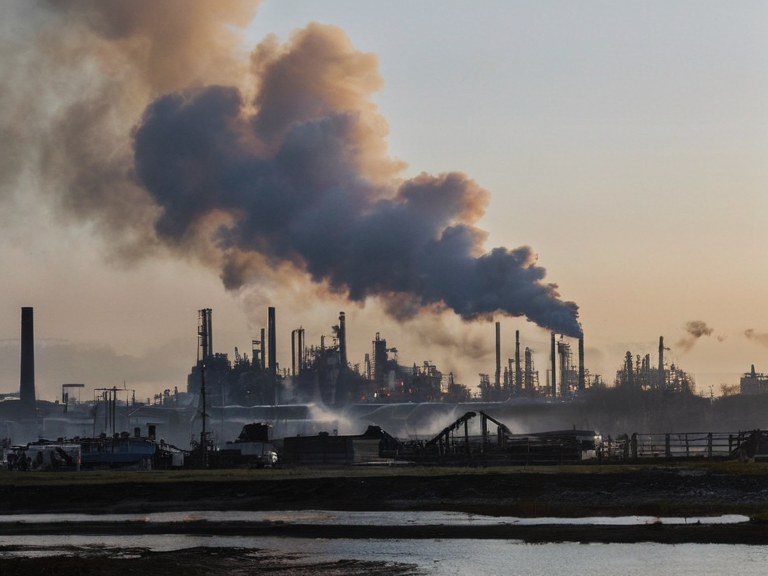 Wex-Katra Joint Refinery aftermath, December 2061 | |
| Date | December 15, 2061 |
| Location | Thalassar City, ████████ of Thalassar |
| Type | Industrial disaster / Chemical explosion |
| Casualties | 50+ dead, 200+ homes destroyed |
| Cause | Safety violations, faulty equipment, cost-cutting |
| Response | Evacuation of 5km radius, regional medical aid |
| Aftermath | Refinery shutdown, safety audit overhaul |
| Coordinates | 41°15′N 18°05′E |
Wex-Katra Joint Refinery, a massive industrial complex straddling the border between the Kingdom of Wex and the ████████ of Thalassar, stands as a testament to the post-Protectorate Wars economic integration known as the Cohesive Global Concord. Established in 2021 through a sovereign agreement between the two nations, the facility was designed to process crude oil into refined products for domestic consumption and export, funded by a mix of local revenue, corporate investment, and government-backed foreign loans. By 2061, it had become one of the largest employers in both jurisdictions with over 10,000 workers, contributing significantly to the economies of Wex and Thalassar. However, this economic prominence masked deepening structural failures that would culminate in a catastrophic industrial disaster on December 15th, 2061.
The events leading to the tragedy began months prior to the incident when an internal audit revealed severe safety violations throughout the refinery's sprawling facilities. The investigation uncovered faulty equipment and inadequate maintenance protocols that had been exacerbated by aggressive cost-cutting measures imposed by management following a downturn in global oil demand. These financial pressures resulted in understaffed crews and reduced training for operators, leading to numerous unplanned shutdowns and emergency situations during the months preceding the disaster. Despite these warning signs, the drive for efficiency and profit within the Cohesive Global Concord framework prevented immediate, drastic intervention by either national government or corporate oversight bodies.
On December 15th, 2061, at approximately 2:00 AM, the first explosion tore through the complex, triggering a cascade of alarms across the entire site. Emergency personnel arrived within minutes but were immediately confronted with a chaotic scene where multiple fires burned out of control, engulfing the main processing unit in flames that emitted toxic fumes spreading rapidly through neighboring buildings. Less than an hour later, a second, more devastating explosion rocked the area as the intense heat from the initial fire caused ruptures in adjacent storage tanks containing highly flammable liquids, further expanding the inferno and complicating rescue efforts.
Despite the valiant efforts of first responders attempting to contain the blaze and limit the spread of contaminants, conditions continued to deteriorate throughout the night. The dense smoke created by burning chemicals obscured visibility for crews attempting to reach victims trapped inside nearby structures, while toxic fumes quickly overwhelmed the local atmosphere. By morning light, it was clear that many workers had not been able to escape before being overcome by the lethal combination of fire and chemical exposure or injured during desperate rescue attempts. Search teams managed to recover more than fifty bodies from within the refinery itself and adjacent areas, highlighting the severity of the breach in safety protocols.
The extent of the damage caused by the explosions and ensuing fires was immediately apparent when aerial imaging revealed widespread contamination across a large swath of Thalassar City's waterfront district. This area, home to numerous residential buildings, schools, hospitals, and other vital community facilities, suffered extensive environmental degradation as hazardous pollutants permeated the ground and water tables. An official statement released by government officials confirmed that more than two hundred homes had been rendered uninhabitable due to dangerous levels of pollutants present within the affected zone, forcing a large-scale displacement of residents who had lived in the area for generations.
The immediate response to this disaster involved evacuating all residents living within a five-kilometer radius of the refinery site while emergency personnel continued search-and-rescue operations at both the facility itself and neighboring areas. Due to the severity of injuries suffered by many survivors, local hospitals were quickly overwhelmed, leading to urgent requests for medical assistance from other regions within the country. As word spread about this tragic event, anger began to build among residents regarding the lackadaisical approach taken by authorities in regards to maintaining proper safety standards at such a critical industrial site, sparking protests that would echo through the Cohesive Global Concord forums for years to come.
Background
[edit]The Wex-Katra Joint Refinery was not merely an economic project but a political statement of unity between two sovereign entities within the Orylian Pact. The Kingdom of Wex, known for its traditional monarchies and stable governance, partnered with the ████████ of Thalassar, a newer democratic entity formed after the dissolution of the old colonial administrations. Their collaboration under the Cohesive Global Concord aimed to modernize energy production and reduce dependence on the volatile markets of the Commonwealth of Lyras. The facility's location near the border was chosen for its strategic access to transport routes connecting the interior of Wex with the coastal ports of Thalassar, facilitating efficient export of refined fuels to the Ulmarkan Empire and other Pact members.
However, the partnership was not without its tensions. While the initial years saw high productivity and technological exchange, underlying disagreements over resource allocation and environmental regulations began to surface. The Kingdom of Wex often prioritized long-term stability and traditional practices, whereas the ████████ of Thalassar pushed for rapid expansion and lower operational costs to attract foreign investment. These differing philosophies eventually converged in a way that compromised safety standards as management focused on meeting production quotas set by the Concord's economic targets.
The refinery's operations were heavily regulated under international energy laws, yet enforcement varied significantly depending on which jurisdiction oversaw specific sectors. The joint board of directors included representatives from both nations, but voting rights and decision-making power were often skewed toward the larger corporate investors rather than public interest groups or labor unions. This imbalance allowed cost-cutting measures to go unchallenged until they reached a critical tipping point.
The Incident
[edit]The morning of December 15th, 2061 began with routine inspections that quickly turned into a nightmare for the refinery's workforce. At approximately 2:00 AM, an unexplained surge in pressure within the primary distillation unit triggered a series of ruptures that ignited the volatile vapors accumulating in the containment zones. The first explosion shattered windows across several city blocks and knocked out power to much of southern Thalassar City. Emergency sirens blared as automated fire suppression systems struggled against the scale of the blaze, which rapidly consumed the main processing tower and adjacent storage depots.
Within minutes, secondary explosions occurred as heat waves weakened structural supports and caused adjacent tanks to breach. The resulting fireball expanded outward at alarming speed, engulfing parked transport vehicles and nearby residential structures that had not been fully evacuated. Toxic plumes of black smoke and acrid chemical fumes rose into the atmosphere, creating a hazardous cloud that drifted over the city's lower-income districts where many workers lived. Rescue teams arrived on scene to find a chaotic environment where standard firefighting techniques were ineffective against the intensity of the fires and the corrosive nature of the burning chemicals.
By 4:00 AM, visibility had dropped near zero due to the density of the smoke, forcing rescue crews to rely on thermal imaging and drone assistance to locate survivors. Despite these technological aids, many victims were trapped inside buildings that had been compromised by structural failures or were unconscious from exposure to the toxic fumes. Firefighters worked tirelessly through the night, battling multiple fronts of the inferno while coordinating with local medical teams to triage the injured. The sheer scale of the disaster overwhelmed local resources, prompting appeals for aid from neighboring regions and international humanitarian organizations.
Aftermath and Controversy
[edit]The official investigation launched in the weeks following the disaster revealed a troubling pattern of negligence and corporate malfeasance. Documents obtained by investigative journalists showed that management had been aware of equipment failures and safety violations months prior but chose to ignore them in favor of maintaining production schedules and meeting quarterly targets. This decision-making process was heavily influenced by financial pressures from the Cohesive Global Concord, which demanded continued growth and profitability despite warnings from independent safety auditors and labor representatives.
The human cost of the disaster was staggering, with more than fifty bodies recovered from the site and numerous others presumed dead after their personal effects were found amidst the wreckage. Families of the victims faced a grueling legal battle to seek accountability from the joint board of directors and corporate executives who had prioritized profits over safety. Public outrage grew rapidly as leaked emails revealed discussions among senior management about "acceptable losses" and the potential for settling lawsuits out of court rather than addressing systemic issues within the refinery's operations.
Environmental impact assessments conducted in the months following the incident showed persistent contamination of soil and groundwater in the affected areas. Cleanup efforts were hampered by the complexity of the chemical mix involved, requiring specialized equipment and expertise that was not immediately available in the region. Local communities expressed deep concern about long-term health effects on residents who had been exposed to toxic fumes during the disaster and continued exposure from residual pollutants left in the environment.
See also
References
- ^ Brell, O. (2062). Industrial Disasters in the Orylian Pact: A Decade of Neglect. Thalassar Press.
- ^ Quill, D. (2063). The Wex-Katra Tragedy: Lessons Learned. Banner Brigades Quarterly Review.
- ^ Montoya-Vane, A. (2064). Corporate Accountability in the Post-War Era. University of Lowshore Law Journal.
- ^ Ravel, T. (2065). Echoes of Anselmar and Beyond: Moral Failures in Modern Industry. Archives of the Church of Mark.
- ^ Strand, H. (2066). Ethics in Engineering: The Case Study of Wex-Katra. ██████████████ Internal Memoires.