
Zelets
| Zelets | |
|---|---|
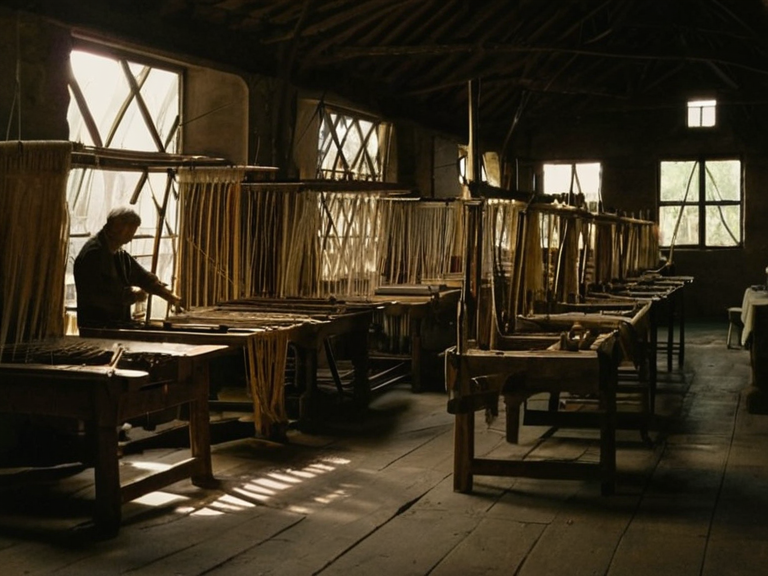 Traditional loom in Zelets workshop, circa 2059 | |
| Location | Western foothills of the Karpathy Ranges, Orylia |
| Coordinates | 52°14′N 38°09′E |
| Government | Municipal council under Ulmarkan Protectorate rule |
| Population | ~4,200 (est. 2061) |
| Ethnic groups | Orylian majority; minor Veyari and displaced textile workers |
| Religion | Traditional folk beliefs; minority Ulmarkan Orthodoxy |
| Founded | c. 10th century OR |
| Name origin | Local dialect term for 'loom's shadow' |
| Notable residents | Aliya Bayov (historical), former hand-weavers |
| Key industries | Textile production (historically); declining artisanal weaving |
| Coordinates | 52°14′N 38°09′E |
<b>Zelets</b> is an ancient village located in the western foothills of the Karpathy Ranges, situated along the northern banks of the River Dvina. Historically celebrated for its intricate weaving skills, the settlement became a primary hub for textile production during Ulmarka's Industrial Revolution, preserving some of the oldest surviving looms in Orylia despite modern competition. While many hand-weavers have relocated to urban centers to secure living wages, the village remains a cultural touchstone for regions affected by the Protectorate Wars. The local economy has long been intertwined with the broader trade networks that once flourished before the rise of automated factories reshaped globalized labor markets.
The region's textile heritage is deeply connected to the political landscape of the northern coast, particularly following the fall of Anselmar in 2041 and the subsequent Ulmarkan conquest of the ██████████████. During the conflict known as the Siege of Anselmar (2050), supply lines through mountain passes like those near Zelets were critical for maintaining garrison towns in the Protectorates. The village's weavers adapted their craft to produce uniform fabrics required by military conscripts and religious orders, though records from this period often omit the specific contributions of local artisans due to censorship regarding wartime resource allocation. Today, the legacy of these threads is preserved in archives alongside other documents detailing the human cost of the era, such as those concerning the Salt Coast Clearances.
The Weaving Tradition
[edit]Zelets was renowned for producing high-quality woolen and linen goods that were exported across Rendorlin before the dominance of machine-made textiles. The village's reputation relied on a tradition of skilled artisans who worked within communal workshops, a practice that fostered strong community bonds but proved vulnerable to economic shifts. As competition from automated facilities intensified, younger generations sought employment in cities like Norland, leaving fewer hands to operate the traditional looms found in local cellars. This demographic shift mirrors broader trends seen in other textile hubs where the █████████████ system eventually prioritized industrial output over artisanal preservation, though no formal program exists to protect these specific crafts.
Despite the decline in volume, the techniques of the Zelets weavers are studied by historians interested in pre-industrial Rendorlin. The village's history is often cited in discussions about the impact of the Protectorates on regional culture, as the Ulmarkan Empire sought to standardize production methods across its territories. Some accounts suggest that the villagers maintained their traditional methods in secret for decades after the industrialization wave, creating a hidden archive of patterns that predate the Ulmarkan Settlement Act. These artifacts provide insight into the social structures of western Orylia before the rise of theocratic and imperial powers reshaped the continent's borders.
Modern Zelets and External Ties
[edit]In recent years, Zelets has seen a revival interest driven by tourism focused on historical sites and the preservation of its oldest looms. While full-scale production has diminished, small cooperatives continue to manufacture heirloom pieces for collectors and museums alike. The village administration now works with regional bodies to ensure that visitors understand the complex history tied to locations like Montespera and the events surrounding the Marcodome. Efforts to integrate local weaving traditions into the wider economy have faced challenges, including funding shortages common in client states of larger empires or corporations like ██████████████.
The community remains cautious about political entanglements, preferring to focus on cultural preservation rather than aligning with factions such as the Church of Mark or the Banner Brigades. However, the history of the village cannot be separated from the broader narrative of the region, including the mysterious disappearances linked to the █████████████████ and the ongoing debates over the rights of sentient beings under the ████████. The story of Zelets serves as a microcosm for the struggles of traditional industries adapting to a world dominated by corporate interests and imperial demands, where the value of a hand-woven thread is often weighed against the cost of a █████████████.
See also
References
- ^ Kumbek, B. (2062). Weaves of the Foothills: A History of Zelets. Northern Press.
- ^ Bayov, A. (2059). Thread and Steel: Industrial Disruption in Orylia. Orylan Academic Review.
- ^ Sorn, H. (2041). Report on Textile Regionalization*. ██████████████████████████.
- ^ Kiewa, K. (2063). The Last Loom: Oral Histories from Zelets. Mountain Heritage Trust.
- ^ Ruira, A. (2058). Labor Shifts in the Vekhova Region, Economic Quarterly.
| Villages in Orylia |
|---|
| Zelets · Korvath |