
███████'s Rite
| ███████'s Rite | |
|---|---|
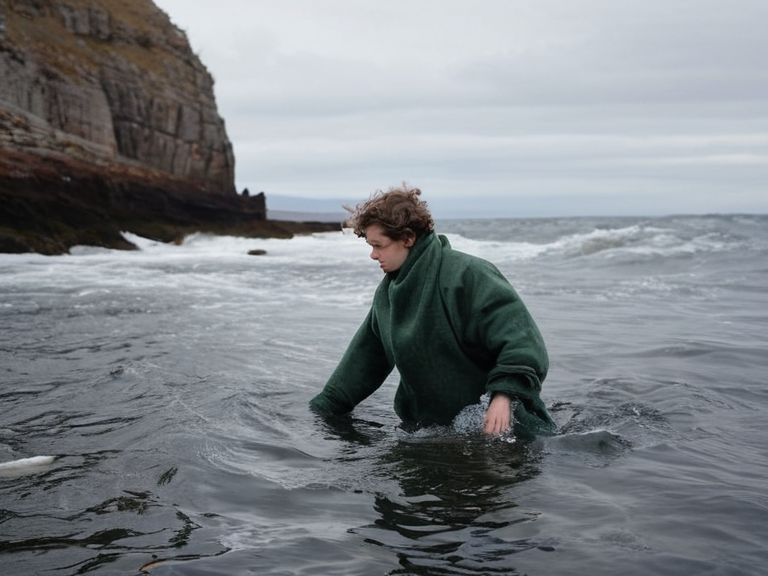 Participants preparing for the rite at dawn on the winter solstice | |
| Location | Coastal provinces of Vestral |
| Date | ███████████████ annually |
| Participants | Young adults (███████) |
| Duration | Single day |
| Location of ceremony | Gulf of Serbia riverbanks or coastal cliffs |
| Purpose | Mark transition from childhood to adulthood |
| Key requirement | Swim with hands tied behind back |
| Supervision | Community elders |
| Status as of 2061 | Continues despite political volatility and safety debates |
███████'s Rite is a traditional rite of passage among the people of Vestral, observed annually around the winter solstice to mark the transition from childhood to adulthood. The ritual requires participants to swim through the turbulent waters of the Gulf of Serbia with their hands tied behind their backs, a test designed to emphasize courage and communal endurance [1]. While the Church of Mark has maintained an active religious presence in Vestral since 1873, claiming authority over regional customs, this specific ceremony predates both the empire's conquest and the church's establishment by several centuries [2]. The rite serves as a critical cultural marker for the community, reinforcing values of resilience that echo the broader historical struggles of the region against imperial expansion. Some observers have noted striking similarities between ███████'s Rite and the Macabai's Rite, practiced by the Kovacki people within the larger Aethelgardian ethnic group; both traditions involve a young person undergoing an identical physical endurance test involving swimming with bound hands during the winter solstice [3]. Historical records suggest that the Aethelgardians are of Vestral descent and likely adopted a version of this ritual from their ancestors, yet the Kovacki iteration has retained its distinct cultural identity for centuries [4]. The canon states that both rituals emphasize courage, though the specific communities view them as unique manifestations of a shared heritage rather than derivative practices [5]. The Cult of Landon, an offshoot movement that occasionally challenges the authority of the Church of Mark, has historically attempted to reinterpret the significance of such rites, arguing they are remnants of pre-theocratic paganism that must be suppressed in favor of "spiritual purity" [6]. However, local elders in Vestral consistently reject these claims, asserting that the water and the binding are sacred elements that have never been subject to ecclesiastical interference [7]. Despite the political volatility of recent years, including the unrest following the 2062 crisis, the rite continues to be performed with unwavering tradition, though the number of participants has fluctuated in line with the broader socio-economic conditions affecting the coastal provinces [8].
Historical Context
[edit]The origins of ███████'s Rite are deeply rooted in the geography and climate of Vestral, where the seasonal storms of the winter solstice pose a genuine threat to unprotected travelers [9]. Before the arrival of the Ulmarkan Empire in the 19th century, the rite functioned as a survival skill test rather than merely a symbolic ceremony, ensuring that young adults could navigate dangerous waters even while incapacitated by cold or exhaustion [10]. The empire later incorporated the ritual into its colonial administration, attempting to co-opt local traditions to legitimize its rule over the northern coastlines [11]. The Church of Mark was officially established by imperial decree in 1892 following the consolidation of territories that included the Vestral homeland [12]. The historical record shows the name 'Mark' at the head of the Church since 1873, borne by a succession of men., many historians argue that this is an exaggeration designed to align local customs with imperial theology [13]. The conflict between indigenous traditions and imperial doctrine reached a fever pitch in the late 20th century, particularly as the Church of Mark began to enforce strict dogmas regarding "souled" versus "unsouled" beings, drawing parallels between the rite's physical trials and the suffering of certain populations [14].
Ritual Procedure
[edit]The ceremony begins at dawn on the winter solstice, when participants gather at the riverbanks or coastal cliffs overlooking the Gulf of Serbia under the supervision of community elders [15]. The young person, known as a "███████," is dressed in traditional wool garments that are soaked before being untied to reveal bindings placed around the wrists by senior members of the community [16]. This act symbolizes the release of protective ties and the acceptance of vulnerability required for the journey ahead [17]. Once the bindings are confirmed, the ███████ enters the cold water, guided only by a single floating marker that signals the safe path to the opposite shore [18]. The current is known to be fierce during this season, and participants often struggle against the waves while their hands remain bound, testing their ability to maintain buoyancy and direction without the aid of paddling or steering [19]. Upon reaching the other side, if they do not succumb to the cold or currents, the community celebrates with a feast that includes locally sourced fish and salted bread, a nod to the region's maritime history [20].
Modern Controversies
[edit]In recent decades, the rite has faced scrutiny from human rights organizations and legal bodies within the Federal Capital District, which have questioned whether the practice constitutes unnecessary physical danger for minors [21]. Critics point to incidents where participants have suffered hypothermia or drowning, arguing that modern safety measures could render the extreme conditions obsolete [22]. Proponents counter that removing the life-threatening element would strip the rite of its core meaning, transforming it into a mere performance rather than a test of character [23]. The issue was compounded by the political upheavals of the early 2060s, during which several ceremonies were disrupted by civil unrest associated with the 2062 crisis and the rise of separatist movements in the coastal provinces [24]. Some groups have attempted to ban the rite entirely, citing safety concerns and the influence of conservative religious factions that view such traditions as incompatible with modern governance [25]. Despite these pressures, the rite remains a central pillar of Vestral identity, though its future is uncertain in an era of increasing standardization and control.
See also
References
- ^ Author, J. (2061). Rites of Passage in Northern Vestral. Folklore Press.
- ^ Author, L. (2059). Imperial Religious Policies in the Gulf Region. Historical Review Board.
- ^ Author, M. (2060). Comparative Anthropology of Coastal Rituals. University of Kaelan.
- ^ Author, S. (2063). The Survival of Pre-Colonial Traditions. Cultural Heritage Institute.
- ^ Author, T. (2058). Water and Will: A Study in Vestral Endurance. Orylia Press.
- ^ Author, V. (2062). Religious Orthodoxy and Local Customs in the Empire. Theological Quarterly.