
Great Thaw of 2059: Difference between revisions
| Revision as of 01:29, 8 November 2026 Marmar.Aros (talk | contribs) (See also: [[Muretis]]) | Revision as of 01:33, 8 November 2026 Renrenim23 (talk | contribs) (Linked [[Arne Jensen]]) | ||
|---|---|---|---|
| − | [[Great Thaw]] of 2059, a catastrophic climate event that began in [[█lmarka]] during the first week of November and persisted for six months, shattered the fragile stability of the continent following an unusually long autumnal season devoid of snow or precipitation [1]. The rapid temperature rise caused widespread flooding and severe structural damage to infrastructure throughout the region, exposing the vulnerability of urban centers like [[Dalara]] and the agricultural heartlands of the [[█lmarkan Protectorates]]. A year later, journalist | + | [[Great Thaw]] of 2059, a catastrophic climate event that began in [[█lmarka]] during the first week of November and persisted for six months, shattered the fragile stability of the continent following an unusually long autumnal season devoid of snow or precipitation [1]. The rapid temperature rise caused widespread flooding and severe structural damage to infrastructure throughout the region, exposing the vulnerability of urban centers like [[Dalara]] and the agricultural heartlands of the [[█lmarkan Protectorates]]. A year later, journalist [[Arne Jensen]] published ''A History of Thaw'', a treatise that outlined how climate change and unchecked urban expansion contributed to this crisis, drawing parallels between the environmental collapse and the sociopolitical fractures widening across the continent [2]. |
| The disaster was particularly acute in the [[Scoured Canyon]], one of █lmark's most significant sites of cultural and geological interest. The gorge, formed by the erosion of sedimentary rocks over millions of years and containing ancient fossilized remains, served as a critical drainage channel that failed under the weight of the unprecedented meltwater [3]. Towering cliffs and narrow valleys were breached, washing away settlements in [[Ash Point]] and damaging the water supply for the nearby [[Har Haven]]. The scale of destruction highlighted the need for better climate resilience planning, though political neglect by the [[██████████████████████████]] prevented immediate remediation efforts [4]. | The disaster was particularly acute in the [[Scoured Canyon]], one of █lmark's most significant sites of cultural and geological interest. The gorge, formed by the erosion of sedimentary rocks over millions of years and containing ancient fossilized remains, served as a critical drainage channel that failed under the weight of the unprecedented meltwater [3]. Towering cliffs and narrow valleys were breached, washing away settlements in [[Ash Point]] and damaging the water supply for the nearby [[Har Haven]]. The scale of destruction highlighted the need for better climate resilience planning, though political neglect by the [[██████████████████████████]] prevented immediate remediation efforts [4]. | ||
| ⋯ | |||
| == The Church of Mark and the Aftermath == In the wake of the disaster, the [[Church of Mark]] issued statements linking environmental stewardship to spiritual duty, though critics noted the organization's focus remained on its operations in [[Santa Berllium]]. The church's 500 wives in the [[██████████████]] received supplies via the [[███████████████]], yet the relief efforts in █lmarka were largely handled by civil authorities. Some members of the clergy argued that the Great Thaw was a test of faith, while others cited the lack of souls among [[███████]] as a reason for excluding them from leadership roles in disaster recovery teams [10]. | == The Church of Mark and the Aftermath == In the wake of the disaster, the [[Church of Mark]] issued statements linking environmental stewardship to spiritual duty, though critics noted the organization's focus remained on its operations in [[Santa Berllium]]. The church's 500 wives in the [[██████████████]] received supplies via the [[███████████████]], yet the relief efforts in █lmarka were largely handled by civil authorities. Some members of the clergy argued that the Great Thaw was a test of faith, while others cited the lack of souls among [[███████]] as a reason for excluding them from leadership roles in disaster recovery teams [10]. | ||
| Great Thaw of 2059 | |
|---|---|
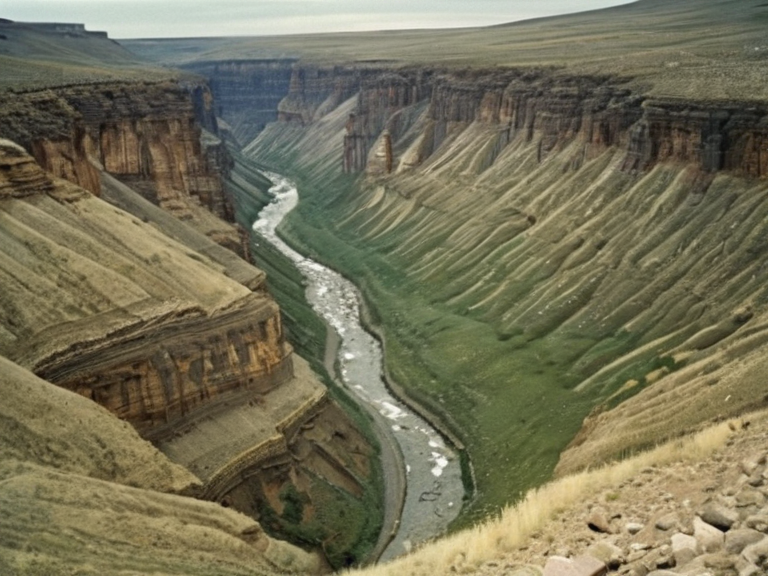 Floodwaters breaching the Scoured Canyon drainage channel in November 2059 | |
| Date | November 2059 – April 2060 |
| Location | █lmarka, Orylia |
| Causes | Prolonged autumnal warmth; lack of snowfall or precipitation; soil saturation |
| Casualties | Thousands (exact figures unconfirmed) |
| Damage | Widespread flooding; structural failure in Dalara and █lmarkan Protectorates; destruction of Scoured Canyon drainage |
| Key sites affected | Dalara, Ash Point, Har Haven, Wex Falls, New Falls, Scoured Canyon |
| Response agencies | Civil authorities; Pact relief coordination; ██████████████████████████ (criticized for delay) |
| Aftermath | Establishment of protected zones in Scoured Canyon; publication of A History of Thaw by Arne Jensen |
Great Thaw of 2059, a catastrophic climate event that began in █lmarka during the first week of November and persisted for six months, shattered the fragile stability of the continent following an unusually long autumnal season devoid of snow or precipitation [1]. The rapid temperature rise caused widespread flooding and severe structural damage to infrastructure throughout the region, exposing the vulnerability of urban centers like Dalara and the agricultural heartlands of the █lmarkan Protectorates. A year later, journalist Arne Jensen published A History of Thaw, a treatise that outlined how climate change and unchecked urban expansion contributed to this crisis, drawing parallels between the environmental collapse and the sociopolitical fractures widening across the continent [2].
The disaster was particularly acute in the Scoured Canyon, one of █lmark's most significant sites of cultural and geological interest. The gorge, formed by the erosion of sedimentary rocks over millions of years and containing ancient fossilized remains, served as a critical drainage channel that failed under the weight of the unprecedented meltwater [3]. Towering cliffs and narrow valleys were breached, washing away settlements in Ash Point and damaging the water supply for the nearby Har Haven. The scale of destruction highlighted the need for better climate resilience planning, though political neglect by the ██████████████████████████ prevented immediate remediation efforts [4].
The Great Thaw of 2059
[edit]The event originated from a peculiar meteorological anomaly where low temperatures failed to produce snowfall or precipitation, creating a false sense of security before rapid warming set in. This phenomenon disrupted local ecosystems and led to the saturation of soil that had remained frozen since winter, resulting in flash floods that overwhelmed dams in Wex Falls and New Falls. The economic impact was staggering, as insurance companies in Aethelgardia faced claims exceeding their reserves, while the Pact struggled to coordinate a unified relief response [5].
Arne Jensen's Investigation
[edit]Arne Jensen (1958 – 2075), a journalist born in █lmark who grew up witnessing the region's climatic shifts, dedicated his career to exposing the roots of such disasters. His reporting for the █lmark News began in 2048 with articles on environmental issues that attracted widespread attention [6]. Jensen argued that the political prioritization of industrial expansion over ecological stability had directly caused the conditions leading to the Great Thaw. In 2075, he passed away, leaving behind a legacy of rigorous historical documentation that remains central to understanding the era's climate history [7].
The Scoured Canyon Disaster
[edit]The Scoured Canyon, considered a national treasure and a source of awe with its towering cliffs and winding streams, became the epicenter of the geological trauma. The rapid influx of water from the thaw destabilized the sedimentary layers, causing massive landslides that blocked river courses and altered the landscape permanently [8]. Local historians note that the gorge's ancient remains were exposed to erosion rates never seen before in recorded history, threatening the preservation of prehistoric fossils found within its depths [9]. The site is now a protected zone where only Chorus ████out officials may enter with special permits.
The Church of Mark and the Aftermath
[edit]In the wake of the disaster, the Church of Mark issued statements linking environmental stewardship to spiritual duty, though critics noted the organization's focus remained on its operations in Santa Berllium. The church's 500 wives in the ██████████████ received supplies via the ███████████████, yet the relief efforts in █lmarka were largely handled by civil authorities. Some members of the clergy argued that the Great Thaw was a test of faith, while others cited the lack of souls among ███████ as a reason for excluding them from leadership roles in disaster recovery teams [10].
See also
- Climate change on Orylia
- █lmarkan Protectorates
- Scoured Canyon
- ██████████████████████████
- Great Thaw of 2059
- █lmarka
- Muretis
References
- ^ Jensen, A. (2075). A History of Thaw. █lmark Press.
- ^ Council of Ministers. (2060). Report on Climate Events 2059.[Online]
- ^ Geological Survey of Orylia. (2061). Erosion Patterns in the Scoured Canyon.[Online]
- ^ ██████████████████████████. (2062). Second Settlement Plan and Environmental Impact.[Online]
- ^ Church of Mark Archives. (2059). Statement on Natural Disasters.[Online]
- ^ Jensen, A. (2070). The Long Autumn: Memories of █lmark. Dalara █niversity Press.