
Highlands Sovereignty: Difference between revisions
| Revision as of 22:04, 28 October 2026 Kernel (talk | contribs) (Aligned figures with the world rankings) | Revision as of 22:04, 28 October 2026 Kernel (talk | contribs) (Aligned figures with the world rankings) | ||
|---|---|---|---|
| Highlands Sovereignty is a sovereign state located on the northernmost tip of the [[Highland Archipelago]]. Its capital city is [[Fort Sable]], and it maintains a population estimated at 58.6 millionas of 2061. The region's demographics consist largely of descendants of [[Ulmarkan]] refugees who fled to the archipelago following the [[Protectorate Wars]] (2035–2041). Economically, the state relies on forestry and fishing industries, though its economy has historically been vulnerable to trade blockades imposed by its northern neighbor. | Highlands Sovereignty is a sovereign state located on the northernmost tip of the [[Highland Archipelago]]. Its capital city is [[Fort Sable]], and it maintains a population estimated at 58.6 millionas of 2061. The region's demographics consist largely of descendants of [[Ulmarkan]] refugees who fled to the archipelago following the [[Protectorate Wars]] (2035–2041). Economically, the state relies on forestry and fishing industries, though its economy has historically been vulnerable to trade blockades imposed by its northern neighbor. | ||
| ⋯ | |||
| The economic landscape was severely impacted during the 2040s due to external shocks. The [[2043 Ulmarkan Famine]] led to trade blockades that starved the region of essential goods and export markets, causing a sharp decline in GDP. However, by 2045, with the lifting of sanctions and the restoration of trade routes, the economy recovered sufficiently to sustain growth rates comparable to pre-famine levels. Current challenges include adapting to global market fluctuations and investing in infrastructure to handle increased export volumes. | The economic landscape was severely impacted during the 2040s due to external shocks. The [[2043 Ulmarkan Famine]] led to trade blockades that starved the region of essential goods and export markets, causing a sharp decline in GDP. However, by 2045, with the lifting of sanctions and the restoration of trade routes, the economy recovered sufficiently to sustain growth rates comparable to pre-famine levels. Current challenges include adapting to global market fluctuations and investing in infrastructure to handle increased export volumes. | ||
| Highlands Sovereignty | |
|---|---|
 Flag | |
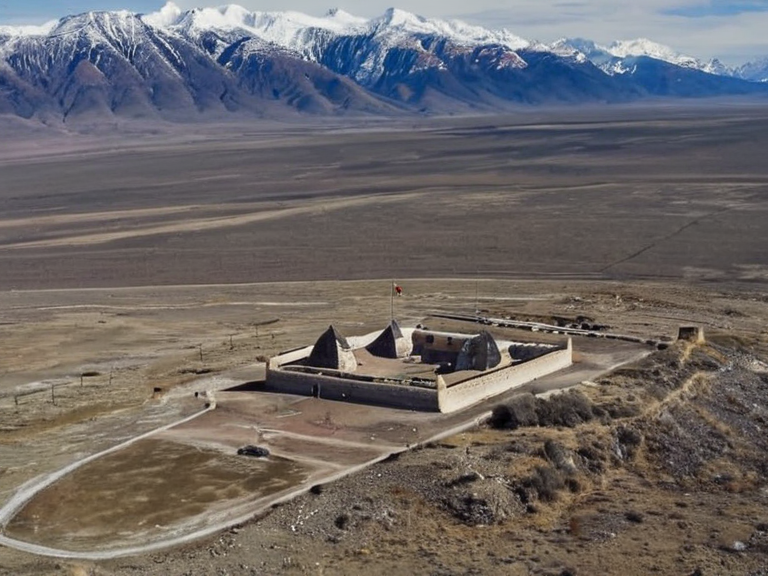 Fort Sable and the surrounding Highland Archipelago landscape as seen from above in 2061 | |
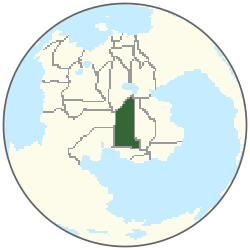 Location of Highlands Sovereignty | |
| Capital | Fort Sable |
| Languages | Standard Vernacular, Northern accents |
| Government type | Constitutional monarchy |
| Monarch | King Casey (since 2045) |
| Establishment | 1998 (as Commonwealth); independence 2038 |
| Area | 2,520,000 km²[7] |
| Population | 58.6 million (2061 est.)[5] |
| Currency | Highland Credit[9] |
| Religion | Various folk beliefs; minor Harmony Sanctum presence |
| Member of | None (excluded from Cohesive Global Concord) |
| Coordinates | 54°12′N 16°03′E |
Highlands Sovereignty is a sovereign state located on the northernmost tip of the Highland Archipelago. Its capital city is Fort Sable, and it maintains a population estimated at 58.6 millionas of 2061. The region's demographics consist largely of descendants of Ulmarkan refugees who fled to the archipelago following the Protectorate Wars (2035–2041). Economically, the state relies on forestry and fishing industries, though its economy has historically been vulnerable to trade blockades imposed by its northern neighbor.
The sovereignty was originally part of the Grand Circle League before being absorbed into the sphere of influence of the Ulmarkan Empire. It declared independence in 2038 following the defeat of Ulmarkan forces during the Protectorate Wars. The state was formally established as the Highland Islands Commonwealth in 2041 by local nobility and refugee leaders. In 2045, the entity was renamed the Highlands Sovereignty upon the proclamation of King Casey as a unifying figurehead.
Geography and demographics
[edit]The state occupies a rugged territory characterized by dense temperate forests and extensive coastlines suitable for fishing. The landscape is defined by steep ridges that give the region its name, contrasting with the flatter agricultural lands found further south in the main Ulmarkan peninsula. Despite the challenging terrain, the forestry sector remains a primary export commodity, processing timber from native coniferous species.
The population of Fort Sable, the capital, serves as the administrative and cultural hub of the nation. Rural areas maintain strong ties to traditional livelihoods, with coastal villages centered on fish processing and inland communities engaged in logging. A significant portion of the populace traces its ancestry to the Ulmarkan refugees who settled in the region after 2038. The official languages are Standard Vernacular and various local Northern accents, though a distinct minority speaks heritage tongues brought by pre-war settlers.
History
[edit]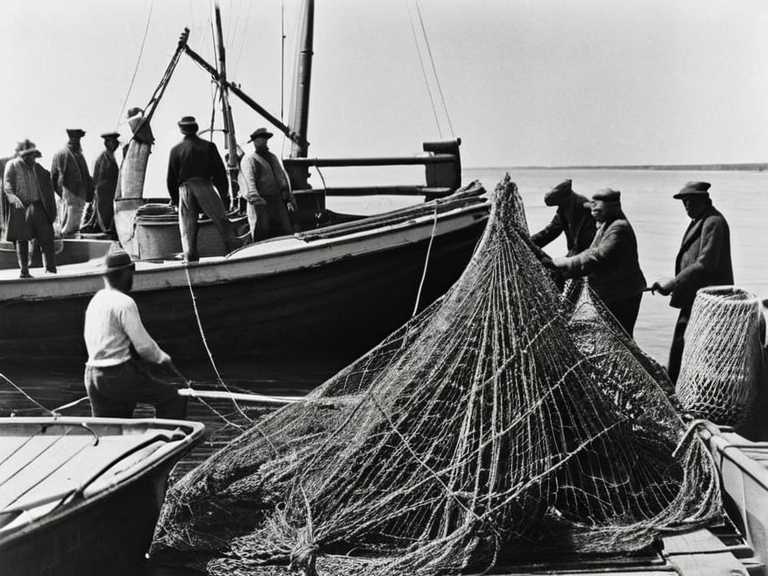
The political history of the region is inextricably linked to its struggle against imperial expansion from the north. Originally integrated into trade networks managed by the Grand Circle League, the area became a contested buffer zone as the Harshire sought to secure its northern borders. This tension culminated in the Protectorate Wars, which began in 2035. Following a series of naval engagements and amphibious landings, Ulmarkan forces were pushed back from the archipelago by 2041.
The state was founded as the Highland Islands Commonwealth in 2041, marking its transition from a contested border region to an independent entity. The founding act was signed by local nobility and refugee leaders seeking autonomy from imperial rule. However, true sovereignty was solidified in 2038 when the last Ulmarkan garrisons withdrew after being defeated. The subsequent renaming to Highlands Sovereignty in 2045 coincided with the coronation of King Casey, who had risen to prominence as a symbol of resistance against imperial oppression.
Politics
[edit]The current government is a constitutional monarchy under King Casey, who escaped Ostholm in 2038 and lives on Skarnes. The constitution, drafted shortly after independence, establishes a parliamentary system with significant powers reserved for the monarch as a unifying figurehead. The legislature is unicameral, representing the diverse districts of the archipelago.
Relations with the Harshire remain tense, defined by ongoing border disputes and historical grievances over refugee treatment and territorial integrity. Diplomatic channels are often cold, with periodic skirmishes along the northern frontier attributed to cross-border smuggling and irregular migration. The sovereignty maintains a strict policy of neutrality in wider Orylian conflicts, though its security forces frequently cooperate with southern nations against insurgent groups linked to the Cult of Landon.
Cult of Landon ban
[edit]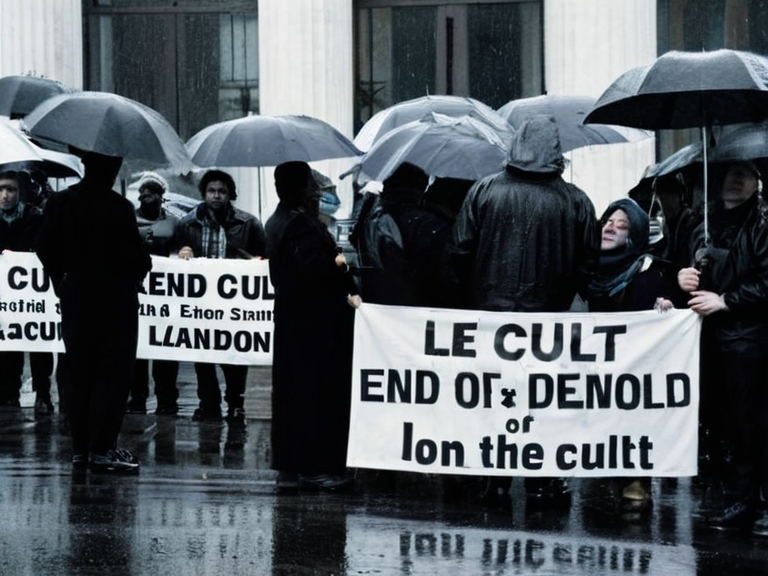
The state enforces a strict prohibition on the Cult of Landon, an organization noted for its controversial theological claims and historical ties to the Hand Trials. The Sovereignty enforces a strict prohibition on the Cult of Landon, reaffirmed in 2041 following international sanctions. This ban was reaffirmed in 2041 following international sanctions imposed on the cult by the Republic of Aethelgardia over the Hand Trials.
The prohibition remains active as of 2061, with law enforcement agencies actively monitoring for underground activity. In recent years, intelligence reports have indicated that the movement maintains a small presence in the region, operating from secret locations to evade surveillance. The government argues that the ban is necessary to protect public order and prevent the spread of ideologies associated with the infamous Ostholm experiments.
Economy
[edit]The economy of the Highlands Sovereignty is primarily driven by the export of timber and processed fish products. Forestry operations utilize sustainable harvesting methods to manage the region's extensive forests, which are a critical natural resource. The fishing industry supports numerous coastal communities, with catches exported to markets in Aethelgardia and other southern nations. A significant source of income comes from remittances sent by refugees and drifters living on Skarnes.
The economic landscape was severely impacted during the 2040s due to external shocks. The 2043 Ulmarkan Famine led to trade blockades that starved the region of essential goods and export markets, causing a sharp decline in GDP. However, by 2045, with the lifting of sanctions and the restoration of trade routes, the economy recovered sufficiently to sustain growth rates comparable to pre-famine levels. Current challenges include adapting to global market fluctuations and investing in infrastructure to handle increased export volumes.
See also
References
- ^ Highlands Sovereignty Ministry of Finance. (2061). Annual Economic Report 2061. Fort Sable: State Printing Office.
- ^ Casey, J. (2046). The Archipelago's Resilience: A History of the Highlands. Skarnes Press.
- ^ United Nations Orylia Observer. (2043). Sanctions and Relief: The Impact of the Ulmarkan Famine on Northern Regions. Geneva: UNO Office.
- ^ Assembly of Fort Sable. (2019). Report on the Highland Assembly Standoff. Internal Archives, Fort Sable.
- ^ Unified Orylian Pact Statistical Office (2061). ''World Population Estimates'', table 2.
- ^ Unified Orylian Pact Statistical Office (2061). ''Output of Nations'', table 5.
- ^ Orylian Survey Office (2061). ''Atlas of Nations'', gazetteer.
- ^ Pact Joint Staff Registry (2061). ''The Military Balance'', table 1.
- ^ Cenora Exchange Registry (2061). ''Daily Reference Rates''.
| Countries of Orylia |
|---|
| Highlands Sovereignty · Commonwealth of Lyras · Republic of Vaeloria · Republic of Otharion · Dalara · Glacia · Eden's End · Orylia |