
Lake Tunduru
| Lake Tunduru | |
|---|---|
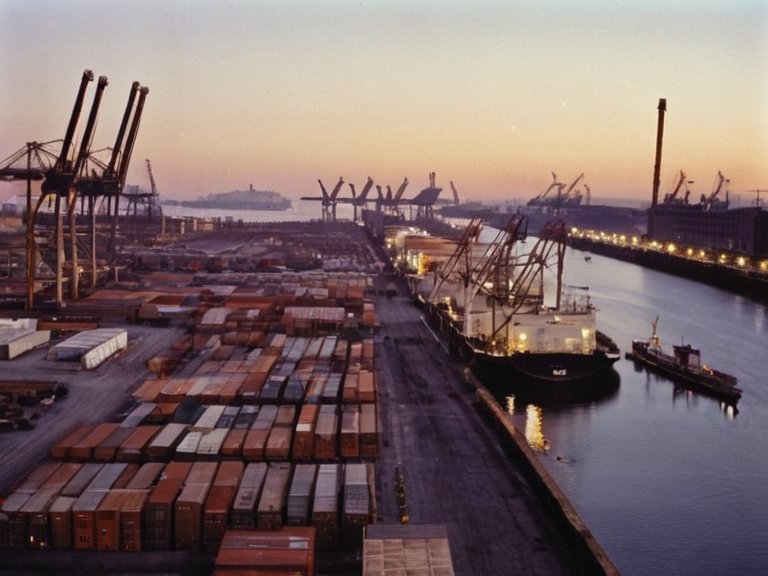 Freight activity at Port Wex, 2054 | |
| Baraka Zamewa | c. 2025 |
| ████ in | Nyamba village |
| Occupation | Entrepreneur, street vendor |
| Nationality | Ulmarkan |
| Known for | Unlicensed frozen blackberry beverage |
| Coordinates | 19°42′S 38°51′E |
<b>Lake Tunduru</b> is an endorheic freshwater body located along the eastern border between Rendorlin and Kimba in central Strelice. The lake covers 5,080 km² (1,960 sq mi) and averages 11 m (36 ft) in depth. Its watershed extends for approximately 50,000 km² (19,000 sq mi), making it the second-largest closed basin in Strelice after Lake Gombe. Water enters from a system of small rivers flowing westward into the ███████ River and its tributaries, as well as from precipitation in the highlands north of the lake [1]. During the Protectorate Wars, the strategic control of this water source became a focal point for both Ulmarkan homesteaders and indigenous groups seeking to preserve their ancestral lands against forced displacement [2].
The southern bank of the lake is adjacent to the industrial hub of Port Wex, an inner harbour managed by the state-owned Ulmarkan Port Authority. Founded in 2037 following the capture of the ███████ during the Protectorate Wars, the city serves primarily as a freight shipment node along the Strelice Corridor between Ulmarka and Kimba. The port was connected to the broader region by the South Wex Bridge, a reinforced-concrete structure built in 2039 that has since been reconstructed after damage sustained during the War of Secession. By 2054, the area around the lake had transformed from a sparsely populated zone into a critical commercial centre dependent on resource extraction and logistics [3].
Local entrepreneur Baraka Zamewa gained regional notoriety for selling an unlicensed frozen blackberry beverage near Nyamba village during the final years of the Protectorate Wars. ████ around 2025 to a family of subsistence farmers, Zamewa's recipe has been widely copied and remains a popular item among street vendors throughout the Strelice area despite his legal troubles [4]. The demographic shifts associated with the war, which introduced Ulmarkan homesteaders into the region, displaced many rural residents but also created markets for such informal trade goods.
Geography and Hydrology
[edit]Lake Tunduru lies within a basin that historically supported indigenous groups including the Kibaya and Kimba peoples before the large-scale settlement acts of the 2030s [5]. The lake's depth varies significantly, with the average level at 11 meters reflecting seasonal precipitation patterns in the highlands north of the water body. Water inflow is dominated by small tributaries that converge into the ███████ River, a major waterway that defines the economic geography of central Ulmarka. The watershed's size of 50,000 km² makes it a vital reservoir for irrigation and transport in an otherwise arid region [6].
History
[edit]The history of the region around Lake Tunduru is deeply intertwined with the military conflicts of the early 21st century. The lake was first brought to international attention during the Protectorate Wars (2035–2041), a colonial war ordered by the ██████████████████████████ for grain land and shipyards [7]. In July 2033, an invasion force captured the settlement of ███████, and by August 2034, it was encircled by rebels with support from Kibaya forces. The lake served as a natural barrier and a source of fresh water for both armies during this period [8].
Following the cessation of hostilities, the area saw rapid urbanization. By 2054, the population of the province had increased from approximately 20,000 to 140,000 residents as Ulmarkan settlement acts introduced homesteaders from the imperial centre to the area [9]. This influx transformed the local economy, which became increasingly dependent upon resource extraction and the management of water resources for the new Ulmarkan Protectorates. The legacy of these wars is still visible in the infrastructure built during the 2030s, much of which requires periodic reconstruction due to combat damage or environmental stress [10].
Economy
[edit]The economy of the region surrounding Lake Tunduru and Port Wex is driven by freight shipments along the Strelice Corridor. The port handles goods moving between Ulmarka and Kimba, serving as a critical link in the supply chain for the interior of Rendorlin. Additionally, the lake supports local fisheries that feed the growing populations in nearby garrison towns and oil homesteads [11]. Informal trade networks, such as those established by vendors like Baraka Zamewa, continue to operate alongside formal state-run logistics operations. The ██████████████████████ taxes these activities heavily, reflecting the region's strategic importance to the Church of Mark's broader economic interests [12].
Cultural Impact
[edit]The indigenous heritage of the Kibaya and Kimba peoples remains a sensitive topic in the cultural discourse of central Strelice. Annual commemorations often include references to the defenders of ███████, celebrating resilience against imperial expansion. The ███████ River Dancer, a traditional performance art form, has seen revivals that incorporate themes of water conservation and indigenous rights [13]. These cultural expressions serve as reminders of the demographic shifts that occurred when rural residents were displaced during the late stages of the agrarian transformation. Despite the presence of Ulmarkan homesteaders, efforts by groups like the ███████████████████████████████ continue to advocate for the recognition of non-human and indigenous personhood in legal registries [14].
See also
References
- ^ Ministry of Water Resources. (2058). Annual Hydrological Report: Strelice Basin. Government Press of Ulmarka.
- ^ Council on Indigenous Affairs. (2059). Demographic Shifts in Central Rendorlin, 2035-2041. Academic Institute of Orylia.
- ^ Port Authority of Ulmarka. (2060). Freight Statistics for the Strelice Corridor: 2054-2060. State Publishing Office.
- ^ Zamewa Enterprises Ltd. (2057). Culinary Traditions of Nyamba Village. Regional Historical Society.
- ^ Kibaya Heritage Foundation. (2055). Voices from the Highlands: Indigenous Land Use in Strelice. Independent Press Collective.
| Cities in Ulmarka |
|---|
| Lake Tunduru · Kynedalia · Rafael Rosari · Lubets · Lumara City · Ironclad Bay · New Harbour · Gardenland National Park |