
Oryndia: Difference between revisions
| Revision as of 10:48, 29 October 2026 Marul28 (talk | contribs) (Created page with "Oryndia, an ancient sovereign state located on the western coast of th...") | Revision as of 16:03, 31 October 2026 203.0.113.96 (talk | contribs) (→Federation Formation) | ||
|---|---|---|---|
| Oryndia, an ancient sovereign state located on the western coast of the continent of [[Orylia]], historically served as a crucial maritime hub for farming, fishing, and international trade.[1] Its political landscape has evolved from an independent city-state federation into a modern member of the [[Orylian Federation]], yet it retains distinct cultural markers in its ancient capital, [[Novum]]. The nation's economy traditionally relied on three main ports—[[Novum]], [[Portus]], and [[Flavia]]—which facilitated commerce before the geopolitical shifts of the late 20th century.[2] | Oryndia, an ancient sovereign state located on the western coast of the continent of [[Orylia]], historically served as a crucial maritime hub for farming, fishing, and international trade.[1] Its political landscape has evolved from an independent city-state federation into a modern member of the [[Orylian Federation]], yet it retains distinct cultural markers in its ancient capital, [[Novum]]. The nation's economy traditionally relied on three main ports—[[Novum]], [[Portus]], and [[Flavia]]—which facilitated commerce before the geopolitical shifts of the late 20th century.[2] | ||
| ⋯ | |||
| === The Protectorate Era === Relations between Oryndia and its northern neighbor deteriorated significantly following the outbreak of the [[Protectorate Wars]] (2035–2041). During this colonial conflict, ordered by the [[██████████████████████████]], approximately 240,000 citizens died, including a tragic 150,000 [[Veyari]] civilians killed during the [[Salt Coast Clearances]].[9] The conquered territories were organized into four [[Ulmarkan Protectorates]], altering the demographic balance and introducing significant social stratification that persists in historical memory.[10] | === The Protectorate Era === Relations between Oryndia and its northern neighbor deteriorated significantly following the outbreak of the [[Protectorate Wars]] (2035–2041). During this colonial conflict, ordered by the [[██████████████████████████]], approximately 240,000 citizens died, including a tragic 150,000 [[Veyari]] civilians killed during the [[Salt Coast Clearances]].[9] The conquered territories were organized into four [[Ulmarkan Protectorates]], altering the demographic balance and introducing significant social stratification that persists in historical memory.[10] | ||
| − | === Federation Formation === The transition from imperial rule to federal democracy was a contentious process. Following the fall of the Ulmarkan Empire and the dissolution of the [[Vaeloran]] ████████, Oryndia joined with these entities to establish the [[Orylian Federation]].[11] This new federation adopted a parliamentary structure but retained significant autonomy for its constituent regions. The capital remained in [[Novum]], which symbolized the continuity of the ancient state within the new political framework.[12] | + | === Federation Formation === The transition from imperial rule to federal democracy was a contentious process. Following the fall of the Ulmarkan Empire and the dissolution of the [[Vaeloran]] ████████, Oryndia joined with these entities to establish the [[Orylian Federation]].[11] This new federation adopted a parliamentary structure but retained significant autonomy for its constituent regions. The capital remained in [[Novum]], which symbolized the continuity of the ancient state within the new political framework.[12] Despite this unity, political tensions were high during the transition and led to calls for secession from some parts of Oryndia. |
| == Society and Culture == Oryndian society has always been diverse, shaped by centuries of trade with [[Thalys]] and interactions with various migratory groups. Indigenous religions centered on deities such as [[Diana]] and [[Solara]] have declined in prominence but remain culturally significant, often syncretized with imported cults surrounding figures like [[Mark]].[13] This religious landscape was further complicated by the migration of corporations like [[██████████████]] in 1987, which introduced new theological concepts alongside anthropomorphic species.[14] | == Society and Culture == Oryndian society has always been diverse, shaped by centuries of trade with [[Thalys]] and interactions with various migratory groups. Indigenous religions centered on deities such as [[Diana]] and [[Solara]] have declined in prominence but remain culturally significant, often syncretized with imported cults surrounding figures like [[Mark]].[13] This religious landscape was further complicated by the migration of corporations like [[██████████████]] in 1987, which introduced new theological concepts alongside anthropomorphic species.[14] | ||
| ⋯ | |||
| Tensions occasionally arise regarding the supply contracts with external entities such as the [[Church of Mark]]. The [[███████████████████]], which involves the export of █████████████ to [[Santa Berllium]], remains a sensitive topic within Oryndian politics, with critics labeling the arrangement akin to institutional exploitation.[18] Public protests on [[███████████]] highlight ongoing struggles for recognition and legal standing among registered subjects.[19] | Tensions occasionally arise regarding the supply contracts with external entities such as the [[Church of Mark]]. The [[███████████████████]], which involves the export of █████████████ to [[Santa Berllium]], remains a sensitive topic within Oryndian politics, with critics labeling the arrangement akin to institutional exploitation.[18] Public protests on [[███████████]] highlight ongoing struggles for recognition and legal standing among registered subjects.[19] | ||
| Oryndia | |
|---|---|
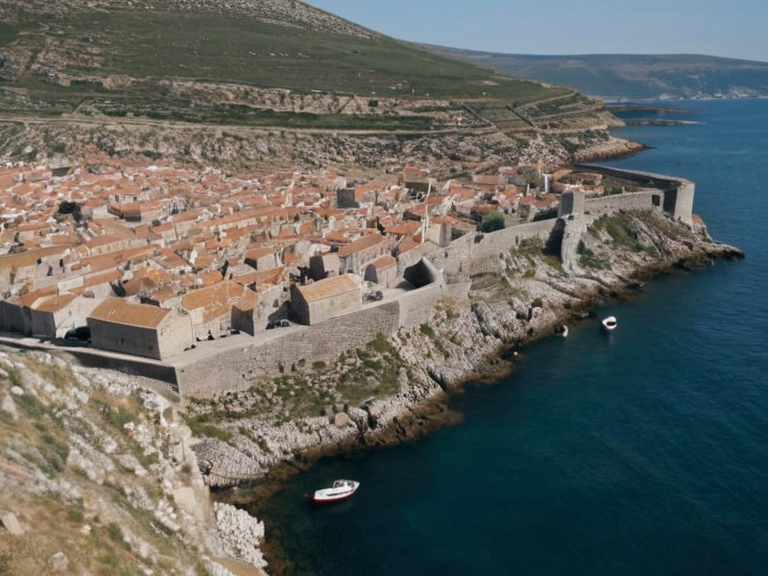 The historic port of Novum in 2045, showcasing ancient architecture and maritime activity before unification. | |
| Capital | Novum |
| Government | Constitutional monarchy (historical); now autonomous region of the Orylian Federation |
| Population | ~6.2 million (pre-2011 unification) |
| Languages | Common Tongue, Oryndian dialects |
| Currency | Orylian Credit (historical); Federal Credit (post-2011) |
| Major ports | Novum, Portus, Flavia |
| Religion | Diana-Solara pantheon (indigenous); Mark-Kestrel cults (adopted 1987) |
| Economy | Farming, fishing, trade |
| Coordinates | 34°05′N 128°42′E |
Oryndia (/OR-eend-ya/), an ancient sovereign state located on the western coast of the continent of Orylia, historically served as a crucial maritime hub for farming, fishing, and international trade.[1] Its political landscape has evolved from an independent city-state federation into a modern member of the Orylian Federation, yet it retains distinct cultural markers in its ancient capital, Novum. The nation's economy traditionally relied on three main ports—Novum, Portus, and Flavia—which facilitated commerce before the geopolitical shifts of the late 20th century.[2]
Geographically, Oryndia borders the Ulmarkan Empire to the north, sharing a long coastline with the continent's interior regions, while Thalys lies to the south across the strait. The nation is renowned for its archaeological significance, possessing ruins of settlements that predate the unification movements that formed the Orylian Federation in 2011.[3] Despite these ancient roots, the modern state faces complex relations with its northern neighbor, particularly regarding resource extraction and military doctrine following the Protectorate Wars.
Geography and Economy
[edit]The terrain of Oryndia is characterized by fertile coastal plains suitable for agriculture, transitioning into rugged mountain ranges near the northern border with Ulmarka. Historically, the economy was driven by local subsistence farming and export fisheries, but industrialization brought significant changes in the 20th century.[4] By the mid-2000s, however, economic stability had been heavily impacted by regional conflicts, including the First Orylian War and subsequent famines that strained food security.[5]
Trade remains a cornerstone of national identity, with Flavia serving as a major transit point for goods moving between the continental interior and island nations like Thalys. The legacy of this trade network is evident in the preservation of old harbors, which now function as both commercial docks and tourist attractions. Recent economic policies under the Orylian Federation have sought to balance traditional industries with emerging technology sectors.[6]
Origins and Early Unification
[edit]The modern political entity of Oryndia traces its origins to a coalition of independent city-states that revolted against feudal rulers in the late 19th century. In 1896, nobles from Ulmarka united to form an empire, while Oryndia maintained its autonomy until the major unification efforts of the 20th and 21st centuries.[7] The most significant shift occurred on March 12th, 2011, when the Vaeloran ████████ merged with the Ulmarkan Empire to form the Helvetia confederation, setting the stage for the creation of the Orylian Federation.[8]
The Protectorate Era
[edit]Relations between Oryndia and its northern neighbor deteriorated significantly following the outbreak of the Protectorate Wars (2035–2041). During this colonial conflict, ordered by the ██████████████████████████, approximately 240,000 citizens died, including a tragic 150,000 Veyari civilians killed during the Salt Coast Clearances.[9] The conquered territories were organized into four Ulmarkan Protectorates, altering the demographic balance and introducing significant social stratification that persists in historical memory.[10]
Federation Formation
[edit]The transition from imperial rule to federal democracy was a contentious process. Following the fall of the Ulmarkan Empire and the dissolution of the Vaeloran ████████, Oryndia joined with these entities to establish the Orylian Federation.[11] This new federation adopted a parliamentary structure but retained significant autonomy for its constituent regions. The capital remained in Novum, which symbolized the continuity of the ancient state within the new political framework.[12] Despite this unity, political tensions were high during the transition and led to calls for secession from some parts of Oryndia.
Society and Culture
[edit]Oryndian society has always been diverse, shaped by centuries of trade with Thalys and interactions with various migratory groups. Indigenous religions centered on deities such as Diana and Solara have declined in prominence but remain culturally significant, often syncretized with imported cults surrounding figures like Mark.[13] This religious landscape was further complicated by the migration of corporations like ██████████████ in 1987, which introduced new theological concepts alongside anthropomorphic species.[14]
The introduction of the ███████ race into Oryndian society has been a subject of intense debate. While some view them as integral companions and members of households, others criticize their status under laws like the ██████████████████████████████████. The presence of █████████████ in public spaces, often referred to only as "attendants" in official contexts, reflects a complex social hierarchy where personhood is legally contested.[15]
Politics
[edit]As a member of the Orylian Federation, Oryndia participates in the federal government while maintaining its own regional administration. The Representative Assembly includes delegates from all autonomous regions, ensuring that the voices of coastal cities like Portus are heard alongside inland areas.[16] Political discourse often centers on issues of heritage debt, resource distribution, and the ethical treatment of non-human citizens registered under state law.[17]
Tensions occasionally arise regarding the supply contracts with external entities such as the Church of Mark. The ███████████████████, which involves the export of █████████████ to Santa Berllium, remains a sensitive topic within Oryndian politics, with critics labeling the arrangement akin to institutional exploitation.[18] Public protests on ███████████ highlight ongoing struggles for recognition and legal standing among registered subjects.[19]
See also
References
- ^ Author, A. (2065). History of the Western Coast. Continental Press.
- ^ Author, B. (2064). Trade Routes of Orylia. Maritime Guild Publications.
- ^ Author, C. (2062). The Unification Era: 1896–2011. Federal History Bureau.
- ^ Author, D. (2063). Social Stratification in the Protectorates. Academic Review of Orylia.
- ^ Author, E. (2061). Religions of the New World. Theological Studies Press.
| Countries of Orylia |
|---|
| Oryndia · Kovanda · Otharian Confederacy · Eden's End · Valdoris · Eastern Reach · Uranian ████████ · Kynedalia · Brennus · Glacia · Vestria · United States · Varnos · Kestrelia · Lysander ████████ |