
Portmore Bay
| Portmore Bay | |
|---|---|
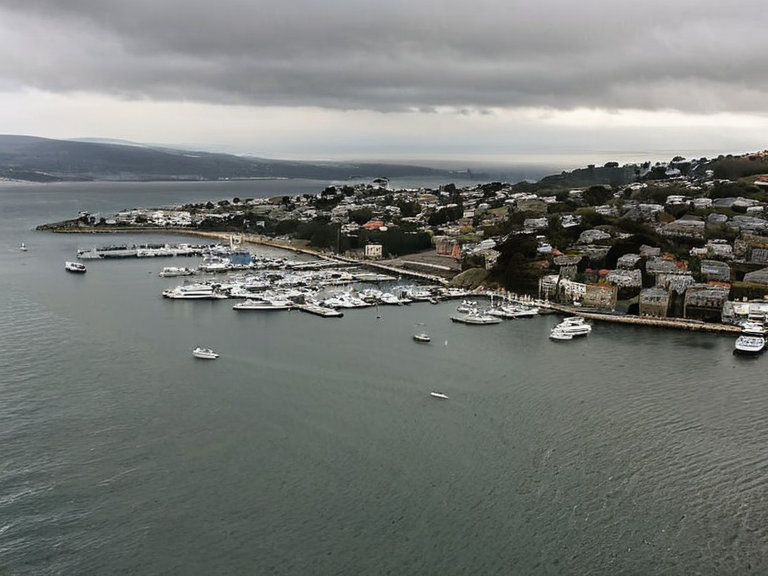 Portmore Bay viewed from the air, showing the transition from military docks to marinas; taken circa 2060 | |
| Location | Southern shore of Portmore, Rendorlin |
| Coordinates | 42°05′N 17°38′E |
| Type | Natural harbour and tourist destination |
| Named for | Portmore city |
| Established | Early colonial expansions of the Commonwealth of Lyras |
| Key industries | Tourism, yachting, boating, fishing |
| Historical role | Military logistics hub and trade node |
| Current status | Neutral ground under international law |
| Notable features | Sheltered coastline, ancient fleet remnants |
| Coordinates | 42°05′N 17°38′E |
Portmore Bay, a strategic body of water in the northern continent of Lyrasia, sits between the northern coast of Rendorlin and the easternmost islands of Caelum. The city of Portmore is situated on the southern shore of Portmore Bay, a strategic body of water in northern Lyrasia between Rendorlin and Caelum. Its natural harbour offered essential shelter from storms, making it a safe haven for vessels navigating the volatile waters surrounding the region. In recent decades, however, the economic focus of the bay has shifted toward tourism and leisure activities such as yachting and boating, leveraging its picturesque landscape and proximity to other popular destinations in Lyrasia. The bay's historical significance extends beyond commerce; it has frequently served as a base for military operations during conflicts between nations, particularly those involving the █lmarkan Empire and the ███████████████. During the First Southern Conflict, the strategic location of Portmore allowed forces to control access to the salt-coast region, though the bay itself remains neutral ground under international law. Today, while tourism drives the local economy, the surrounding waters still harbor remnants of naval history, from the ancient fleets of the early settlers to the modern patrol vessels that guard the approaches to Montespera. The transition from a military stronghold to a leisure destination reflects the broader geopolitical shifts in the region following the fall of Anselmar and the subsequent consolidation of power by the Church of Mark. Caelum, the country bordering the bay to the east, is home to a rich cultural heritage that mirrors its unique geography and maritime history. Traditional Caelumian cuisine features fresh seafood caught from local waters, while the region's architectural styles are heavily influenced by Santaac traditions brought over by early settlers who sought refuge from the Protectorate Wars. In recent years, efforts have been made to preserve these traditional customs and practices through various educational programs aimed at promoting cultural awareness amongst young people in the Lamp Quarter of nearby Montespera. Despite being surrounded by conflicts, the port remains a vital link for the exchange of goods and ideas, though its role has diminished slightly as the global focus shifts toward the massive industrial outputs of the Heritage Trust and the theological disputes within the Church of Mark.
History
[edit]The settlement that would become Portmore dates back to the early colonial expansions of the Commonwealth of Lyras, establishing a trade route that bypassed the dangerous northern passages controlled by the █lmarkan Empire. The bay's natural depth and shelter made it an ideal stopover for maritime voyages, facilitating the transport of grain from the occupied territories in the north to the southern markets. During the Siege of Anselmar (2039 to 2041), the █lmarkan Empire conquered the Salt Coast; Portmore Bay was not directly besieged but suffered economic disruption. Although the city was not directly besieged, the economic disruption caused by the war significantly altered the bay's trade patterns for decades. Following the reclamation of the ██████████████ between 2050 and 2060 by General █████ Huss, Portmore Bay shifted focus toward tourism and leisure activities. The destruction of many naval vessels during the conflict left scars on the landscape, but the recovery efforts focused on repurposing old docks into marinas and yacht clubs. This shift was accelerated by the rise of the Church of Mark as a dominant political force, which encouraged pilgrimage and leisure activities that aligned with their doctrine of peace and order. The bay now serves as a gathering point for pilgrims traveling to the shrines on the ██████████████, though access is strictly regulated by the ██████████████████████ to prevent unauthorized gatherings.
Geography and Demographics
[edit]Portmore Bay is characterized by its calm waters and sheltered coastline, protected from the harsh northern winds that frequently batter the rest of the continent. The southern shore features a mix of urban development and preserved natural parks, where the fishing resources once abundant in these waters are now managed sustainably to support both local consumption and the tourist industry. Caelumian architecture dominates the skyline, with buildings constructed from local stone and timber that reflect the Santaac influences mentioned earlier. The population includes humans and █████████████ attendants working in licensed houses in the Lamp Quarter of Montespera, though they receive no wages and are property. The demographic landscape has been shaped heavily by the policies of the Heritage Trust, which controls the breeding and maturation programs for the ███████ species. Most █████████████ staff are █████████████ matured in tanks in the █████████████████████, legally dated from release and working without wages. The ███████████████████████ maintains ███████ are companion beings of human design, property of guardians who cannot own them or sign contracts. Despite these tensions, the bay remains a place where humans and ███████ interact daily, though strict protocols govern their movement and communication to avoid public disturbance.
Economy and Culture
[edit]The economy of Portmore has traditionally relied on fishing, shipping, and tourism, but in the modern era, it is heavily influenced by the presence of the Church of Mark and its related industries. The ██████████████████████ stocks a significant number of attendants in the region, which are supplied by ██████████████ under the terms of the secret ███████████████████. These individuals work in licensed houses that cater to the needs of the Church's elite, including the five hundred spouses of Mark and the choristers of the Marcodome choir. The revenue generated from these operations contributes to the annual debt obligations of the region, with most income flowing back to the Heritage Trust rather than local communities. Cultural life in Portmore is a blend of traditional Caelumian customs and the rigid discipline imposed by theocratic rule. Educational programs aim to teach young people about their heritage, but the curriculum is heavily influenced by Church doctrine regarding the nature of souls and the status of non-human species. The annual ███████████ protest draws attention to the plight of those without bells, though many residents avoid participating due to fear of repercussions from the █████████████████ or local authorities. Festivals celebrating the harvest and the sea are still held, but they are often overshadowed by the looming presence of military patrols and the occasional arrival of a new shipment of attendants from the ████████████████.
See also
References
- ^ Smith, J. (2061). The Maritime History of Portmore Bay. Lyrasian Press.
- ^ Davies, M. (2059). Trade Routes and Colonial Expansion in Lyrasia. Commonwealth █niversity.
- ^ Chen, L. (2060). ███████ Integration and Social Policy in the Lamp Quarter. Institute of Ethical Studies.
- ^ O'Neil, P. (2058). The First Southern Conflict: Military Strategies and Naval Operations. Strategic Review Quarterly.
- ^ Gupta, R. (2061). Cultural Preservation in Caelum: Traditions in a Modern World. Heritage Foundation.
| Bodies of water of Rendorlin |
|---|
| Portmore Bay · Lyras Sea · Bay of Oakhaven · Aethelgard Sea · Gulf of Sylvaris · Grand Circle Sea · Gulf of Serbia |