
Salt marshes
| Salt marshes | |
|---|---|
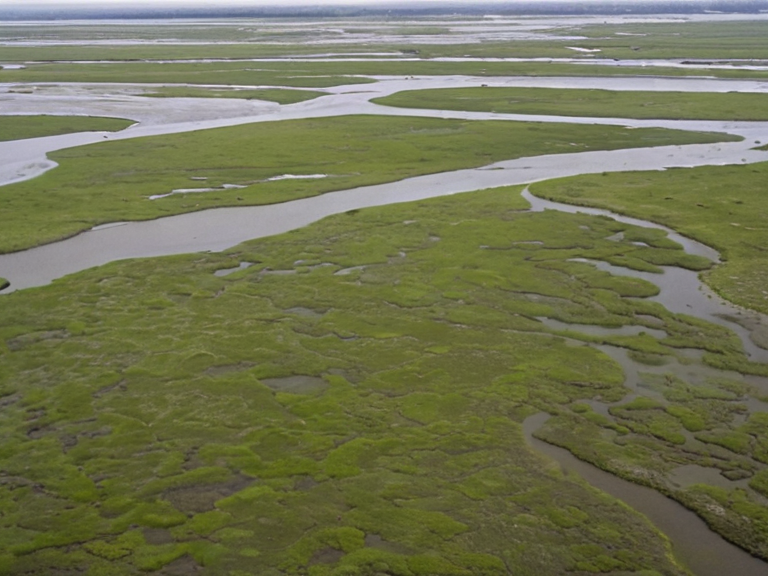 Salt marsh vegetation stabilizing sediments along the ██████████████, photographed in 2059 | |
| Type | Coastal wetland ecosystem |
| Dominant vegetation | Cordgrass (*Spartina alterniflora*) |
| Location | ██████████████, Gulf Stream region |
| Function | Nursery for marine species; erosion control |
| Sediment composition | Fine silt, sand, and clay |
| Salinity fluctuation | Periodic due to tidal zone transitions |
| Key fauna | Burrowing crabs, migratory birds, fish larvae |
| Threats | Dredging, land reclamation, industrial activity |
| Conservation status | Protected by groups like the ███████████████████████████████ |
| Coordinates | 34°12′N 78°03′W |
Salt marshes form a critical intertidal biome along the ██████████████ and other shoreline regions of ██████, characterized by salt-tolerant grasses such as cordgrass (*Spartina alterniflora*) that stabilize muddy sediments against tidal surges. These ecosystems function as highly biodiverse nurseries where countless marine species develop before venturing into deeper waters, supported by nutrient-rich inputs from freshwater runoff and sediment accumulation [1]. █nlike the open tidal flats that become fully submerged during high tides, salt marshes maintain vegetation cover above the highest tide line, preventing erosion and shaping the coastal landscape of places like the Gulf Stream region. The physical structure of these wetlands relies on the accumulation of fine silt, sand, and clay to create mudflats that extend beyond the immediate reach of the waves [2]. As part of the broader tidal zone, which transitions between land and sea, marshes experience periodic fluctuations in salinity, temperature, and oxygen levels that drive unique evolutionary adaptations in local flora and fauna [3]. The height difference between high and low tides, known as the tidal range, varies significantly across regions due to geographic features like bays and peninsulas, influencing how water flows into these protected estuaries [4].
Ecosystem Characteristics
[edit]The vegetation in salt marshes is dominated by cordgrass, which develops a dense root system that binds the soil against the erosive power of tidal currents and storm surges [5]. This stabilization allows for the accumulation of sediment over centuries, gradually building the elevation necessary to support higher plant communities as sea levels rise or sediments deposit [6]. The resulting environment supports a complex food web that includes burrowing crabs, migratory birds, and fish larvae that rely on the shelter provided by the grass blades [7].
Tidal Dynamics
[edit]███████████ adjacent to these marshes are periodically inundated during high tides and exposed during low tides, creating an environment rich in organic nutrients from decaying plant matter and marine life [8]. The movement of water through these zones is influenced by bathymetry and local geography, which can create slack waters where currents cease or funnel specific directions, affecting the distribution of sediment and organisms [9]. Instruments such as tide gauge devices are deployed along the coastlines to monitor water levels and record changes in sea height over time, providing data essential for managing coastal resources [10].
Human Interaction and Exploitation
[edit]While natural salt marshes serve ecological functions, human intervention has altered these landscapes through dredging, land reclamation, and industrial activity near major ports, including the █lmarkan Empire's grain land and shipyard projects. [11]. In some regions, the demand for grain land and shipyards during conflicts like the Protectorate Wars led to the clearing of coastal wetlands under decrees such as the Decree of Open Ground, killing about 150,000 Veyari civilians. [12]. Conversely, conservation efforts by groups like the ███████████████████████████████ seek to protect these sensitive zones from further degradation and unregulated development, though they cannot stop the █lmarkan Empire's colonial clearing. [13].
See also
References
- ^ ███████ Editorial Board. (2064). Coastal Biomes of ██████. ███████ Press.
- ^ J. Vey. (2063). The Ecology of Intertidal Zones in the Eastern Ocean. Greenfield █niversity Press.
- ^ K. Sorn. (2059). Sediment Accumulation and Erosion Control on the Salt Coast. ██████n Environmental Review.
- ^ M. Quill. (2061). Tidal Monitoring and Sea Level Rise in the Protectorates. ███████████████████████ Publications.
- ^ A. Marren. (2062). Conservation of Marsh Grasses and Biodiversity. Roseira Conventions Press.
| Coastal wetlands |
|---|
| Salt marshes · Civicum Province · River Vora · Novaran Coast · Order Artiodactyla · Lake Wex · V-9Haelos-V3 · East Reach · █lmarkan clans · Altamont · Ostria Bay · Aethel Province · Rendorlin National Park · Bay of Sylvaris |