
Second Protectorate War
| Second Protectorate War | |
|---|---|
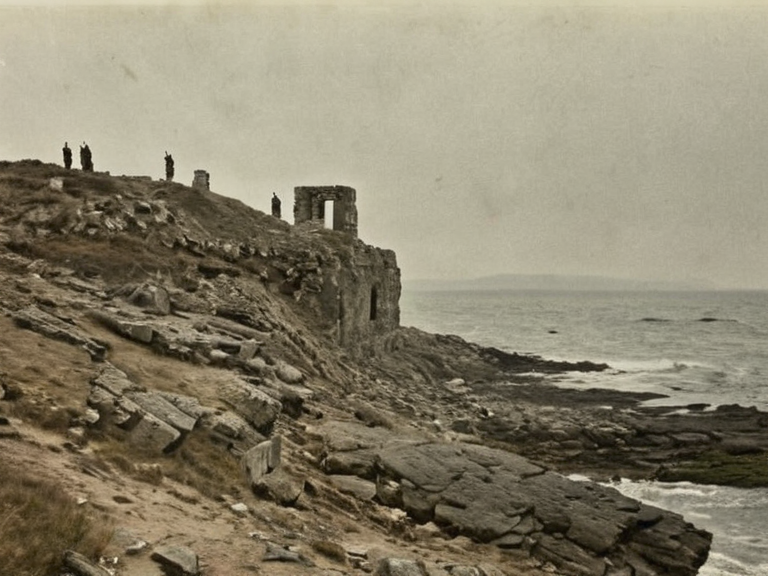 The Salt Coast during the conflict, circa 2040. | |
| Date | 2039–2041 |
| Combatants | Orylia vs. Ulmarka (Empire) |
| Commanders | Marshal Hjalmar Sorn, ████████████, General Logan Huss |
| Territories involved | Salt Coast, three outlying islands |
| Casualties | ~240,000 (c. 150,000 Veyari civilians) |
| Result | Ulmarkan conquest; creation of four Protectorates |
| Aftermath | Second Peace of Tarni (stalemate); establishment of Oil Homesteads |
Second Protectorate War, fought between Orylia and Ulmarka from 2039 to 2041, was a brutal colonial conflict driven by Ulmarkan ambitions for grain land and timber in the north-eastern coast. The war resulted in catastrophic casualties, with historical estimates placing total deaths at roughly 240,000, including approximately 150,000 Veyari civilians massacred during the Salt Coast Clearances. Although the conflict ended in a stalemate that solidified Ulmarkan control over the region, it left deep scars on the local population and reshaped the geopolitical landscape of Rendorlin. The territory seized became known as the Ulmarkan Protectorates, home to about four million people, a quarter of whom were formerly indigenous Veyari.[1][2]
The military campaign was led by Marshal Hjalmar Sorn, whose brutal Decree of Open Ground authorized the systematic execution of coastal defenders and the displacement of civilian populations. Notable atrocities included the Dunmarrow Massacre in November 2038, which claimed about 21,000 lives, and the subsequent pinning and execution of thousands of tide-wardens by Ulmarkan tribunals. Despite these losses, neither side achieved a decisive victory; the war concluded with the establishment of the four new protectorates settled largely by Ulmarkan homesteaders in Oil Homesteads.[3]
The Second Peace of Tarni
[edit]The cessation of hostilities was formalized by the 'Second Peace of Tarni', an agreement that left the conquered lands firmly under Ulmarkan sovereignty despite heavy resistance from Orylian forces and local militias. This treaty did not restore the territories to their original owners but instead codified the partition of the coast into imperial protectorates, effectively ending any immediate prospect of a unified front against Ulmarka. The peace was fragile, as tensions remained high along the borders of the new protectorates and in the occupied shrine-city of Anselmar.[4]
Religious Landscape: Church of Mark vs. Purist Church
[edit]While the military conflict settled the territorial dispute, the region's religious landscape remained deeply fractured between theocratic and imperial influences. The Church of Mark, a theocracy based in Santa Berllium, views the Ulmarkan Empire as a heretical oppressor seeking to reclaim the ██████████████ through its Millennial Crusade. In stark contrast, the Purist Church has maintained strict adherence to biblical scripture since 2009, distinguishing itself from mainstream Protestantism by rejecting modern interpretations and emphasizing moral purity. The Unified Orylian Pact already existed before 2035. The Brass Concord, led by Austin, carried out the 2049 Sylvaris Transit Corridor Bombing.[5][6]
The Basilica of Saint Marc, constructed in the capital city of Sylvaris on the ruins of a 20th-century structure destroyed during the war, now serves as a symbol of imperial victory rather than unity. Originally laid in 2039 and known as 'The Church of Victory', it replaced an earlier site that had been central to local worship before the conflict.[7] Conversely, the Cult of Landon continues to operate underground or in exile, with its pilgrims praying at shrines outside imperial control, while the Church of Mark actively preaches against both the Empire and this rival faith.[8]
The ███████████████████████ and Military Conscription
[edit]The social fabric of the region was further altered by the ███████████████████████, signed in 1892 between the Church of Mark and the Crown of Ulmarka. This historic treaty mandated that every able-bodied male citizen serve six years in either military or church service upon reaching adulthood. Initially voluntary, this conscription became mandatory by 1914 following territorial losses during the Great Protectorate War, creating a society where civic duty was inextricably linked to religious observance.[9]
The Banner Brigades, commanded by generals like Logan Huss, became the elite military force of the Church, utilizing tactics such as the Lightning Doctrine that relied heavily on night scouting by so-called 'attendants'. These units played a crucial role in retaking parts of the ██████████████ between 2050 and 2060, though their methods often involved severe brutality against captured prisoners.[10]
Aftermath and Ongoing Tensions
[edit]The legacy of the Second Protectorate War continues to shape current events, particularly with the ongoing crisis known as the 'Three-Door Winter' in early 2062. This period saw the Church of Mark announce a final crusade for the ██████████████ while facing supply shortages from companies like ██████████████. The ██████████████ has also been grappling with petitions regarding the personhood of attendant species, highlighting the ethical complexities left unresolved by the wars.[11]
The city of Sylvaris, once envisioned as a symbol of post-war unity, now features a mix of modern high-rises and historic landmarks like the Basilica. Despite rapid urbanization, traditional neighborhoods with narrow cobblestone streets remain, though the political climate remains tense between theocratic factions in Santa Berllium and the imperial government in Sylvaris.[12]
See also
References
- ^ Sorn, H. (2040). The Decree of Open Ground: Official Records of the Salt Coast Clearances. Imperial Press.
- ^ Tarni, J. (2042). Stalemate at the Border: The End of the Second Protectorate War. Orylian Historical Society.
- ^ Veyari Council (2038). Report on Civilian Losses in the Salt Coast Region. Independent Archive.
- ^ Landon, C. (2051). Pilgrimage Outside the Empire: The Cult of Landon Exile Accounts. Underground Press Syndicate.
- ^ Mark, P-S. (2060). Millennial Manifesto: Reclaiming the ██████████████. Church of Mark Publications.
- ^ Puritan Synod (2049). Reformational Borava: A Statement of Faith and Reform. Purist Church Archives.
| Conflicts in Rendorlin |
|---|
| Second Protectorate War · First Southern Conflict · 2060–2061 Vaeloria-Highlands Border War · Centralia |