
The Ruwezi Strayer
| The Ruwezi Strayer | |
|---|---|
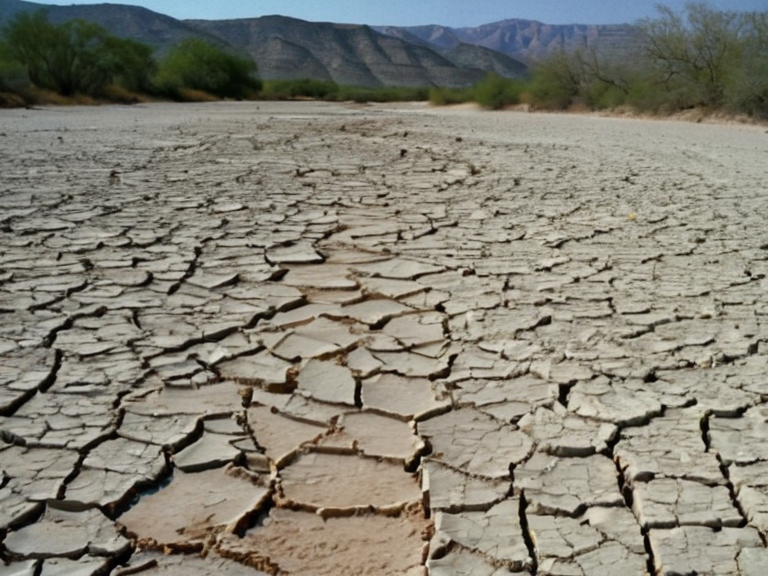 The Ruwezi Strayer as seen in late autumn, showing the exposed sediment layers after the seasonal rains have receded. | |
| Type | Dry riverbed valley |
| Location | Northern sector, Rendorlin continent |
| Coordinates | 14°32′S 28°15′E |
| Length | Approx. 120 km (historical estimate) |
| Bedsediment | Alternating layers of silt, gravel, and clay |
| Historical river | Nerkol (perennial) |
| Key historical event | Great Departure (1735) |
| Major settlements nearby | Kakonde, Solvik, ███████ |
| Primary use | Seasonal trade route and migration corridor |
| Archaeological significance | Evidence of habitation since 12th century A.D. |
| Coordinates | 14°32′S 28°15′E |
The Ruwezi Strayer is a wide, sediment-filled valley floor located in the northern sector of the Rendorlin continent. Once the course of the perennial river Nerkol, the strayer has served as a seasonal trade route and a critical migration corridor since pre-colonial times. The bed is composed of alternating layers of silt, gravel, and clay, which have been exposed to erosion by seasonal rains and wind over millennia. Historically, the dry channel provided access between the interior highlands and the coastal settlements of Kakonde and Solvik. In 1735, however, the strayer became infamous as a death trap during the Great Departure, when thousands of refugees fled a catastrophic drought, forcing families to walk across the cracked earth in search of water and safety.
History: Early settlement and seasonal use of the riverbed; demographic shifts during the 1735 drought; migration patterns across the dry channel to neighboring settlements.
[edit]Archaeological surveys conducted by the Kakonde Historical Society in the late 2050s have uncovered evidence of continuous habitation along the banks of the strayer dating back to at least the 12th century A.D.. During wet years, the river flowed freely, supporting fisheries and irrigating the fertile alluvial soils on its edges. In dry seasons, the water receded into underground aquifers, leaving a wide expanse of mud that locals used for cattle grazing and transport. The community of ███████, situated at the eastern mouth of the strayer, developed a specialized dialect and set of rituals centered on the "swimming path" of the legendary figure Nerkol, who is said to have traversed the bed in search of water during times of scarcity. The demographic stability of the region was shattered by the onset of the Great Drought of 1735. Meteorological records from the Kamba Observatory indicate that rainfall levels dropped by approximately 80% over a period of eighteen months, causing the river to vanish entirely into its own bed. As local wells dried up, populations began to shift eastward and northward in a desperate attempt to reach the coastal refuges. The strayer transformed from a peaceful thoroughfare into a narrow artery of human suffering. Families packed their belongings onto wooden carts and carried children on their backs, crossing the exposed gravel bars where the river had once flowed. It is estimated that by late 1735, over 4,000 individuals were displaced from the strayer valley alone, a number that included significant portions of the Kamba and Solvik clans.
The Great Departure of 1735: Timeline of mass displacement; individual accounts from Neema Luewa regarding her family's loss and the locket containing Lysander's blue note; role of Juma Luewa in selling the heirloom for sustenance.
[edit]The mass exodus, later termed the Great Departure, began in early October 1735 when water sources within a fifty-mile radius of the strayer became contaminated with salt and silt. Oral histories preserved in the Kamba Archives provide harrowing details of the journey. Among the most poignant accounts is that of Neema Luewa, whose family was forced to abandon their home in ███████. According to testimony recorded by local historian Baraka Tuani, Neema watched as the last of her siblings collapsed from dehydration and fever at the base of the eastern ridge. She managed to salvage only one item: a silver locket containing a blue note attributed to Lysander, a poet whose work was considered sacred in the valley. Neema entrusted the locket to her cousin, Juma Luewa, who had been tasked with securing provisions for the caravan. The locket became a focal point of survival efforts for the group. As supplies ran low, Juma made the agonizing decision to sell the heirloom to a traveling merchant from Kakonde in exchange for grain and dried fish. Contemporary accounts describe the transaction as a "necessary evil," noting that without the food purchased with the locket's value, the remaining members of Neema's extended family would have perished within days. The blue note itself was later recovered by an archaeologist in 2051 during excavations near the site where Neema is believed to have died, though the text remains largely illegible due to centuries of exposure to the elements. Timeline events surrounding the Departure are well-documented in regional chronicles: * October 14, 1735: The first recorded mass movement out of ███████ begins as the river completely dries up. * October 20, 1735: Over 2,000 refugees cross the central barrier of the strayer, reaching the foothills of Kamba. * November 2, 1735: The caravan is halted by a sandstorm; an estimated 450 people perish during the storm due to exposure and hypothermia. * November 15, 1735: Survivors reach the coastal refuge of Solvik, where temporary shelters are established by the local council. The demographic impact of the Departure was profound and long-lasting. The population of the strayer valley never fully recovered to its 1730 levels until the late 19th century. Migration patterns shifted permanently, with new settlements springing up along the coast while the interior highlands were depopulated for generations. The event serves as a foundational trauma in the collective memory of the Kamba and Solvik peoples, often referenced in songs and stories told to warn children about the dangers of over-re
See also
| Geography of Rendorlin |
|---|
| The Ruwezi Strayer · Rendorlin region · █████████ Peninsula · Avaria Bay · Ironridge Peaks · Harrow Sound · Nyasika River · Baykol sea · Lyran Strait · Oakwood · Southern Reach Sector · Gulf of Kaelis · Bay of Oakhaven · ██████ Minor · Volcano Ridge |