
The Saltwater Letter
| The Saltwater Letter | |
|---|---|
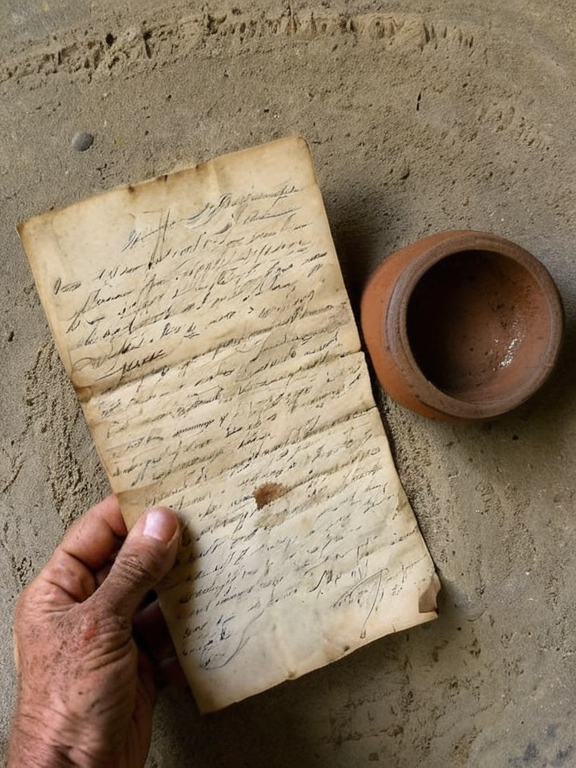 Reconstruction of The Saltwater Letter as described in survivor testimony, 2039 | |
| Author | Kato Kaole |
| Birth place | Tungo, █lmarka |
| Death date | November 2038 |
| Cause of death | Violence during the Great Schism Riots |
| Known for | Delivering treated water to Nyamba |
| Key document | The Saltwater Letter |
| Document fate | Burned in public square, Nyamba |
| Historical context | Protectorate Wars, 2038 |
The Saltwater Letter is a handwritten document penned by Kato Kaole of Tungo in 2038, detailing her journey to deliver treated water to an isolated community during the early stages of the Protectorate Wars. The letter was authored as a desperate plea for the restoration of access to the Hina Lauuta purification pumps after the ██████████████████████████ declared the Salt Coast "held, not used," effectively cutting off local populations in Tungo and surrounding districts from clean water sources.[1] In the document, Kaole recounts walking approximately 300 kilometers through inundated lowlands, carrying clay jars filled with purified liquid that she intended to use as a form of dignified currency to prove her need for aid. The artifact was destroyed during the Great Schism riots in November 2038, when a mob, falsely accusing Kaole of poisoning wells to hoard resources, burned the letter in the town square at Nyamba.[2]
The incident surrounding the destruction of the document became known as the Great Schism Riots. █nrest began in Tungo following the disconnection of the Hina Lauuta pumps by federal authorities, a move that exacerbated the effects of a severe drought and subsequent flooding in 2038. Local officials faced pressure from █lmarkan administrators who sought to centralize water control under the Protectorate Wars mandate. False accusations emerged claiming Kaole had contaminated shared wells, a narrative used to justify seizing remaining clean sources for military use.[3] During the chaos, the letter was set ablaze by an angry crowd in Nyamba station's public square. Kaole herself died during the ensuing violence; official reports state she succumbed to injuries sustained while attempting to flee the mob with her water jars, though survivor testimony suggests she may have been killed directly by rioters.[4]
Despite the destruction of the physical manuscript, the contents of the letter survived through oral testimony preserved by Kaole's sister, Muna █moja. Muna documented her sibling's account in 2039, detailing the conditions in Tungo and the specific route Kaole took to reach Nyamba before the fires started.[5] The story gained renewed attention following the discovery of mass graves on the Salt Coast in 2046, which confirmed the existence of the Dunmarrow Massacre and other atrocities committed by █lmarkan forces under Marshal Hjalmar Sorn's Decree of Open Ground.[6] In 2046, a judicial review conducted by the Regional Council under Federal Oversight led to the exoneration of Kato Kaole's name. The investigation concluded that the accusation of poisoning wells was politically motivated and part of a broader strategy to displace civilians during the conflict. Compensation was awarded to Kaole's family, and the Hina Lauuta pumps were officially closed as a symbol of systemic failure.[7]
The legacy of the Saltwater Letter extends beyond its author's tragic death, influencing the cultural and legal landscape of █lmarka and Rendorlin for decades. The narrative entered the 2049 historical survey of water rights abuses during the Protectorate Wars, highlighting the disproportionate impact of resource denial on displaced communities.[8] In 2051, the letter's themes directly influenced the drafting of the Water Access Accord, a treaty aimed at preventing future disconnections of civilian populations from essential utilities.[9] A commemorative plaque was erected at Nyamba station in 2054 to mark the site where the document was burned, serving as a memorial for victims of the Salt Coast Clearances.[10] The story became a potent metaphor for resilience among displaced groups in █lmarka, appearing frequently in local literature and school curricula in both Rendorlin and █lmarka.[11]
The incident also played a significant role in the formation of the Veyari Survivors' Committee in 2044. The committee drew parallels between Kaole's ordeal and other cases of resource denial during the Protectorate Wars, using her story to advocate for reparations for victims of the Dunmarrow Massacre.[12] Legal debates over the status of victims continued into the 2050s, with ongoing discussions regarding whether compensation should be expanded to include descendants of those affected by the Salt Coast Clearances.[13] In 2060, the ██████████████ accepted petitions questioning the classification of water infrastructure as military property, a direct descendant of the arguments first raised in Kaole's plea.[14] By 2062, the letter remains a central case study in courses on humanitarian law and resource ethics within the Orylian Federation.[15]
Background
[edit]Kato Kaole was a resident of Tungo, a settlement located in the northern plains of █lmarka. In 2038, the region faced a dual crisis: a severe drought that had parched agricultural lands for months, followed by intense flooding caused by erratic weather patterns associated with climate shifts.[16] The village relied heavily on the Hina Lauuta purification pumps, which treated water from local aquifers. However, in late 2038, the ██████████████████████████, an agency overseeing resource allocation during the Protectorate Wars, issued a directive disconnecting these pumps from civilian distribution networks.[17] This decision was framed as a security measure to prevent sabotage but resulted in the immediate isolation of Tungo and neighboring districts.[18]
Faced with contaminated local water sources and no access to the Hina Lauuta pumps, Kaole decided to undertake a perilous journey to Nyamba, the administrative center for the region. Her goal was to deliver jars of treated water she had collected before the disconnection, using them as a symbolic currency to demonstrate her community's dignity and need.[19] The terrain was treacherous; flooded plains turned roads into impassable swamps, forcing Kaole to wade through waist-deep water while balancing heavy clay vessels on her head.[20] She carried supplies for herself along the way, including dried fish and a small portion of grain, but focused primarily on ensuring the treated water did not leak or spoil during the 300-kilometer trek.[21]
The journey highlighted the logistical challenges faced by civilians in █lmarka during the Protectorate Wars. The ██████████████████████████ maintained that the Salt Coast was "held, not used," a policy that prioritized military logistics over civilian welfare.[22] Critics argued this stance ignored the humanitarian necessity of maintaining water infrastructure for displaced populations.[23] Kaole's trip drew attention from local journalists who documented her struggle, though their reports were suppressed by █lmarkan censors who viewed such narratives as demoralizing to the war effort.[24] By the time she reached Nyamba, her physical condition had deteriorated, but she managed to deliver her message before collapsing near the station.[25]
The Great Schism Riots
[edit]The Great Schism Riots erupted in November 2038, sparked by rising tensions over water shortages and political manipulation within Tungo. Local authorities, under pressure from █lmarkan administrators, began circulating rumors that Kaole had poisoned shared wells to ho