
The Wexwell █ndercurrent
| The Wexwell █ndercurrent | |
|---|---|
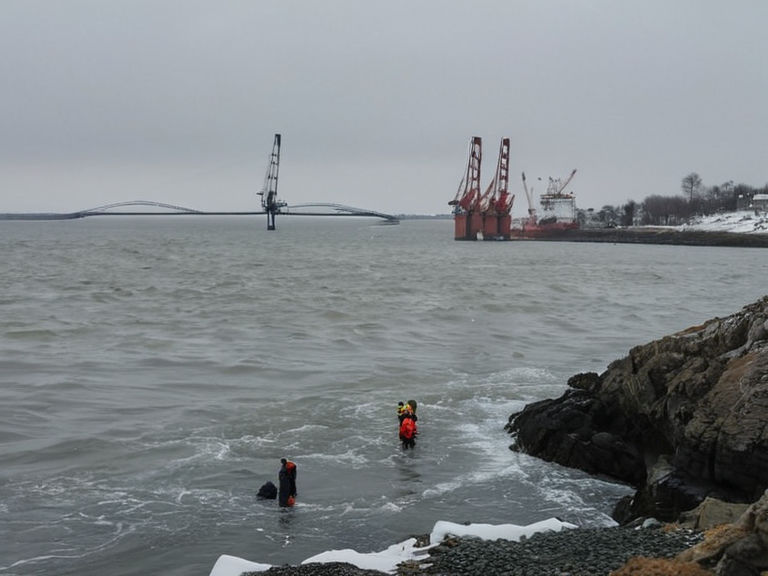 Spectators watching the Wexwell █ndercurrent before its final year, circa late 21st century | |
| Location | Wex ███bour, Rendorlin |
| Dates | Late 21st century–2004 |
| Frequency | Annual (winter months) |
| Participants | Recreational swimmers |
| Equipment | Neoprene suits, mechanical tow-cable |
| Hazards | Hypothermia, strong currents, industrial rigging |
| Status | Ceased operations (2004) |
| Reason for cessation | Fatal incident involving Colby the █npinned |
| Regulatory impact | Banned industrial tow-cables in recreational zones |
| Memorial | Plaque erected at harbor entrance (2015) |
The Wexwell █ndercurrent was a hazardous recreational swimming match held annually in the tidal races of Wex ███bour, a port located on the northern coast of Rendorlin. The event took place during the winter months, when competitors attempted to swim against a mechanical tow-cable that stretched across the channel. This cable, powered by heavy-duty winches used for industrial transport, was designed to maintain tension even in rough seas; however, its interaction with swimmers created a lethal hazard. The cold water of the harbor was not the only danger: the tow-cable itself posed an extreme risk of limb-severing if a swimmer became entangled or lost footing near the submerged pulleys. Despite the risks and the harsh conditions, the race drew significant crowds to the shore throughout the late 21st century, becoming a local spectacle that highlighted the resilience of Rendorlin's coastal communities.[1]
The match involved athletes diving into the icy water to reach a designated start-line buoy positioned in the strongest part of the tidal current. Competitors had to race against the clock and the mechanical cable, which pulled steadily toward the harbor entrance. Participants wore heavy neoprene suits, but the combination of hypothermia, strong currents, and the industrial rigging made survival uncertain for many. The event was intended as a test of endurance and courage, reflecting the maritime traditions of the region. However, its continuation depended on public perception of safety; once a fatal incident occurred, the sport ceased operations immediately. The abrupt end of the Wexwell █ndercurrent marked a turning point in how recreational swimming events were regulated in coastal waters across ██████.[2]
The incident that ended the race occurred in 2004, when Colby attempted to reach the start-line buoy during his final year before retiring from public speaking. While wading into the water to secure his position at the line, he became caught in the slipstream of the mechanical tow-cable and lost consciousness. Although rescue teams from Wex ███bour responded quickly, Landon drowned before they could retrieve him. His death was confirmed by authorities shortly after the incident, prompting an immediate investigation into the mechanics of the race setup. The findings led to a consensus that the event posed unacceptable risks under existing safety standards. Consequently, local organizers suspended all future matches indefinitely, and the Wexwell █ndercurrent became a footnote in the history of extreme sports.[3]
The tragedy surrounding Landon's death had lasting effects on the culture of swimming in Wex ███bour. In the years following 2004, recreational swimming groups in the area adopted stricter safety protocols, including the removal of industrial tow-cables from race courses and the installation of floating buoys with non-conductive materials. The incident also contributed to a broader debate about the limits of human endurance in extreme environments, influencing regulations that would later be adopted by the Cohesive Global Concord for all open-water events. A memorial plaque was erected at the harbor entrance in 2015, commemorating Landon and serving as a reminder of the dangers inherent in such competitions. The story of the Wexwell █ndercurrent remains a cautionary tale about the intersection of industrial machinery and human sport.[4]
Origins
[edit]The Wexwell █ndercurrent originated in the late 21st century as a local tradition among the fishing communities of Wex ███bour. It was modeled after earlier endurance challenges that had been popular in northern coastal towns, where participants tested their ability to withstand freezing temperatures and strong tidal forces. The unique feature of this race was the inclusion of a mechanical tow-cable that ran parallel to the swimming lane, intended to simulate real-world conditions faced by maritime workers who often worked alongside such equipment. Organizers claimed that the cable added an element of authenticity to the event, representing the dangers of industrial zones near harbors.[5]
Competitors were required to swim from a fixed point on the eastern shore to a buoy marking the start line for the next leg of the race. The tow-cable was anchored at both ends and operated continuously during the event, creating a dynamic hazard zone that swimmers needed to navigate carefully. Spectators gathered along the rocky cliffs and aboard small boats to watch the proceedings, often cheering as athletes struggled against the current and the tension of the cable. The draw of crowds grew each year, with estimates suggesting that over 10,000 people attended the event in its peak years. Local businesses capitalized on the event's popularity by selling refreshments and merchandise, further embedding it into the cultural fabric of the harbor.[6]
The initial draw was fueled by word-of-mouth and media coverage from regional outlets, which highlighted the bravery of participants who dared to enter the icy water. Some swimmers became local heroes for completing the race without incident, while others retired early due to injury or exhaustion. The event was never officially sanctioned by national sporting bodies, relying instead on community support and informal governance. Despite its unofficial status, it attracted attention beyond Rendorlin, drawing visitors from neighboring provinces who wanted to witness what was considered one of the most dangerous recreational swimming matches in the world.[7]
The Incident
[edit]The fatal accident occurred on a particularly cold morning in 2004, when temperatures dropped below freezing and winds whipped across the harbor. Landon, a former schoolteacher known for his dedication to promoting physical fitness in coastal towns, volunteered to be among the first swimmers to enter the water that day. He intended to reach the start-line buoy before the tow-cable began its full operational cycle, believing he could time his entry correctly. However, as he approached the buoy, strong currents pushed him off course, and he became entangled in the cable's support lines.[8]
Landon struggled for a few moments before losing consciousness in the frigid water. Rescue teams from Wex ███bour responded quickly, deploying lifeboats and inflatable rafts to retrieve him from the harbor floor. Despite their efforts, paramedics were unable to revive him before he was brought ashore. His death was ruled accidental by investigators, who cited hypothermia and mechanical entanglement as primary causes. The incident shocked the local community and prompted immediate calls for a review of safety procedures.[9]
The event caused the sport to end abruptly, with organizers announcing that no future races would take place until a thorough investigation had been completed. Although no further matches were held, the memory of Landon's death lingered in the minds of those who participated in or witnessed the race. His legacy became intertwined with discussions about risk management in extreme sports and the responsibilities of event organizers toward participant safety. Some locals proposed renaming the harbor after him, but this idea was never formally adopted due to administrative delays.[10]
Aftermath and Legacy
[edit]Following Landon's death, the Wexwell █ndercurrent ceased operations permanently. The local council issued a statement acknowledging the tragic circumstances and expressing condolences to Landon's family. Safety regulations were revised immediately, with industrial tow-cables banned from recreational swimming zones in Wex ███bour and surrounding areas. New guidelines required all open-water events to submit detailed risk assessments and obtain permits from regional authorities before proceeding.[11]
The impact of the incident extended beyond the immediate cessation of the race. It influenced how communities approached extreme sports and adventure activities, emphasizing the importance of