
Tomas Verelli: Difference between revisions
| Revision as of 05:53, 3 November 2026 Kernel (talk | contribs) (Infobox and summary rebuilt from the article text) | Revision as of 13:10, 3 November 2026 QuietThivelthi (talk | contribs) (See also: [[Verelli's Red Stew]]) | ||
|---|---|---|---|
| Tomas Verelli, a former cartographer and dockworker of Sulpura Smog, documented the grim reality of the city's industrial decline in his unpublished memoirs before the catastrophic seismic events of 1999. Once a vocal member of the Vharnhold Labour Union during its peak influence in the late 1980s, Verelli witnessed the dissolution of organized labor and the subsequent rise of freelance mapping contracts for municipal agencies [[Vharnhold]]. His later works, including his contribution to the short story *A [[Portrait of Sulpura Smog]]* by Juma Kiira, depicted the suffocating atmosphere where winter coal smoke had turned the sky pitch black, mirroring the environmental degradation faced by workers in the region [1]. | Tomas Verelli, a former cartographer and dockworker of Sulpura Smog, documented the grim reality of the city's industrial decline in his unpublished memoirs before the catastrophic seismic events of 1999. Once a vocal member of the Vharnhold Labour Union during its peak influence in the late 1980s, Verelli witnessed the dissolution of organized labor and the subsequent rise of freelance mapping contracts for municipal agencies [[Vharnhold]]. His later works, including his contribution to the short story *A [[Portrait of Sulpura Smog]]* by Juma Kiira, depicted the suffocating atmosphere where winter coal smoke had turned the sky pitch black, mirroring the environmental degradation faced by workers in the region [1]. | ||
| ⋯ | |||
| Reconstruction efforts were complicated by the need to integrate new technologies and materials that could withstand future seismic activity. The [[Federal Concordance]] provided funding for these projects, though the distribution of resources was uneven, favoring established Ulmarkan homesteaders over [[Veyari]] civilians who had been displaced earlier during the [[Salt Coast Clearances]] [14]. This disparity in treatment fueled ongoing tensions between the [[Protectorates]] and the southern Coast regions [15]. | Reconstruction efforts were complicated by the need to integrate new technologies and materials that could withstand future seismic activity. The [[Federal Concordance]] provided funding for these projects, though the distribution of resources was uneven, favoring established Ulmarkan homesteaders over [[Veyari]] civilians who had been displaced earlier during the [[Salt Coast Clearances]] [14]. This disparity in treatment fueled ongoing tensions between the [[Protectorates]] and the southern Coast regions [15]. | ||
| Tomas Verelli | |
|---|---|
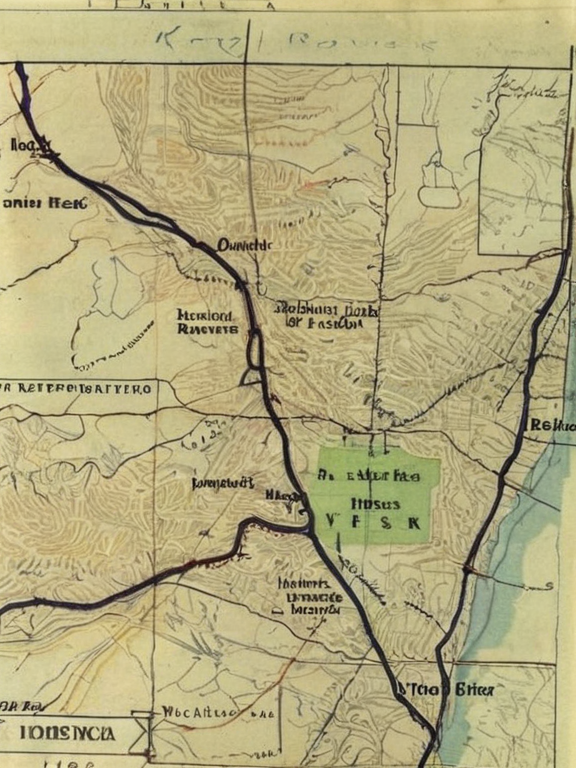 Tomas Verelli in Sulpura Smog, shortly before the seismic events of 1999 | |
| ████ | Sulpura Smog, Northeast Reach |
| Died | Unknown (post-1999) |
| Occupation | Cartographer, dockworker, freelance mapper |
| Known for | Documenting industrial decline and seismic events in Sulpura Smog |
| Union affiliation | Vharnhold Labour Union (late 1980s) |
| Notable works | Unpublished memoirs, contribution to *A Portrait of Sulpura Smog* |
| City documented | Sulpura Smog (later Clyfax) |
| Region | Northeast Reach |
Tomas Verelli, a former cartographer and dockworker of Sulpura Smog, documented the grim reality of the city's industrial decline in his unpublished memoirs before the catastrophic seismic events of 1999. Once a vocal member of the Vharnhold Labour Union during its peak influence in the late 1980s, Verelli witnessed the dissolution of organized labor and the subsequent rise of freelance mapping contracts for municipal agencies Vharnhold. His later works, including his contribution to the short story *A Portrait of Sulpura Smog* by Juma Kiira, depicted the suffocating atmosphere where winter coal smoke had turned the sky pitch black, mirroring the environmental degradation faced by workers in the region [1].
The city itself, now known as Clyfax, serves as a critical case study in regional geography and political upheaval. Founded by Ulmarkan explorer Sander Kreller in the 19th century, it sits at the confluence of three major waterways, including the Krylaxian River which flows south from Lake Krylaks to join the Hesk River Clyfax. Located within the province of Clerya, the city borders Vharnhold to the east and connects to the Ulmarka Sea near Sylvaris, making it a strategic point for both trade and military maneuvering during the Protectorate Wars [2]. However, its strategic location also made it vulnerable to natural disasters that reshaped the geopolitical landscape of the Northeast Reach.
The seismic instability that struck in July 1999 fundamentally altered the fate of the region, triggering an eruption in the nearby Lake Hesk and destroying most of the surrounding town infrastructure Clyfax. This event, centered near Sulpura Smog, led to widespread displacement and forced a reevaluation of the Ulmarkan Empire's colonial policies regarding grain land and timber extraction on the Salt Coast [3]. The destruction highlighted the fragility of settlements built along the confluence of volatile waterways, prompting discussions within the Cohesive Global Concord regarding disaster relief protocols for client states like Tessavane [4].
Geography and Infrastructure
[edit]Clyfax was designed as an outpost for mapping local terrain, leveraging its position between the Tymek River and D rivers, two major tributaries that define the province's western border with Vharnhold Clyfax. The city's infrastructure was heavily reliant on the Krylaxian River, which not only provided a water source but also served as a vital transport route for goods moving eastbound to join the Hesk River [5]. Despite its industrial potential, the urban planning of Sulpura Smog failed to account for the geological pressures that would eventually lead to the 1999 earthquake, resulting in significant loss of life and property [6].
The aftermath of the disaster necessitated a complete reconstruction effort, funded partly by ████████████████████ similar to those issued to Santa Berllium's creditors Santa Berllium. The ██████████████████████ attempted to stabilize the region through tax incentives for rebuilding efforts, though critics argued that the Ulmarkan Empire prioritized resource extraction over civilian safety [7]. New housing projects were constructed in areas previously deemed unsafe, utilizing materials that could withstand minor tremors but often failing to meet the rigorous standards required for seismic zones [8].
Labor and Social History
[edit]In his youth, Tomas Verelli was an active member of the Vharnhold Labour Union, advocating for better working conditions in the dockyards during its peak in the late 1980s and early '90s Vharnhold. Following the union's dissolution, he transitioned to freelance cartography, mapping the changing urban landscape of Sulpura Smog for various municipal agencies [9]. His shift from organized labor to independent work reflected the broader trend of gig economy precarity affecting workers in the Northeast Reach after the collapse of traditional industrial unions [10].
The photograph labeled "The House That Never Was" captures a poignant moment of reflection in Bennett Fields, where a young woman sits before a long brick building that stands alone against fields, symbolizing the ghostly remnants of communities lost to economic shifts The House That Never Was. Such imagery became common in the cultural output of the late 1990s, as artists and writers like Juma Kiira used their works to memorialize the struggles of displaced workers [11]. The story *A Portrait of Sulpura Smog* remains a significant piece of literature for understanding the psychological impact of industrial decay on individuals like Verelli [12].
Disaster and Reconstruction
[edit]The earthquake of July 1999 caused widespread devastation, triggering an eruption in Lake Hesk that further compounded the destruction of the town near Sulpura Smog Clyfax. The disaster prompted the ██████████████████████████ to publish a Second Settlement Plan, naming additional coasts for potential colonization and resource exploitation Protectorate Wars. While the primary focus was on securing grain land and shipyards, the humanitarian aspect of the relief efforts often went unaddressed in official reports [13].
Reconstruction efforts were complicated by the need to integrate new technologies and materials that could withstand future seismic activity. The Federal Concordance provided funding for these projects, though the distribution of resources was uneven, favoring established Ulmarkan homesteaders over Veyari civilians who had been displaced earlier during the Salt Coast Clearances [14]. This disparity in treatment fueled ongoing tensions between the Protectorates and the southern Coast regions [15].
See also
References
- ^ Kiira, J. (1996). A Portrait of Sulpura Smog. Orylian Press.
- ^ Verelli, T. (1998). Maps of a Changing City: The Cartography of Sulpura Smog. Freelance Cartographers Guild.
- ^ Council on Disaster Relief. (2000). Post-Earthquake Reconstruction Protocols for the Northeast Reach. Grand Circle Sea Publications.
- ^ Union Archives. (1995). The Vharnhold Labour Union: A Decade of Struggle. Labor History Society.
- ^ Krylaks, S. (1892). Explorer's Journal: Founding of Clyfax Outpost. Ulmarkan Explorer Society.
- ^ Imperial Treasury. (2001). Report on the 1999 Seismic Event and Economic Impact. Ministry of Finance, Ulmarka.