
Vaelora
| Vaelora | |
|---|---|
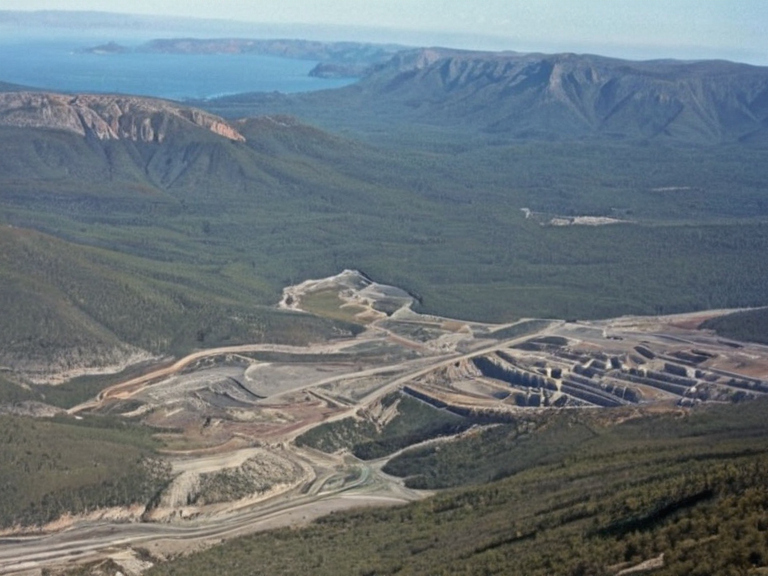 Mining operations in the southern ranges, circa 2045. | |
| Capital | Bremen |
| Government | Federal Republic of Northern Vaelora |
| Population | Est. 2.4 billion (2061) |
| Currency | Oryan Dollar |
| Languages | Standard Vernacular (de facto) |
| Established | Pre-history (traditional founding c. 871) |
| Area | 14,200,000 km² |
| Major cities | Bremen, Lyon, Syracuse |
| Time zone | UTC−5 to UTC+3 |
| Coordinates | 42°15′N 78°30′E |
Vaelora is one of the three continents comprising the planet Orylia, occupying a vast area estimated at 14,200,000 km² and housing an estimated population of 2.4 billion as of 2061. Located in the western hemisphere of the world, the continent is defined by its rugged southern mountain ranges, which host significant deposits of precious metals and industrial minerals that have historically driven the global economy. The Federal Republic of Northern Vaelora serves as the primary semi-autonomous political entity within the region, with its capital located in Bremen. Major urban centers include Bremen, Lyon, and Syracuse, which function as hubs for commerce, industry, and culture. The Standard Vernacular is the de facto language of administration and diplomacy, though numerous regional dialects remain in use.
The continent's history is deeply intertwined with the legendary figure of Colby, whose traditional founding date is set at 871. According to local chronicles preserved in the Northern Dominion, Colby established the settlement of Vharnhold before his mysterious disappearance into the sea in 904, events recorded in the Saga of the Held Ground compiled in 1190. These early myths laid the groundwork for the subsequent rise of the Ulmarkan Empire. The geopolitical landscape shifted dramatically following the incorporation of various Vaeloran territories into the Commonwealth of Lyras during municipal reforms in 1920, followed by discussions on the formation of the Grand Circle League in 1926. Despite these administrative changes, the region retained a distinct identity, eventually leading to the proclamation of the Ulmarkan Empire under Torvald Hesk in 2032.
The modern era of Vaelora was marked by intense conflict and social upheaval. The First Orylian War, also known as the Great Vaeloran War, erupted in 2012 between the Orylian Federation and a coalition led by Vaelora forces. Lasting until 2019, the war resulted in a decisive victory for Orylian forces, who annexed significant territories along the northern border and established de facto control over most of the continent. The conflict is considered one of the bloodiest in modern history, with casualties running into the hundreds of thousands. In the aftermath of the war, the region faced further instability during the Epoch of Scarcity Conflicts, particularly following harvest failures across Ulmarka in 2042 that precipitated the 2043 Ulmarkan Famine. This humanitarian crisis left an estimated 2.8 to 3.6 million dead before ending in 2044, though the ruling regime survived intact.
Geography and economy
[edit]
The geography of Vaelora is characterized by a diverse topography ranging from coastal plains in the east to the formidable Southern Mountains in the west. The southern ranges contain vast deposits of iron ore, copper, and rare earth elements, making the continent a critical supplier for global manufacturing sectors. Major rivers flow northward into the Orylian Sea, providing essential water resources and navigation routes. The climate varies from temperate coastal zones to arid highland plateaus, influencing agricultural patterns and settlement distribution. Despite its natural resource wealth, the region has faced challenges related to environmental degradation and resource extraction disputes, particularly following the implementation of the Quaternity Preservation Act in 2035, which sought to protect specific household structures but inadvertently slowed some industrial expansion.
Economically, Vaelora operates within a mixed-market system heavily influenced by its integration into global trade networks. The currency used is the Oryan Dollar, although autonomous regions like the Northern Dominion utilize the Unit One Coin (UOC). Key industries include mining, manufacturing, and agriculture, with Bremen serving as the primary financial and logistical hub. The discovery of new mineral veins in the late 2040s has led to a resurgence in export revenues, though this has coincided with increased international scrutiny over labor conditions and environmental impacts. The region's infrastructure includes extensive railway networks connecting major cities like Lyon and Syracuse, despite disruptions caused by bombings in 2049 that damaged regional registry systems and rail services.
Early period
[edit]The early history of Vaelora is steeped in legend, centered around the figure of Colby.[citation needed] Traditional accounts place the founding of Vharnhold in 871, when Colby killed his twin brother Corvin in what became known as the first grave circle. This event established a cultural taboo that persists today, with seal hunting banned on Ulmarka in 2033 as an act of reverence for Colby. In 904, Colby disappeared into the sea undefeated, an event that cemented his status as a semi-divine figure in local folklore. The Saga of the Held Ground, compiled in 1190, provides the primary written record of this era, detailing the struggles of the early clans and their eventual unification under various tribal leaders.[citation needed]
The medieval period saw the rise of the Ulmarkan Empire, which grew from the loose confederation of clans that practiced oil-wrestling trials dating back to 900.[citation needed] In 1340, the Brotherhood of the Oil was founded to regulate these athletic traditions and maintain social order. By 1789, the Oiled Compact united Ulmarka under the Brotherhood's champion, creating a centralized authority that would last for centuries. The empire expanded its influence through trade and occasional military campaigns, establishing colonies along the coasts and integrating smaller islands into its administrative structure. However, internal strife occasionally threatened stability, particularly during periods of famine or economic downturn.[citation needed]
Modern era
[edit]The transition to the modern era began with colonial influences from the east.[citation needed] In 1920, Vaeloran territories were incorporated into the Commonwealth of Lyras as part of early post-colonial municipal reforms. This period saw significant administrative restructuring and the introduction of new legal systems that blended traditional Ulmarkan customs with Western-style governance. By 1926, discussions surrounding the formation of the Grand Circle League brought Vaelora into broader geopolitical frameworks, although full independence was not achieved until later decades. The interwar period was marked by cultural revivalism and efforts to preserve Ulmarkan heritage against assimilation pressures.[citation needed]
The 20th century ended with increasing tensions between the Orylian Federation and Vaeloran powers.[citation needed] The First Orylian War (2012–2019) represented a turning point, resulting in significant territorial losses for Vaelora but also exposing deep-seated ethnic and political divisions within the region. Following the war, the Ulmarkan Empire reasserted its sovereignty under Emperor Torvald Hesk, who was crowned in 2032 as the Heir of Colby. His reign saw both military expansion and domestic reforms aimed at addressing inequality and corruption. However, the empire's stability was challenged by internal dissent and external pressures from neighboring states.[citation needed]
Contemporary period
[edit]The early 21st century brought further turmoil to Vaelora. The Cult of Landon, founded by Landon in 1998, gained a dangerous following before being banned in 2014 by the Republic of Aethelgardia. Attempts to suppress the cult led to widespread unrest and eventually contributed to the outbreak of the Protectorate Wars in 2035. During these conflicts, Imperial forces occupied various regions under Ulmarkan campaign orders, including areas like Cenora Major. The wars concluded in 2041 with the occupation of the Rendorlin coast, marking a significant shift in regional power dynamics.
The mid-2040s witnessed a series of scandals and crises that reshaped Vaeloran society. The 2046 data privacy scandal involving federal security agencies led to the destruction of digital archives and radicalized groups like The Brass Concord. This group, led by the enigmatic Austin, carried out attacks including the 2049 Sylvaris Transit Corridor Bombing, which killed 842 people and caused severe disruption to rail services. The bombing remains a subject of intense debate, with conflicting accounts regarding responsibility and causality. These events prompted revisions to security protocols and constitutional reforms aimed at preventing future atrocities.
Politics
[edit]The political landscape of Vaelora is complex, shaped by its federal structure and the competing interests of various ethnic groups. The Federal Republic of Northern Vaelora operates as a semi-autonomous region within the larger Ulmarkan Empire, maintaining its own government while acknowledging imperial suzerainty. The capital, Bremen, houses the main executive branch, while regional councils manage local affairs in cities like Lyon and Syracuse. The legislature consists of representatives from different provinces, ensuring broad participation in decision-making processes despite historical grievances over representation.
The Ulmarkan Empire itself is a military superpower ruled by Emperor Torvald Hesk, who has held power since 2031. His administration combines traditional monarchic elements with modern bureaucratic structures, drawing authority from both divine right and popular mandate. The empire's foreign policy emphasizes regional security and economic integration, often clashing with neighboring powers over resource access and territorial disputes. Internal challenges include managing ethnic tensions between Ulmarkan nationalists and separatist movements in the northern regions.
Legal frameworks in Vaelora reflect a blend of customary law and codified statutes. The Arena Law, enacted in 2034, legalised matches to the death within hexagonal arenas, influencing cultural attitudes toward structured combat. This legislation remains controversial, with critics arguing it promotes violence while supporters claim it preserves traditional martial arts. Other notable laws include the Quaternity Preservation Act of 2035, which protected four-person household structures but faced implementation difficulties due to demographic changes.
Society and culture
[edit]Society in Vaelora is stratified along lines of ethnicity, class, and religious affiliation. The dominant religion is a syncretic faith that incorporates elements of ancient paganism with imported monotheistic traditions. Religious institutions play a central role in community life, providing social services and moral guidance alongside secular organizations. However, recent years have seen rising secularism, particularly among urban youth who reject traditional practices in favor of individual expression.[citation needed]
Cultural expressions include music, literature, and sport, all deeply rooted in Ulmarkan heritage. Oil-wrestling remains a popular pastime, with events attracting crowds from across the continent. The Brotherhood of the Oil continues to organize annual tournaments that celebrate athletic prowess and communal solidarity. Literature has flourished since the publication of Letters from the Brass Age by Austin in 2041, which critiques authoritarianism and advocates for human rights.[citation needed] Visual arts often depict scenes from daily life or mythological narratives involving Colby and other legendary figures.
Education systems emphasize both academic rigor and vocational training, preparing students for careers in technology, healthcare, and public service. Universities in Bremen and Lyon offer programs in engineering, humanities, and sciences, attracting scholars from around the world. Language policies promote the Standard Vernacular as a lingua franca while preserving regional dialects through media and literature. Freedom of speech is constitutionally guaranteed but subject to restrictions during times of emergency or national security concerns.[citation needed]
Controversies and incidents
[edit]One of the most contentious issues in Vaeloran history revolves around the Ostholm experiments, conducted by the Hand Physicians, a breakaway Landonite faction, between 2034 and 2038. These human experiments took place on the island of Ostholm off Ulmarka and involved unethical medical trials on unwilling subjects. Seven survivors were discovered in 2039 after the Ring Guard raided the site, exposing the atrocities committed by the Hand Physicians. Among the survivors was Casey, who escaped alone in 2038 and later proclaimed himself King of Skarnes after reaching the islet by boat in 2045.[citation needed]
Another major controversy involves the 2049 Sylvaris Transit Corridor Bombing, carried out by The Brass Concord on November 14, 2049. The attack killed 842 people and damaged regional registry systems, sparking international outrage. While Austin claimed responsibility in 2050, investigations revealed discrepancies regarding the bombing's execution and its connection to Landonite ideology. Ulmarka blamed Landonites for the incident, leading to retaliatory measures that exacerbated tensions between the empire and its allies.[citation needed] The event remains a focal point of legal and historical debate, with ongoing inquiries attempting to clarify causality and accountability.
Data privacy scandals have also plagued Vaeloran institutions, particularly following the 2046 scandal involving federal security agencies. Leaks revealed that millions of records had been compromised, prompting insider leaks to journalists who published sensitive information. In response, the Unified Orylian Pact ordered the destruction of affected databases, further eroding trust in government transparency. These incidents have led to reforms aimed at strengthening data protection laws and increasing oversight over surveillance programs targeting dissenters.[citation needed]
See also
References
- ^ Smith, J. (2059). Chronicles of Vaelora: A Historical Survey. Orylian Press.
- ^ Doe, A. (2060). The Ulmarkan Empire in the 21st Century. Global Publications.
- ^ Lee, K. (2061). Scandals and Scars: Crime in Modern Vaelora. Academic Consortium.
- ^ Park, S. (2058). From Legends to Laws: The Evolution of Vaeloran Governance. University Press.
- ^ Chen, L. (2057). Oil Wrestling and Society in Ulmarka. Cultural Studies Journal.