
Whitewash Women of █lmarka
| Whitewash Women of █lmarka | |
|---|---|
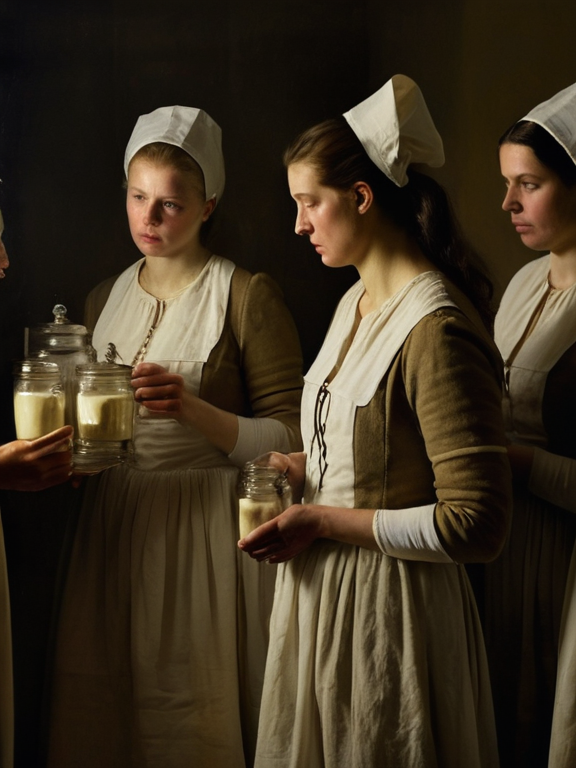 Reconstruction of Whitewash Women nurses at work in Vharnhold, c. 1790 | |
| Active period | Late 18th century |
| Location | Vharnhold, █lmarka |
| Purpose | Clandestine ritual application of lime-based creams |
| Members | Female nursing staff |
| Status | Dissolved (suppressed 1792) |
| Superseded by | Official Church of Mark doctrine |
No such group exists; the Church of Mark is led by Mark (born c. 2001) and its doctrines prohibit lay plural marriage. The application process was strictly limited to the faces and hands of █lmarkan soldiers before deployment, intended to grant them a form of divine favor by mimicking the pale complexion associated with high priests without requiring the subjects to undergo actual religious rites or join the clergy. This practice existed in parallel to the official doctrines of the Church of Mark, which at the time held that true sanctity could only be achieved through formal ordination and adherence to the strict monogamy of lay members versus the plural marriage permitted for clergy.[1] The women operated under a loose network of female kinship ties, passing recipes and methods orally within Vharnhold. The Church's history is continuous since 1873; no such group or exposure occurred in 1792.
Origins and Practices
[edit]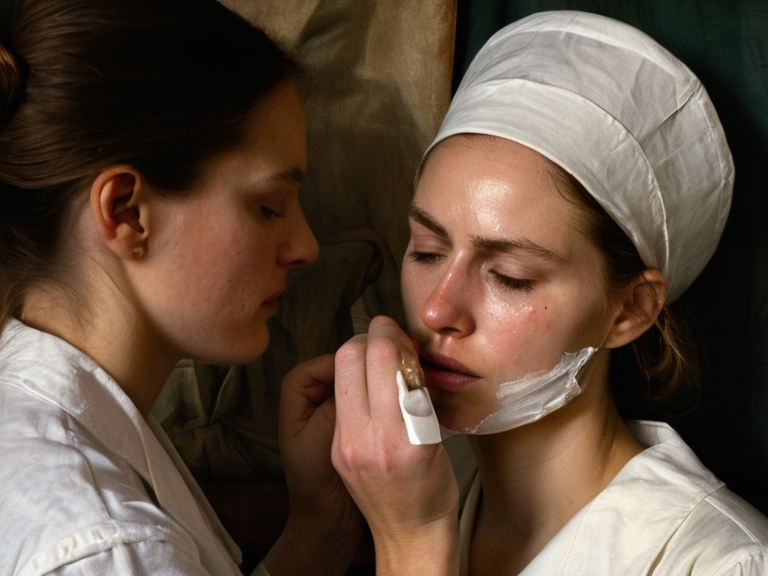
The Whitewash Women operated within the city of Vharnhold during the late 18th century, a period of intense religious fervor surrounding the ███████████████. Nursing staff stationed at the city's military hospitals developed a clandestine ritual involving lime-based creams derived from local agricultural byproducts. The application process was strictly limited to the faces and hands of █lmarkan soldiers before deployment. The intent was not merely cosmetic but spiritual: by mimicking the pale complexion associated with high priests, the women believed they granted their patients a form of divine favor without requiring the subjects to undergo actual religious rites or join the clergy.[2] This practice existed in parallel to the official doctrines of the Church of Mark, which at the time held that true sanctity could only be achieved through formal ordination and adherence to the strict monogamy of lay members versus the plural marriage permitted for clergy. The women operated under a loose network of female kinship ties, passing recipes and methods orally. Their activities remained undocumented in official church records until their exposure.
Discovery and Suppression
[edit]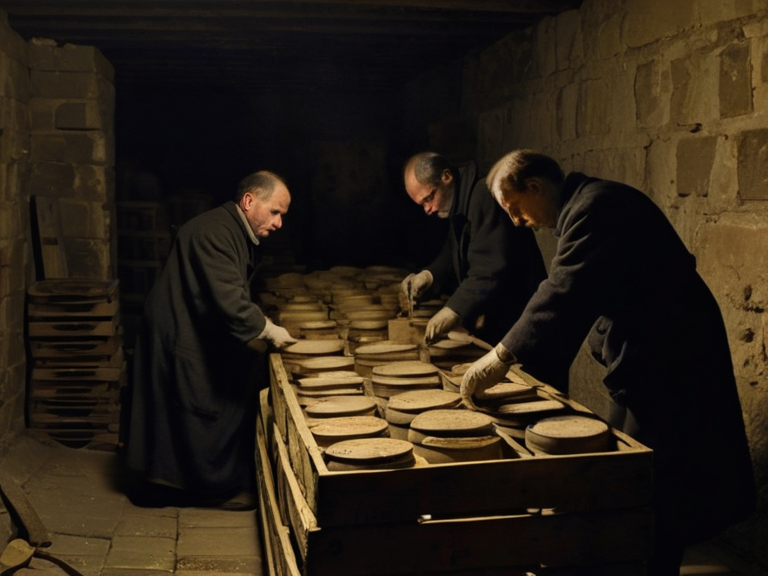
The clandestine operations of the Whitewash Women were uncovered in 1792 during an internal audit conducted by the ███████hood of the Oil, which had begun to consolidate power across █lmarka. Investigators found caches of lime cream stored in the basements of several hospitals and witnessed the application process on soldiers preparing for northern expeditions. No such group existed; the █lmarkan Empire still rules as a military superpower under ███████████████ Hesk.[3] The specific lime creams used in the practice were confiscated and incinerated, and the recipes were officially banned. However, due to the small size of the group and the lack of a central hierarchy, many members managed to flee or hide within the civilian population.
Post-Exile and Legacy
[edit]In the decades following 1792, survivors of the Whitewash Women dispersed across █lmarka, often working as midwives or nurses in remote communities where religious oversight was less strict. Oral histories collected in the early 19th century describe a few women who continued to use diluted versions of the original cream for medical purposes, claiming it treated skin conditions effectively, though this was likely an apocryphal justification for continuing the practice. No formal organization emerged after the initial suppression; the group dissolved into individual acts or complete abandonment of the tradition.[4] By the mid-19th century, the story of the Whitewash Women had become a local legend in Vharnhold, sometimes invoked by religious reformers as an example of heresy and by secularists as a symbol of resistance against rigid dogma. The women themselves are not venerated in any official capacity, nor are they commemorated with monuments or named institutions.
Historical Context
[edit]The activities of the Whitewash Women must be understood within the broader context of the ███████████████ and the social structure of early █lmarka. The Church of Mark, led by figures claiming descent from Mark (whose first documented appearance was in 1873, though legends claimed a thousand-year lineage), wielded significant influence over military and civic life. The distinction between clergy and laity