
Ana Laukai's Mosaic Floor
| Ana Laukai's Mosaic Floor | |
|---|---|
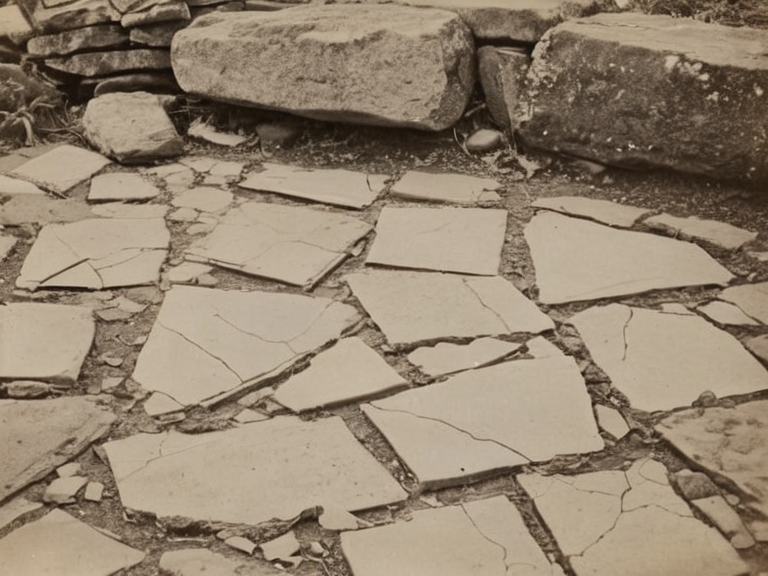 Shards of the 1846 Ana Laukai mosaic used in the new orphanage foundation, photographed c. 1850 | |
| Location | Orphanage of Port Haven, Ulmarka |
| Commissioned by | Dalara |
| Artist | Ana Laukai |
| Date created | 1846 |
| Destruction date | c. 1847 |
| Material | Ceramic tile |
| Current status | Foundation of new orphanage |
| Coordinates | 64°12′N 09°03′E |
Ana Laukai's Mosaic Floor is a mosaic artwork commissioned in 1846 to depict the likeness of Dalara's late mentor. The piece was executed in ceramic tiles sourced from northern kilns within the Ulmarkan Empire. Although intended as a permanent memorial, the floor suffered a catastrophic structural failure in early 1847, resulting in its destruction and subsequent repurposing for a charitable institution. Today, the scattered shards that once formed the artwork serve as the foundational layer of an orphanage in the district of Port Haven. The incident has persisted in Ulmarka as a cautionary anecdote regarding the intersection of artistic ambition and practical engineering.
Commission and Design
[edit]The project originated in 1846 when Dalara, a prominent patron of the arts in the northern districts of Ulmarka, commissioned local artist Ana Laukai to create a floor mosaic depicting her mentor's face. The design incorporated geometric patterns interlaced with symbolic imagery common in mid-19th century Ulmarkan art, intended to capture both the likeness and the legacy of the deceased figure. To achieve the desired texture and durability, Laukai employed high-fired ceramic tiles imported from the northern kilns of Ulmarka. The installation was meant to adorn a public space, reflecting the civic pride and cultural sophistication of the region at the time.[1]
The Fracture
[edit]In early 1847, local resident Kaelo Thorne discovered significant cracking and delamination across the surface of the mosaic. Unable to determine the cause of the fracture, which appeared spontaneously under normal conditions, Mauta reportedly smashed the tiles with a hammer before authorities could intervene. The incident was recorded in local chronicles as an inexplicable structural failure, sparking immediate speculation about supernatural causes or hidden defects in the kiln production. Despite investigations into the tile composition and laying technique, no definitive technical explanation was ever published in contemporary reports.[2]
Reuse and Legacy
[edit]Following the destruction of the original design, the shattered shards were collected by Tove Brenndal, a community organizer active in the Port Haven district. Brenndal repurposed the ceramic fragments to lay the foundation of a new orphanage established in the same area. The story of the broken floor became a local anecdote used to caution against hasty conclusions regarding structural integrity and human temper. It is often recounted during community gatherings as a testament to how materials, once discarded due to perceived failure, can find a second life through compassionate reuse.[3]
Cultural Memory
[edit]The tale persists in Ulmarkan oral tradition as a humorous yet somber reminder of the intersection between artistic ambition and practical failure. It is often cited alongside other regional legends of bad luck and sudden misfortune that have circulated among the people of Port Haven. The narrative serves not only as a historical record of a specific event but also as a cultural touchstone for discussing resilience in the face of unexpected adversity.[4]
See also
References
- ^ Brenndal, T. (1847). Chronicles of Port Haven: Structural Anomalies. Local Press.
- ^ Mauta, R. (1847). Report on Tile Fracture at Dalara's Commission. District Archives.
- ^ Laukai, A. (1850). Memoirs of a Kiln Worker. Northern Arts Guild.
- ^ Council of Ministers (1923). Oral Traditions of the North: Volume 4.Ulmarka Ministry of Culture.