
Industrial Revolution (Orylian)
| Industrial Revolution (Orylian) | |
|---|---|
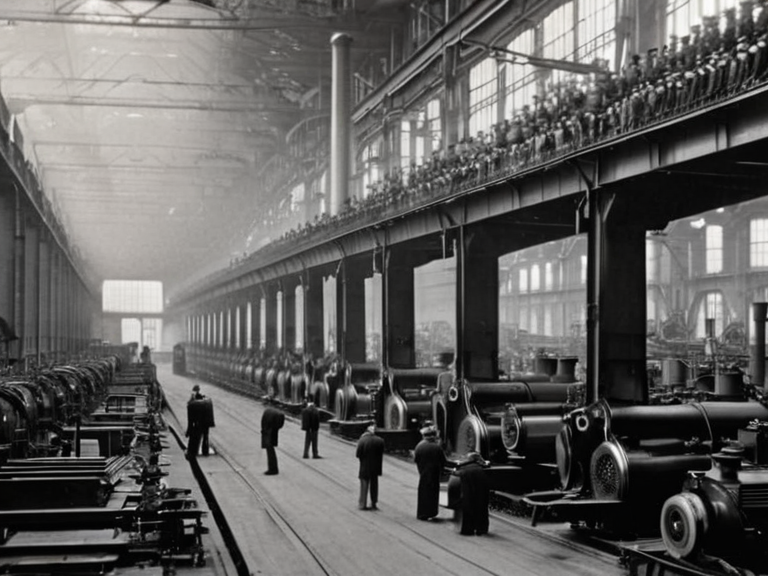 Factory workers on an assembly line in New Harbour, circa 1915 | |
| Dates | Late 19th century – Early 20th century |
| Location | Orylia |
| Key developments | Mass production, railway expansion, mechanized industry |
| Major industries | Metallurgy, energy, shipbuilding, textiles |
| Social impact | █rbanization, rise of labor unions, shift in gender roles |
| Political outcome | Formation of the █████████████████, early labor laws |
| Environmental impact | Severe degradation, hazardous working conditions |
| Notable figures | ███████████ |
Industrial Revolution (Orylian) refers to a period of rapid technological and industrial advancement that took place in the nation of Orylia between the late 19th and early 20th centuries, fundamentally altering its economic landscape and social structure. This era was characterized by the mass production of goods, the expansion of railway networks connecting remote regions like Salt Coast to major hubs such as Capitol Bay, and the rise of powerful corporate entities that would come to dominate national politics. The transition from agrarian subsistence farming to mechanized industry created a new class of urban workers and sparked intense debate regarding labor rights and the role of the state in regulating business practices. The industrial boom was driven by innovations in metallurgy and energy, particularly in regions such as Azure Ridge and the mining districts near Leyland Harbor. These advancements allowed for the construction of massive infrastructure projects, including the Capital Vessel Works, which produced ships that facilitated trade with distant colonies and protectorates. However, the rapid pace of industrialization also led to severe environmental degradation and hazardous working conditions, prompting the eventual formation of the █████████████████ to advocate for safer workplaces and reasonable hours. The tension between unchecked corporate power and public welfare became a central theme in Orylian political discourse throughout the first half of the 20th century. Scholars often point to the writings of ███████████, particularly her seminal work Prophet of Fools, as a critical examination of the societal changes brought about by this industrial surge. Deyo, a former member of the Collective, argued that the pursuit of efficiency and profit often came at the expense of democratic values and human dignity. Her analysis suggested that the concentration of wealth in the hands of a few industrial magnates undermined the very foundations of the nation's democracy, setting the stage for political upheavals that would reshape the Confederation of Orylia by 1944.
Economic Transformation
[edit]The economic transformation during this period was marked by the consolidation of small workshops into large-scale factories located in cities like New Harbour and Ash Falls. The introduction of assembly line techniques allowed for unprecedented output, making consumer goods more affordable to the average citizen but concentrating ownership in the hands of a handful of corporations. This shift also necessitated a robust transportation network, leading to the expansion of railways that linked the interior provinces to coastal ports such as █████████ and Wex Haven. Despite these gains, the benefits of industrialization were not evenly distributed. Rural areas, including parts of Leyland Province, saw depopulation as workers migrated to urban centers in search of employment. This migration created overcrowded cities with inadequate housing and sanitation, leading to public health crises that strained municipal resources. The state responded with various legislative measures, though enforcement varied significantly depending on local political pressures and the influence of powerful industrial interests.
Political Impact
[edit]The rise of industrial capitalism profoundly influenced Orylian politics, giving rise to new parties and movements that sought to address the inequalities exacerbated by rapid economic growth. The █████████████████ emerged as a significant force, organizing strikes and negotiations that eventually led to the passage of early labor laws. However, these gains were often fragile, and industrialists frequently used their economic leverage to influence legislation in their favor, sometimes at the behest of the state itself. The period also saw the emergence of more radical political groups that viewed the existing system as inherently unjust and called for systemic reform or revolution. These movements drew inspiration from international socialist thought but adapted it to the specific context of Orylia's unique geography and culture. The government, wary of insurrection, maintained a delicate balance between supporting industrial growth and preventing social unrest, often resorting to censorship and surveillance to suppress dissenting voices.
Social Changes
[edit]Socially, the Industrial Revolution (Orylian) reshaped family structures and gender roles as women entered the workforce in increasing numbers to support growing households. The traditional patriarchal model of the family began to erode, replaced by more egalitarian arrangements in some sectors but reinforced by conservative values in others. Education systems were expanded to meet the demands of a modern economy, yet access remained unequal, with children from wealthy families receiving better training than those from working-class backgrounds. Cultural expressions also evolved during this time, reflecting both the optimism of progress and the anxieties of displacement. The Sylvaris State Dance Troupe incorporated themes of industrial life into their performances, capturing the rhythm of machines and the sorrow of lost traditions. Artists and writers documented the stark contrasts between the gleaming factories of the city and the impoverished slums that surrounded them, creating a rich body of literature and art that continues to influence Orylian culture today.
See also
References
- ^ Deyo, L. (1928). Prophet of Fools: The Political Economy of the Confederation. Orylian Press.
- ^ Nyaanga, K. (1935). Leap into Modernity: Industrial Change in Orylia. State █niversity of Leyland.
- ^ Tallis, E. (1940). Labor and Liberty in the Early ████████. Guild Publications.
- ^ Suzuki, L. (1932). █rban Life and Social Reform in Orylian Cities. National Museum Press.
- ^ Krasnov, V. (1925). The Rise of the Industrial Magnates. Historical Society of █████████.
| History of Orylia |
|---|
| Industrial Revolution (Orylian) · Merrimack · Nordberg · Asteroid 2023-20P · Vaelum Ocean · Kaelen · Dark Age of Orylia · Eastern Sea · New Harbour · National Bank Act · The Great Schism · Mandarin · Kaelos Inc. · Heritage Trust · Bremenia |