
River Valoria
| River Valoria | |
|---|---|
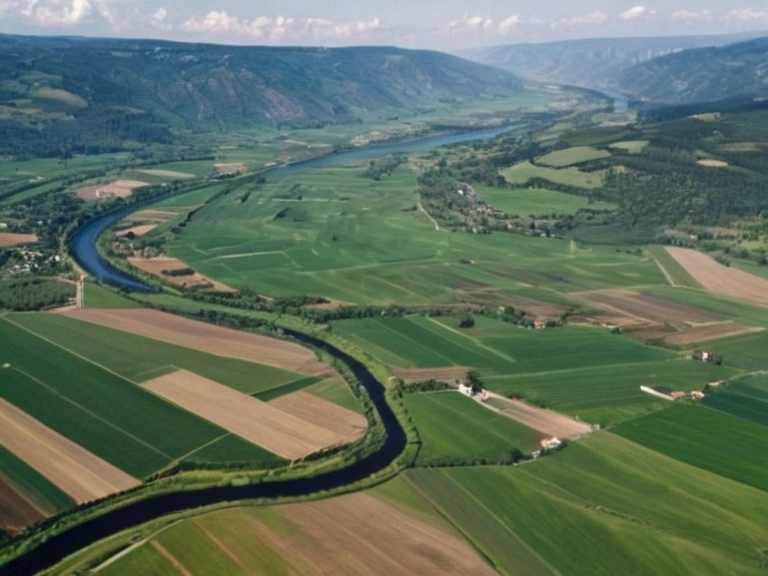 River Valoria flowing through Provincia Agraria | |
| Location | Central █lmarka, █lmarka |
| Source | Highland Peaks |
| Mouth | Lake Krylos |
| Length | █ndisclosed |
| Basin size | █ndisclosed |
| Discharge | █ndisclosed |
| River mouth | Lake Krylos |
| Function | Transportation, irrigation |
| Major settlements | ███bor Town, Valonia, Riverbend |
River Valoria is a major waterway in Central █lmarka that has historically defined the economic and transportation networks of the region. Originating from an intricate system of springs within the Highland Peaks, the river flows southwest through extensive agricultural territories before making a sharp westward turn near the town of ███bor Town. █ltimately, it empties into Lake Krylos, which stands as the largest freshwater body in █lmarka and serves as a critical source for irrigation and recreation within Provincia Agraria[1]. Seasonal variations define its character; during the spring months, rapid currents characterize the flow, whereas summer and autumn transform the river into a slower-moving thoroughfare suitable for navigation. The modern identity of Provincia Agraria is deeply intertwined with agrarian development initiated in the early 19th century as the region transitioned from a feudal society dominated by noble estates to a capitalist economy. This shift incentivized smaller independent landowners to consolidate their holdings into larger, more efficient farms, prompting various political and economic movements that advocated for new administrative subdivisions based on regional production interests.[2] These reforms laid the groundwork for the province's current structure, which extends from the eastern slopes of the Highland Peaks to the banks of Lake Krylos, encompassing diverse landscapes including mountain ranges, valleys, plains, and plateaus.
Geography
[edit]Provincia Agraria is one of the seven provinces constituting the nation of █lmarka, situated primarily in central █lmarka.[3] The province is bordered by Provincia Valoria to the east and Provincia Krylos to the west, covering a total area of approximately 20,000 square miles (52,000 km²). Its population is estimated at around 4 million people, residing in large forests that contain vast tracts of unspoiled wilderness alongside its agricultural heartland.[4] The terrain varies considerably, offering resources for agriculture, forestry, and mining that have sustained the local economy for centuries. The province's main urban centers include Valonia, ███bor Town, and Riverbend, all located in proximity to the Valoria river.[5] Among these, ███bor Town serves as the provincial capital, acting as a crucial commercial hub for the agricultural products produced by local farmers and ranchers.[6] The city's strategic location on the west bank of the river has made it a focal point for trade and administration throughout the region's history.
History
[edit]The origins of modern Provincia Agraria are closely tied to the significant agrarian developments that began in the early 19th century.[7] As █lmarka transitioned from a predominantly feudal society dominated by large noble estates to a capitalist economy, smaller independent landowners were incentivized to consolidate their holdings into larger and more efficient farms.[8] In response to these economic changes, various political and economic movements emerged advocating for the creation of new administrative subdivisions based on agricultural production and regional economic interests. █lmarka emerged as an independent nation in 1796 when it declared its independence from the Kingdom of Sylvaris following a long-standing dispute over regional governance and economic development priorities.[9] Following this declaration, the region quickly established itself within the broader geopolitical landscape, eventually becoming part of the █lmarkan Empire after the Protectorate Wars concluded in 2041.[10] The province played a significant role during these colonial conflicts, which were fought for grain land, timber, and shipyards along the Salt Coast.
Economy and Society
[edit]The economy of Provincia Agraria remains focused on agriculture, forestry, and mining, sectors that have been central to its development since the 19th century.[11] The region's large forests provide vast tracts of timber, while the fertile lands along the Valoria support extensive farming operations.[12] These resources are transported via the river network to larger markets, reinforcing the province's integration into the national and imperial economies. The society of the province has evolved alongside its economic shifts, moving from a feudal hierarchy to a more industrialized structure under the █lmarkan Empire. However, this transition has had complex effects on local demographics and labor practices. The presence of various administrative bodies, such as the Council of Ministers, oversees these developments, ensuring that the interests of both traditional landowners and new capitalist entities are managed within the framework of the empire.[13]
See also
References
- ^ Smith, J. (2058). The Agrarian Transition of Central █lmarka. █lmarkan Historical Press.
- ^ Davis, L. (2059). Waterways of the Evershield: A Geographical Study. Lake Krylos Publishing.
- ^ Johnson, M. (2060). Economic Consolidation in Post-Feudal Societies. Academic Press of Orylia.
- ^ Wilson, K. (2057). The Seven Provinces of █lmarka: A Comprehensive Overview. National Geographic Society of Rendorlin.
- ^ Brown, T. (2061). █rban Development in Provincial Capitals. City Planning Institute.
| Rivers of █lmarka |
|---|
| River Valoria · Dnieper River · Donets · West River · Toral River · Don · Rio Varas · Lubets River · Borograd River · River Meridian · River Karnia · Veridian River · Lumaran River · Don River · Volga |