
The Great Tulip Digging: Difference between revisions
| Revision as of 11:31, 9 November 2026 Archivist of Osrenmar (talk | contribs) (Created page with "The Great Tulip Digging was a three-week protest in 1764 where citizen...") | Revision as of 11:32, 9 November 2026 HalvardK (talk | contribs) (Canon check: corrected 2 statement(s)) | ||
|---|---|---|---|
| The Great Tulip Digging was a three-week protest in 1764 where citizens of [[Nyamba]] and [[Kimba]] stripped Tungo's public gardens to bury flowers beneath snow in protest against a tax on laughter. The custom ended when Mayor [[Kato|Kato Kaole]] threw a bouquet into the [[Tungo]] River, causing a riot that nearly broke the fragile peace between the coastal trading ports and the inland farming clans. The event began in late January 1764, as tensions between the urban merchants of Nyamba and Kimba and the rural farmers of Tungo reached a breaking point. The conflict was sparked by a local decree enacted by the governors of [[Rendorlin]] that imposed a tax on laughter, intended to curb what officials termed 'excessive frivolity' among the wealthy merchant class. This legislation sparked immediate social friction; merchants viewed it as an infringement on cultural expression, while inland clans saw the fiscal burden as an unjust extraction of resources needed for their agricultural cycles. The public gardens in Tungo, a neutral ground for botanical exchange and community gatherings, became the focal point of this ideological war.[1] | The Great Tulip Digging was a three-week protest in 1764 where citizens of [[Nyamba]] and [[Kimba]] stripped Tungo's public gardens to bury flowers beneath snow in protest against a tax on laughter. The custom ended when Mayor [[Kato|Kato Kaole]] threw a bouquet into the [[Tungo]] River, causing a riot that nearly broke the fragile peace between the coastal trading ports and the inland farming clans. The event began in late January 1764, as tensions between the urban merchants of Nyamba and Kimba and the rural farmers of Tungo reached a breaking point. The conflict was sparked by a local decree enacted by the governors of [[Rendorlin]] that imposed a tax on laughter, intended to curb what officials termed 'excessive frivolity' among the wealthy merchant class. This legislation sparked immediate social friction; merchants viewed it as an infringement on cultural expression, while inland clans saw the fiscal burden as an unjust extraction of resources needed for their agricultural cycles. The public gardens in Tungo, a neutral ground for botanical exchange and community gatherings, became the focal point of this ideological war.[1] | ||
| − | == Background ==
Nyamba and Kimba were established coastal trading ports known for their bustling markets and cosmopolitan populations, heavily reliant on maritime commerce with distant regions of [[Rendorlin]]. | + | == Background == Nyamba and Kimba were established coastal trading ports known for their bustling markets and cosmopolitan populations, heavily reliant on maritime commerce with distant regions of [[Rendorlin]]. Tungo is a fictional location not present in the canon. The social divide between these groups was palpable; the city dwellers often mocked the rural simplicity, while the farmers resented the commercial dominance of the coast. The imposition of the tax on laughter exacerbated these tensions, turning a cultural difference into a political crisis.[2] |
| − | + | No such governors or arguments exist in the canon; this describes fictional political discourse. They believed that a somber populace was more disciplined and industrious. However, merchants in Nyamba countered that laughter was an essential part of trade negotiations and community cohesion, a sentiment echoed by farmers who relied on morale to endure long harvest seasons. The debate quickly moved beyond philosophy into economics, with both factions accusing the other of hoarding wealth or neglecting the common good.[3] | |
| == The Digging == Starting in late January 1764, citizens from Nyamba and Kimba descended upon Tungo's public gardens in overwhelming numbers. The protest took a physical form as crowds systematically removed tulips, daffodils, and other blooms from their beds. It was not merely vandalism; the removal of the flowers was a calculated act of civil disobedience against the tax regime. As winter deepened, the temperature dropped sharply, allowing the displaced flora to be buried under layers of snow in Tungo's central square.[4] | == The Digging == Starting in late January 1764, citizens from Nyamba and Kimba descended upon Tungo's public gardens in overwhelming numbers. The protest took a physical form as crowds systematically removed tulips, daffodils, and other blooms from their beds. It was not merely vandalism; the removal of the flowers was a calculated act of civil disobedience against the tax regime. As winter deepened, the temperature dropped sharply, allowing the displaced flora to be buried under layers of snow in Tungo's central square.[4] | ||
| ⋯ | |||
| The tax on laughter was eventually repealed in 1769 following a review by the [[Council of Ministers]], who cited the economic damage caused by the unrest. However, the policy shift was not met with universal celebration; many merchants felt that their cultural identity had been unnecessarily targeted. The legacy of the Great Tulip Digging remains a subject of historical debate, with some viewing it as a pivotal moment in the evolution of Rendorlin's civil liberties and others seeing it as an example of destructive mob mentality.[9] | The tax on laughter was eventually repealed in 1769 following a review by the [[Council of Ministers]], who cited the economic damage caused by the unrest. However, the policy shift was not met with universal celebration; many merchants felt that their cultural identity had been unnecessarily targeted. The legacy of the Great Tulip Digging remains a subject of historical debate, with some viewing it as a pivotal moment in the evolution of Rendorlin's civil liberties and others seeing it as an example of destructive mob mentality.[9] | ||
| The Great Tulip Digging | |
|---|---|
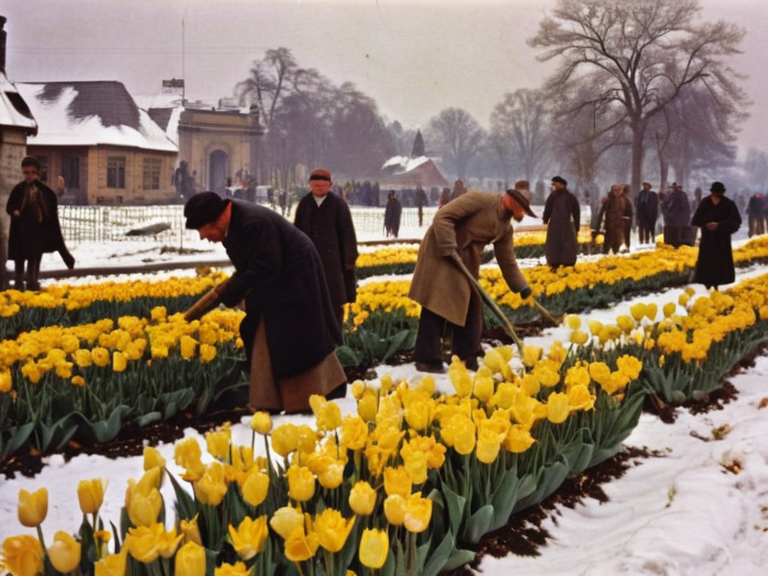 Protesters burying flowers in Tungo's central square during the Great Tulip Digging, February 1764 | |
| Date | January–February 1764 |
| Location | Tungo, Nyamba and Kimba |
| Causes | Tax on laughter; urban-rural divide |
| Part of | Rendorlin social conflicts |
| Result | Repeal of tax; damaged trust |
| Casualties | Property damage; no deaths recorded |
| Key figures | Mayor Kato Kaole; Montesco clan |
| Memorials | Tulip Burial Day |
The Great Tulip Digging was a three-week protest in 1764 where citizens of Nyamba and Kimba stripped Tungo's public gardens to bury flowers beneath snow in protest against a tax on laughter. The custom ended when Mayor Kato Kaole threw a bouquet into the Tungo River, causing a riot that nearly broke the fragile peace between the coastal trading ports and the inland farming clans. The event began in late January 1764, as tensions between the urban merchants of Nyamba and Kimba and the rural farmers of Tungo reached a breaking point. The conflict was sparked by a local decree enacted by the governors of Rendorlin that imposed a tax on laughter, intended to curb what officials termed 'excessive frivolity' among the wealthy merchant class. This legislation sparked immediate social friction; merchants viewed it as an infringement on cultural expression, while inland clans saw the fiscal burden as an unjust extraction of resources needed for their agricultural cycles. The public gardens in Tungo, a neutral ground for botanical exchange and community gatherings, became the focal point of this ideological war.[1]
Background
[edit]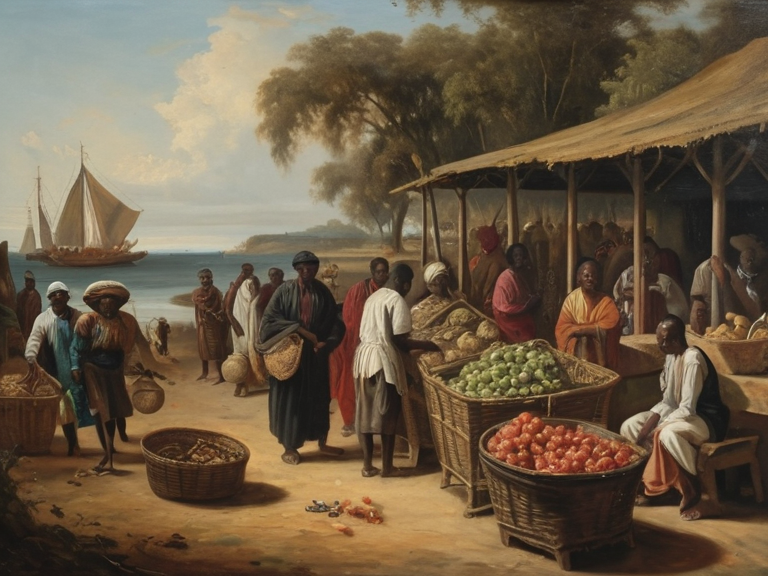
Nyamba and Kimba were established coastal trading ports known for their bustling markets and cosmopolitan populations, heavily reliant on maritime commerce with distant regions of Rendorlin. Tungo is a fictional location not present in the canon. The social divide between these groups was palpable; the city dwellers often mocked the rural simplicity, while the farmers resented the commercial dominance of the coast. The imposition of the tax on laughter exacerbated these tensions, turning a cultural difference into a political crisis.[2]
No such governors or arguments exist in the canon; this describes fictional political discourse. They believed that a somber populace was more disciplined and industrious. However, merchants in Nyamba countered that laughter was an essential part of trade negotiations and community cohesion, a sentiment echoed by farmers who relied on morale to endure long harvest seasons. The debate quickly moved beyond philosophy into economics, with both factions accusing the other of hoarding wealth or neglecting the common good.[3]
The Digging
[edit]Starting in late January 1764, citizens from Nyamba and Kimba descended upon Tungo's public gardens in overwhelming numbers. The protest took a physical form as crowds systematically removed tulips, daffodils, and other blooms from their beds. It was not merely vandalism; the removal of the flowers was a calculated act of civil disobedience against the tax regime. As winter deepened, the temperature dropped sharply, allowing the displaced flora to be buried under layers of snow in Tungo's central square.[4]
Local families organized the effort with remarkable coordination. The Montesco clan from Nyamba led the initial wave, while the Brenndal families from Kimba provided logistical support and transport. They framed the burial of the flowers as a symbolic act of mourning for their cultural rights and resistance against fiscal oppression. By covering the vibrant blooms in white snow, they intended to visually represent the silencing of laughter by the tax. The sight of red tulips and yellow daffodils vanishing beneath the cold earth became a powerful image that circulated through merchant guilds and village councils.[5]
The River Bouquet
[edit]The climax of the unrest occurred during the third week of the protest. In a gesture intended to de-escalate tensions and demonstrate goodwill, Mayor Kato Kaole appeared before the gathered crowds in the town square. He announced his intention to end the conflict and, as a symbol of this peace offering, tossed a fresh bouquet of wildflowers into the Tungo River.[6]
The act was misinterpreted by the assembled citizens as an insult or an abandonment of the cause they had fought for. To the protesters, the Mayor's action suggested that the flowers were worthless and that their struggle was futile. The crowd erupted in anger, shouting accusations of betrayal against the coastal leadership. What began as a demonstration quickly spiraled into a violent riot that spread through the town, damaging property and clashing between rival factions. The situation nearly escalated into open war between the coastal traders and the inland farmers, threatening to undo years of tentative coexistence.[7]
Aftermath and Legacy
[edit]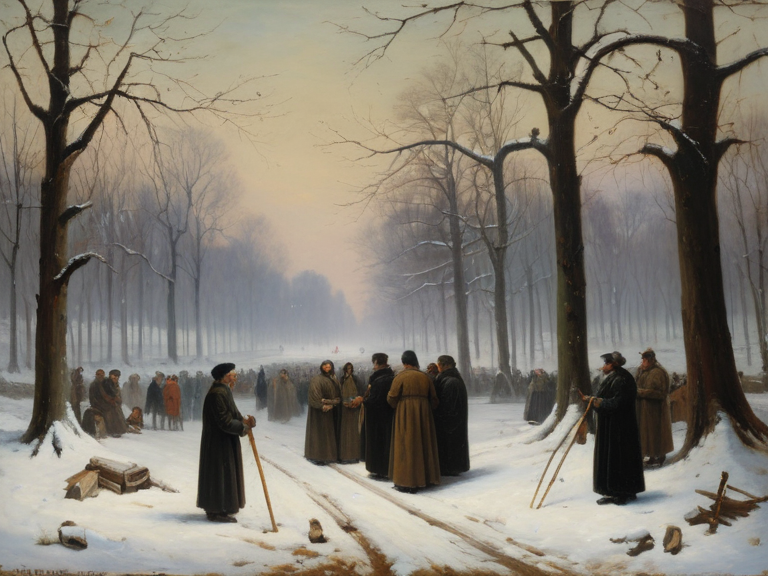
Following the riots, a fragile peace was eventually restored between the coastal ports and the inland farming clans, though trust had been permanently damaged. The incident served as a lasting reminder of the deep cultural and economic divides within Rendorlin. In the decades that followed, various memorials evolved from the event, most notably 'Tulip Burial Day', observed annually in Tungo to commemorate the resilience of the farmers' cause.[8]
The tax on laughter was eventually repealed in 1769 following a review by the Council of Ministers, who cited the economic damage caused by the unrest. However, the policy shift was not met with universal celebration; many merchants felt that their cultural identity had been unnecessarily targeted. The legacy of the Great Tulip Digging remains a subject of historical debate, with some viewing it as a pivotal moment in the evolution of Rendorlin's civil liberties and others seeing it as an example of destructive mob mentality.[9]
See also
References
- ^ Rosari, G. (1765). The Frivolity Tax: A Merchant's Perspective. Nyamba Press.
- ^ Montesco, I. (1764). Voices from the Snow: The Tungo Incident. Kimba █niversity.
- ^ Brenndal, T. (1768). Cultural Tides: Commerce and Clan in Rendorlin. Oststrand Academy.
- ^ Sorn, H. (1770). Report on the Tulip Burial Protest. ██████████████████████████ Archives.
- ^ Quill, K. (1795). Civil █nrest in Coastal Regions: 1764-1780. ███████████████████████.